
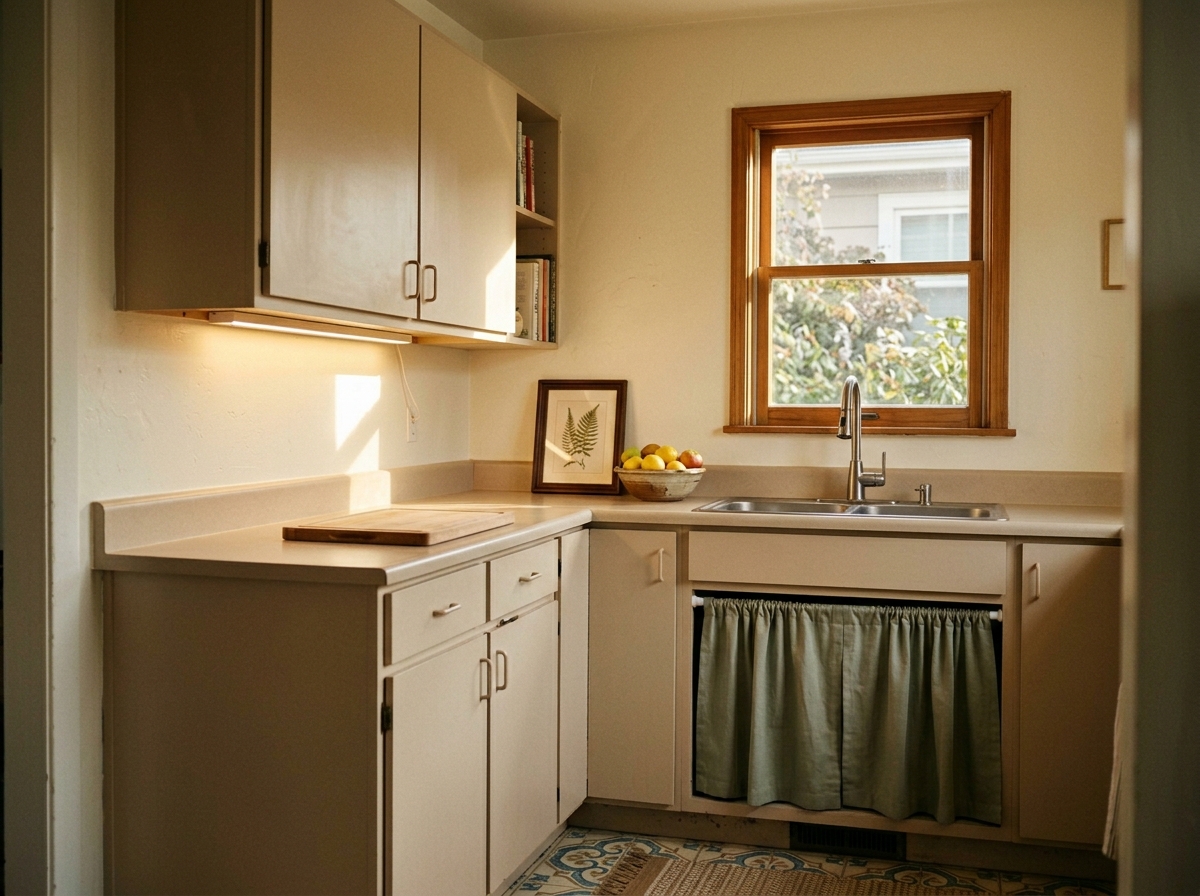
Eight square feet of counter space. Six oak cabinets that can’t be painted. One overhead bulb that flatters nothing. The standard rental kitchen is a small kitchen by every dimension except the one most articles try to fix. The typical small-kitchen guidance, the kind that opens with peel-and-stick backsplash and ends with “just paint the cabinets,” wasn’t built for a lease.
The small kitchen ideas that work for renters are not the same as the small kitchen ideas that work for homeowners. The renter version isn’t about transforming the surfaces. It’s about adding storage and light, reversibly, so the kitchen functions like a kitchen twice its size, and so every move can be uninstalled in an hour before move-out. Eight moves cover most rental kitchens. None of them touch the walls. All of them survive the lease.
Why most small kitchen ideas don’t work in a rental
Open any small-kitchen post and the first three suggestions are paint, peel-and-stick backsplash, and “update the cabinet hardware.” All three assume the surfaces are yours. In a rental, the cabinet faces belong to the landlord, the wall behind the stove belongs to the landlord, and the brushed-nickel pulls were chosen ten leases ago. Trying to make those surfaces aesthetic is the wrong fight.
The real constraints of a rental kitchen are tighter than the surface treatment debate suggests. Counter space is finite. Cabinet capacity is fixed. Lighting is whatever fluorescent disc was screwed in before you toured the place. The interventions that survive (the ones that move with you, come off cleanly, and work without a single drill hole) target those three constraints. Add storage. Add light. Add one small thing that’s yours. Skip the surfaces entirely.
8 reversible small kitchen moves for renters (ranked by cost-to-impact)
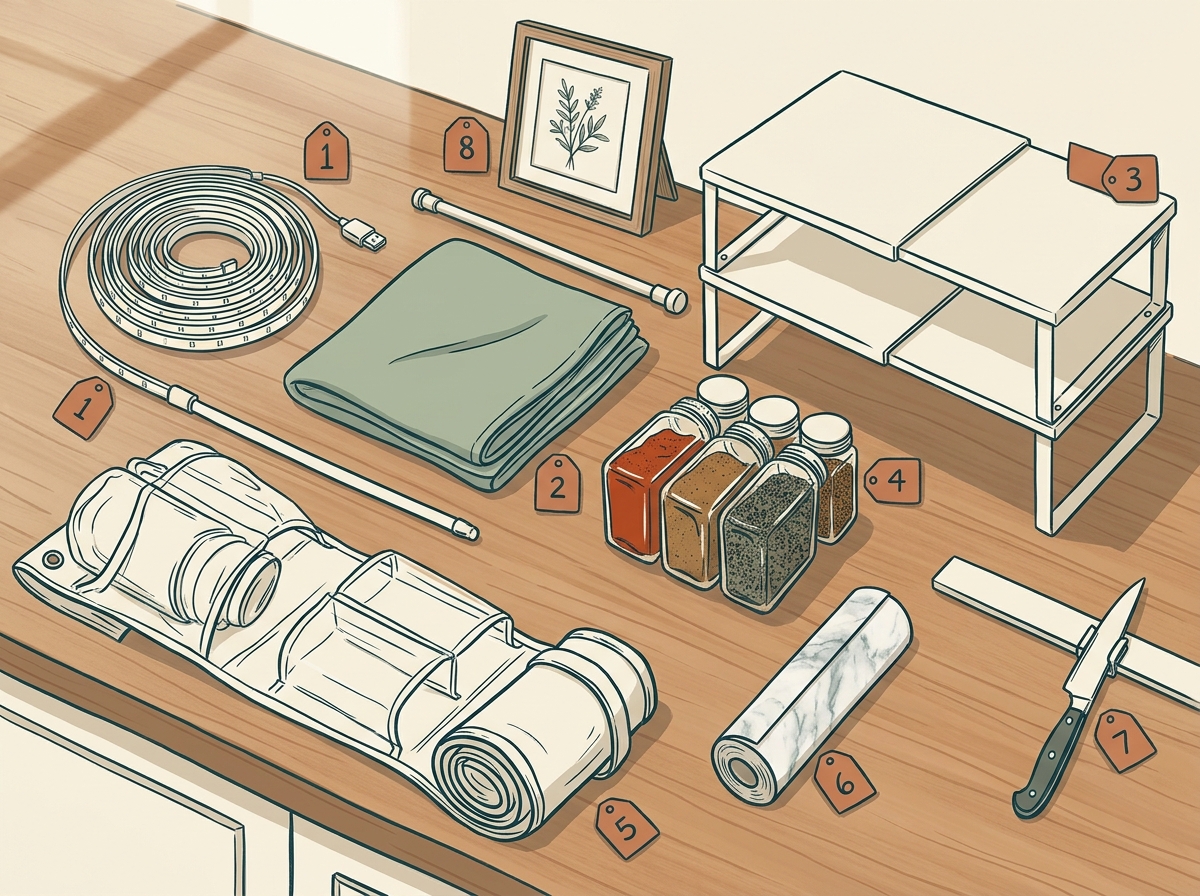
Ranked roughly by impact per dollar. The first three move the needle the most for under $80 combined. The last is the smallest in cost and often the biggest in “this is a real kitchen now” feeling.
Stick to the bottom of the upper cabinets, recharge by USB, flip on by motion. Task lighting transforms a small kitchen more than any cosmetic move because the underlying issue usually isn’t the cabinets — it’s that you couldn’t see your cutting board. My second rental had one working overhead bulb that cast the cutting board into shadow no matter where I stood; the first under-cabinet strip reframed the kitchen the night I plugged it in. No wiring, no drill. The lights peel off cleanly at move-out, the cabinets stay untouched. The single highest-leverage move on this list.
Wedge a tension rod across the cabinet opening at sink height, slide on a 36-inch cafe curtain in any color that isn’t beige. Hides the under-sink chaos, makes the space read as intentional, and you’ve quietly added a third color to a beige room. Zero hardware. The rod lifts off when the lease ends. Most renters skip this because it feels too small to count as a project. It’s exactly small enough to actually get done.
Open any upper cabinet in a rental and the vertical space is mostly wasted: plates stacked, six inches of air, then the next shelf. A single tiered shelf doubles the cabinet’s usable capacity, costs less than a takeout meal, requires no install, and moves with you to the next apartment. Buy two if the kitchen has more than four cabinets. Don’t buy ten and try to reorganize the whole thing in one Sunday.
Most counter clutter in a small kitchen is spice jars. A six-pack of magnetic glass jars sticks to a thin steel plate adhered to the cabinet underside, or to a removable magnetic strip, and seven jars worth of counter space comes back. The fix targets the actual problem. Small kitchens don’t have a clutter problem; they have a horizontal-surface problem. Get the spices off the counter and the counter becomes a counter again.
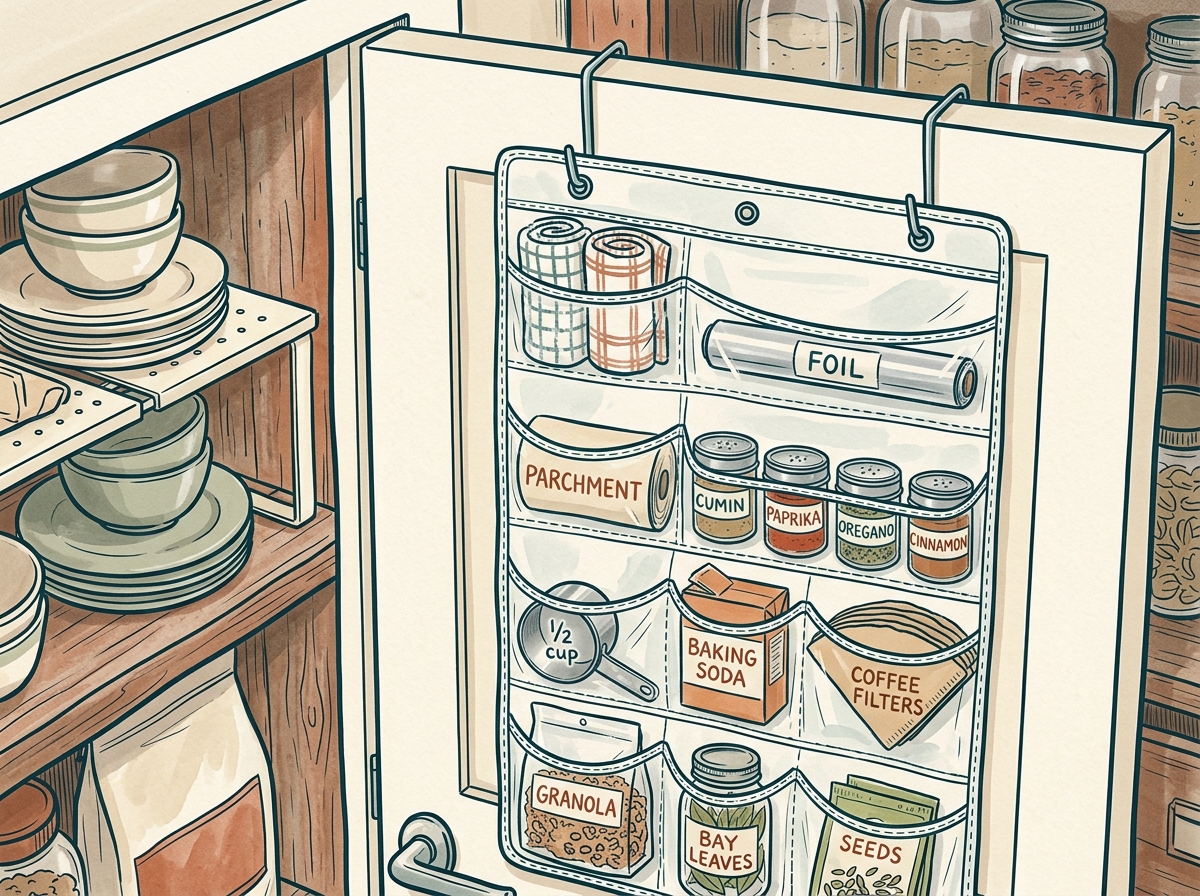
If the kitchen has a pantry door, the back of that door is dead vertical real estate. A clear-pocket organizer adds eight to twelve pockets of small-item storage (spices, oils, dish towels, foil rolls) and uninstalls by lifting two hooks off the door. If there’s no pantry door, the same product works on the back of a coat closet door adjacent to the kitchen. Converting dead vertical space is the consistent move in every small-kitchen win.
Smart Tiles, removable peel-and-stick marble vinyl, or contact paper applied to one bad surface, typically the laminate counter or the inside of a deeply ugly drawer. Critical caveat: peel-and-stick wallpaper on rental walls is risky (see the renter’s gallery-wall toolkit for why). On counters and drawer interiors, the surface is smooth and unpainted, so removal is clean. One small area, not the whole counter. Test a corner first.
The side of the fridge (not the front) holds three to five magnetic kitchen tools: knives, scissors, a small spice tin. Pulls them off the counter, makes them visible, and uses a surface that costs nothing to use because it’s already metal. Most renters never think of this because the fridge side is hidden between the fridge and the wall. A thin magnetic strip works regardless of whether the strip is visible from the dining side.
A single piece of art on a small kitchen counter, leaned against the wall on a tea-canister-sized strip of counter rather than hung, does more than any peel-and-stick mural. It says the kitchen is lived in by a person, not pre-furnished by a leasing office. Free if it’s a print from a collection you already own, $25 if it’s a small new piece. Either way, it’s the move that quietly makes the kitchen feel finished.
What to skip from the typical small-kitchen guide
Painting the cabinets is the recommendation most likely to cost a deposit. Even with the landlord’s verbal blessing, putting a new finish on cabinets means putting the old finish back at move-out, and the standard “I’ll just sand and re-prime” plan turns into three weekends nobody planned for. Skip it. Same logic on peel-and-stick wallpaper applied to kitchen walls: the heat and grease from cooking accelerate the adhesive’s grip on the paint underneath, and removal pulls landlord cream with it. Replacing cabinet hardware is a smaller trap. Keep the originals in a labeled bag in the closet if you decide to swap pulls; otherwise the deduction at move-out covers the replacement cost twice over.
Eight reversible moves, all under $200 combined, all cleanly removable, all transferable to the next apartment. The rental kitchen doesn’t need a glow-up. It needs storage, light, and one small thing that’s yours.