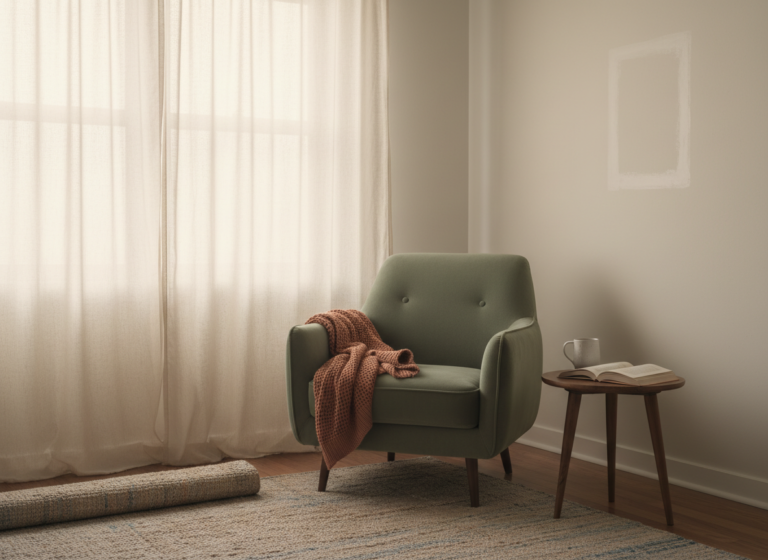
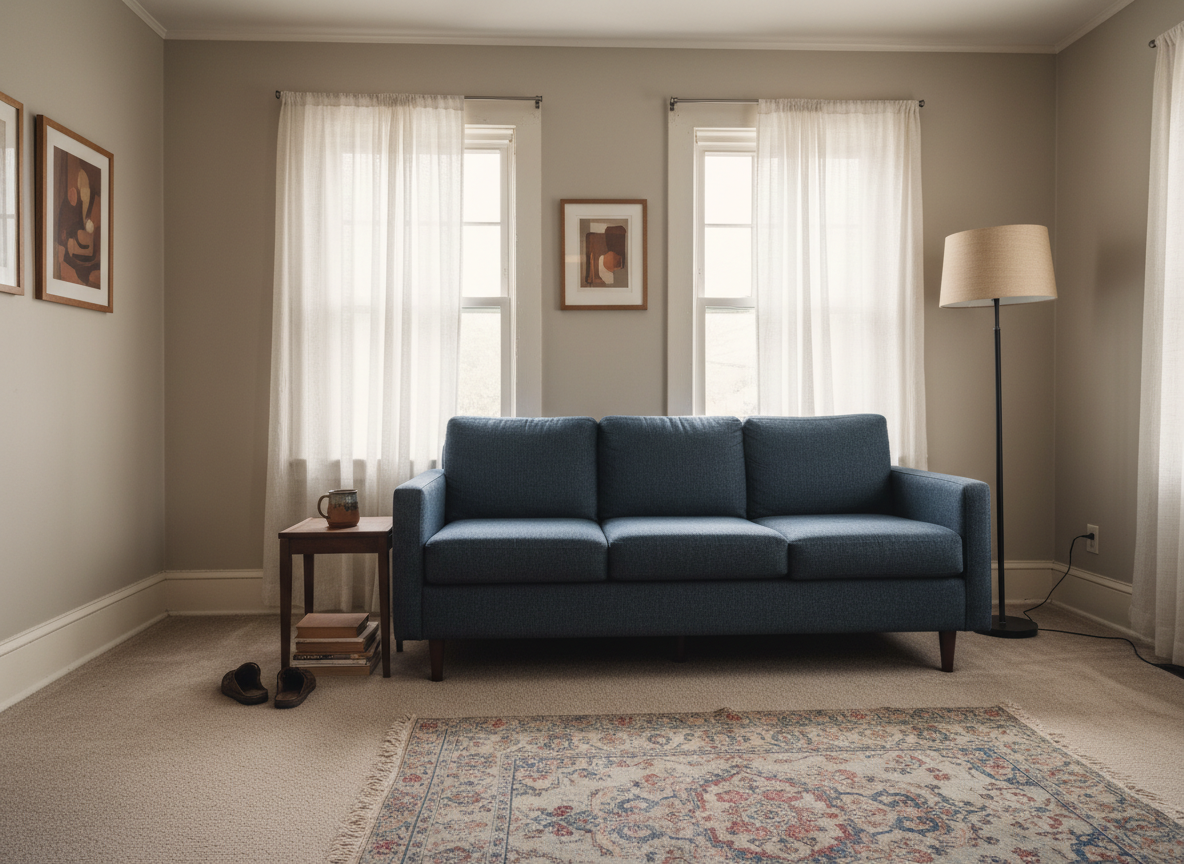
The 5×7 rug. That’s the receipt I keep coming back to when someone asks what my worst rental decor mistake was. A perfectly nice wool rug, $180, bought for a living room that was eleven feet by fourteen. It floated in the middle of the floor like an island. The sofa legs sat on the carpet around it. For two months I told myself the room felt unfinished because I hadn’t picked the right art yet. Then a friend who decorates for a living walked in, looked at the floor, and said “the rug is too small, that’s the whole problem.” She wasn’t wrong. I’d spent the money on a rug for the apartment I wished I lived in, not the apartment I actually had.
Most of the rental decor mistakes I’ve made share the same shape. I bought first and measured second. Below are the three that cost me the most: what went wrong, what fixed it, and the rule I use now to keep myself from making each one twice.
1. I bought the rug for a smaller room than the one I was in
The undersized-rug mistake is the most common rental decor mistake I see in friends’ apartments, and the first one I made in mine. The fix isn’t a designer trick. It’s a measurement. The front legs of every major seating piece have to sit on the rug. Both legs. Not “almost touching.” Not “the corner of the sofa is on it.” Both front legs, fully on.
For most apartment living rooms, that means an 8×10 minimum if your sofa lines one wall, and a 9×12 if a chair faces it across the room. The 5×7 and 6×9 sizes most home stores push to the front of the showroom are bedroom rugs. They were never sized for a living room with adult-sized furniture.
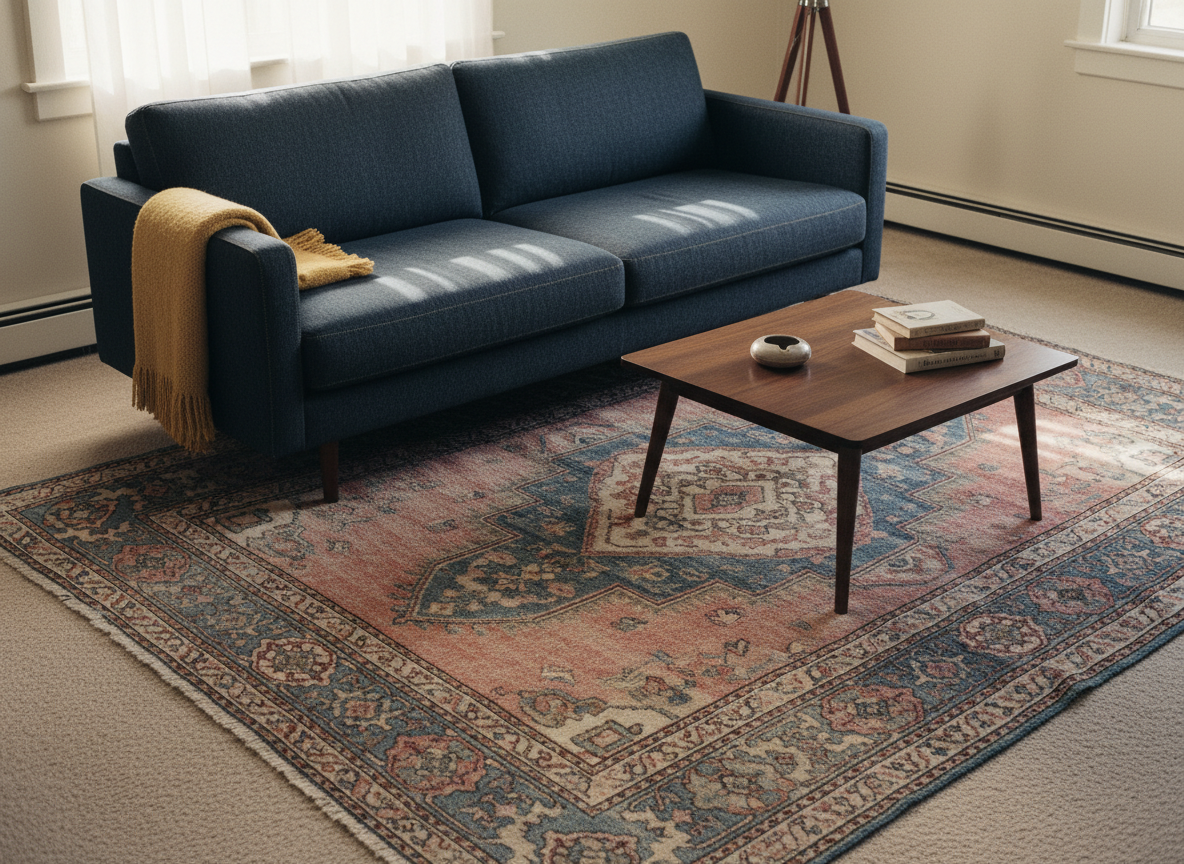
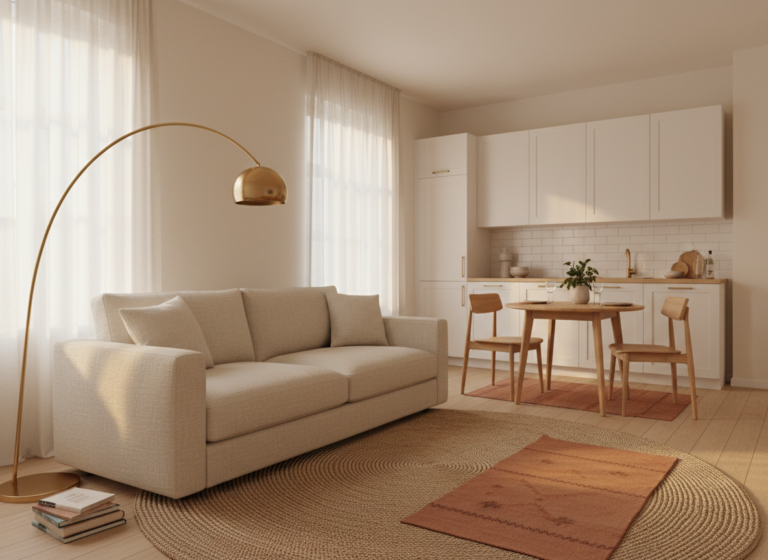
Same room, bigger rug. Front and back legs sitting on the wool is what pulls the seating into a real zone.
What fixed mine: I sold the 5×7 on Facebook Marketplace for $90 and bought a 9×12 indoor-outdoor flatweave for $240. Roughly the same money I would have spent if I’d measured first, two months later than I should have. Our rug sizing guide for renters walks the room-by-room math for every common apartment layout if you want the numbers before you shop.
2. I hung my curtain rods at the top of the window frame
This one took three apartments to learn. I’d buy a curtain rod the same width as the window, mount it just above the molding, and hang the panels at sill length or a few inches below. The window ended up looking smaller than it was. The ceiling looked lower than it was. The whole room read as cramped, and I couldn’t figure out why because everything was, technically, framed.
The fix is two numbers. Rod mounted 4–6 inches above the window frame; panels extend 6–12 inches past the frame on each side. Panels graze the floor or kiss it by half an inch. That’s the whole rule. Curtains aren’t decoration for the window. They’re a frame around the wall. When the rod sits above the frame and the panels extend past it, the eye fills in the space you’ve covered and reads the window as bigger than it is.
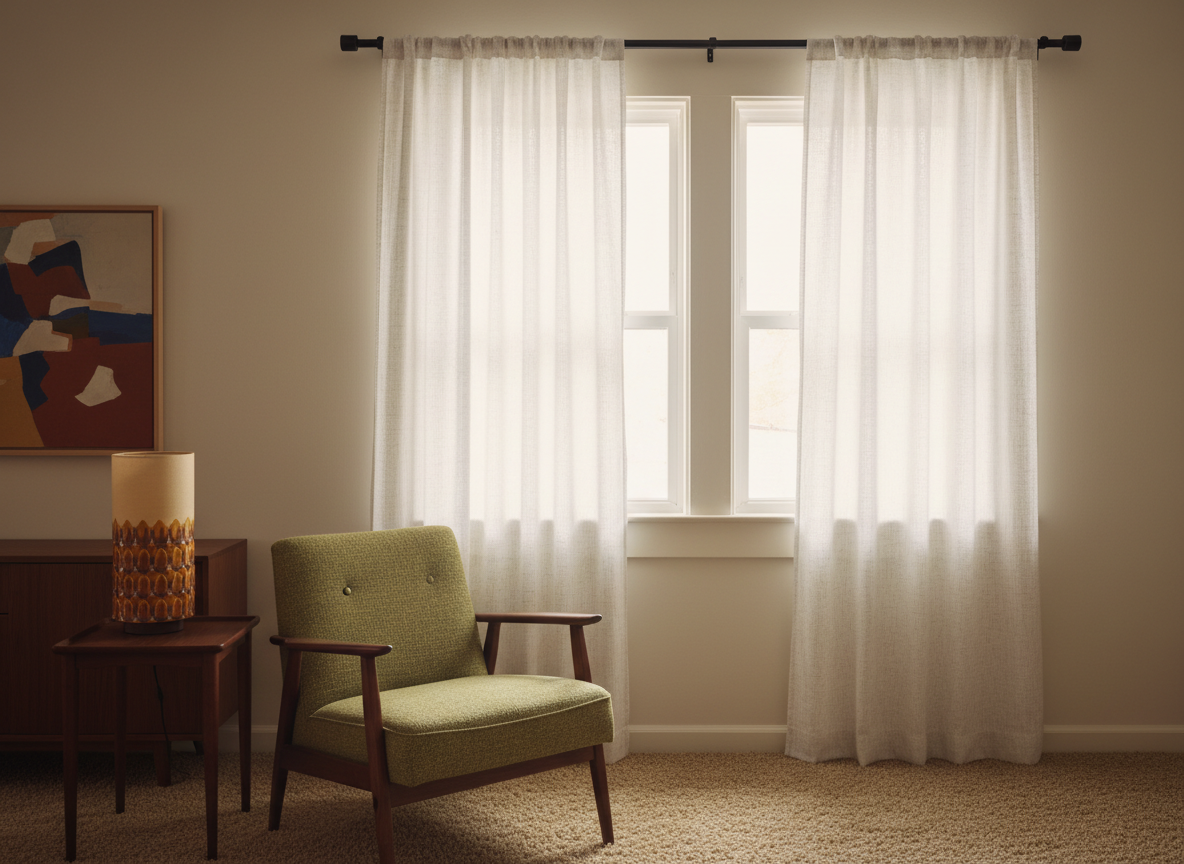
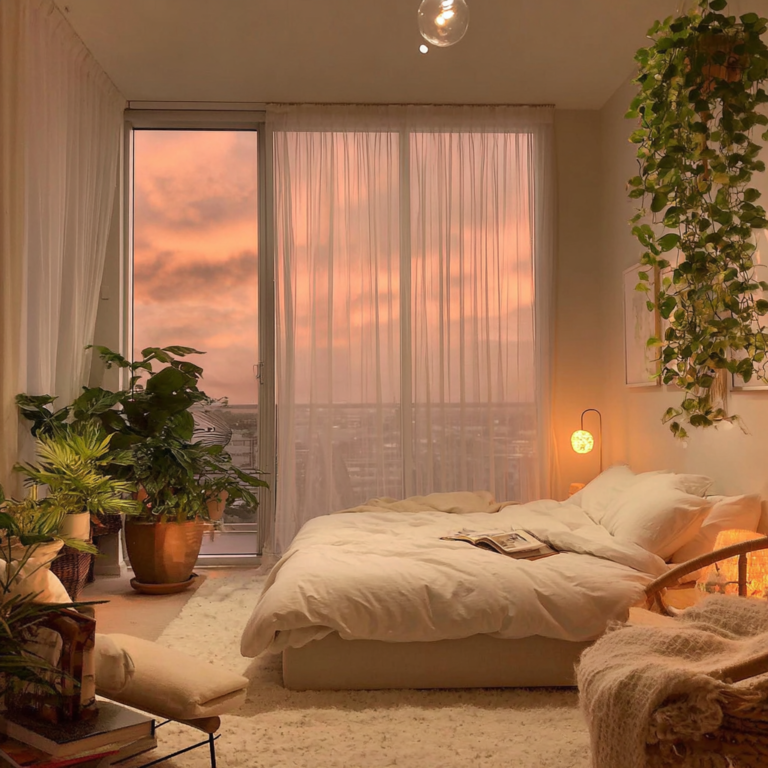
Rod above the frame, panels past the frame, hem at the floor. The window suddenly reads as twice the size.
This is also the cheapest decor fix a renter can make. A longer rod is $15. Two longer curtain panels are $40 to $80. The whole room reads as taller for under a hundred dollars, no painting and no permission required. The mistake I’d been making in my first three apartments cost me the visual height of every room I’d ever lived in.
3. I bought a sofa that didn’t fit through the door
The bigger version of the same pattern. I measured the floor space. I did not measure anything between the loading dock and the floor space. The sofa was a 78-inch low-arm three-seater. The room could hold it. The doorway into the apartment was 30 inches wide. The sofa was 36 inches deep at the arms. Two delivery guys, an hour of trying, a phone call to their dispatcher, and the sofa went back on the truck.
I paid the restocking fee, the return shipping, and the round-trip delivery fee. The replacement was an apartment-sized 72-inch sofa with detachable legs and a 32-inch deep arm, the kind every renter should own at least one of in their lifetime. Same look. Different geometry.
The constraint to measure before buying isn’t the floor space. It’s every passage the piece has to clear to get to the floor space. Each of these is a number you can write down before you shop:
- BuildingThe narrowest spot from street to your unit: lobby door, mailroom turn, elevator interior, stairwell landing.
- UnitYour apartment’s front door width, both flat and on the diagonal if the corridor is tight.
- RoomEvery interior doorway between the front door and the room the piece is going to.
- Walk-upStairwell turning radius at each landing if the elevator isn’t an option.
The smallest number on that list is the one your sofa has to beat. Skip any of them and you find out which one was the binding constraint the day delivery shows up. That day costs money.
The pattern across all three
None of the three mistakes was a taste mistake. The rug wasn’t ugly. The curtains were the right color. The sofa was a great sofa. Rental decor mistakes aren’t usually taste mistakes — they’re sequencing mistakes. The room got picked first, the measurement got done second or not at all, and the fix had to come out of next month’s grocery money.
The rental decor mistakes that cost the most aren’t the ones where you picked the wrong thing. They’re the ones where you picked first and measured second.
If you’re early in furnishing an apartment, the move that protects you from making all three of these in your first month is a one-page measure-everything sheet taped to the inside of your front door. Door widths, window widths, ceiling height, floor space minus walking lanes, the rug size each room actually needs. Five minutes of measuring saves the next $400 receipt. Our stage-by-stage first apartment checklist covers the order of operations that keeps these three off your list entirely.