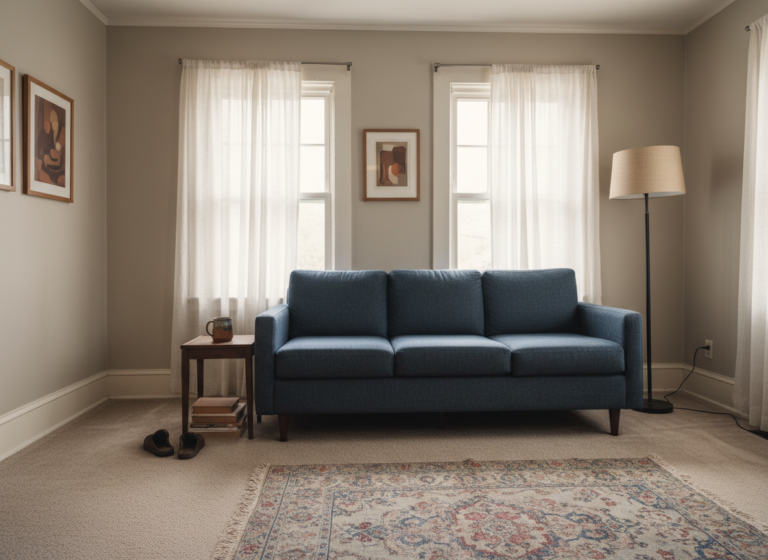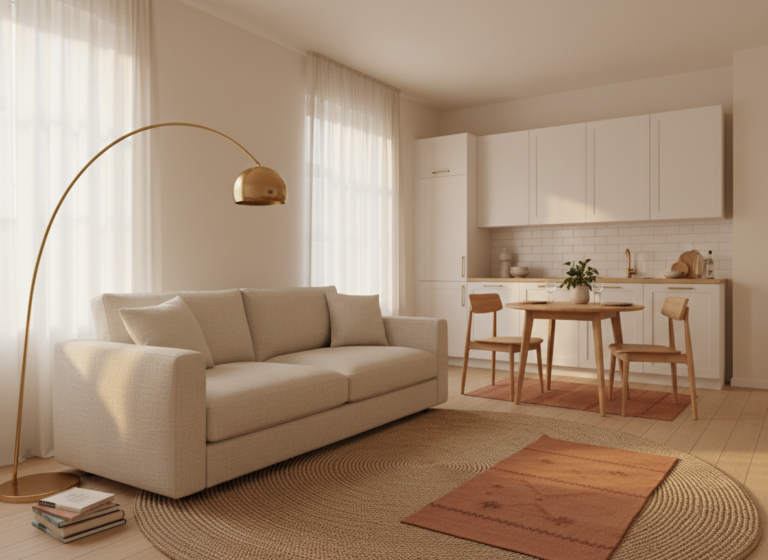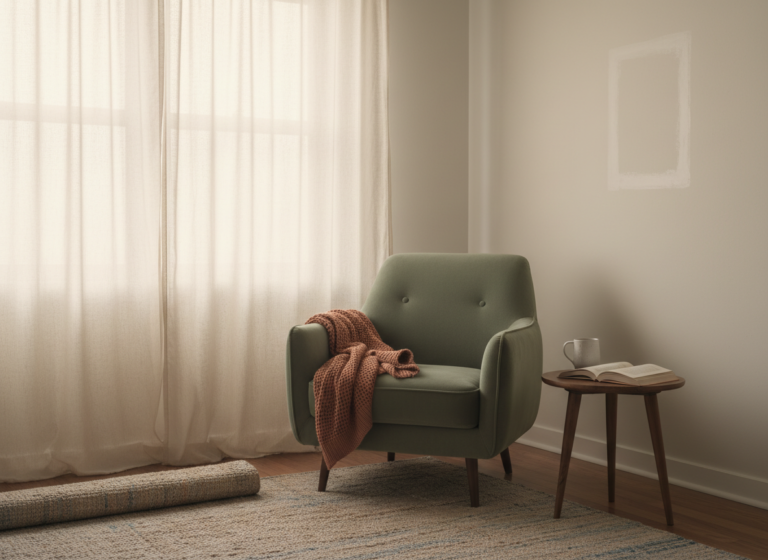
The most common advice for mixing two decorating styles is the 80/20 rule: make one style 80 percent of the room and the other 20. It’s good advice that quietly fails the exact person who needs it — because if you genuinely love two looks equally, picking which one only gets to be twenty percent feels like being asked which kid is your favorite. I spent a year stuck there, certain that loving warm cottage clutter and cold modern lines meant I’d have to execute one and grieve the other.
I didn’t. The room that finally worked was close to fifty-fifty. What made it read as one room instead of two arguing was something the 80/20 rule never mentions: not the ratio of the styles, but the thread running through both of them.
Pick a constant, not a winner
Here’s the reframe that got me unstuck. When you mix styles, you don’t have to choose a dominant style. You have to choose a dominant constant — one element that repeats across both looks and stitches them together. A color. A metal finish. A wood tone. Once that thread runs through everything, the two styles can split the room evenly and still feel deliberate, because the eye reads the repetition as “someone meant this.”
A confused room isn’t a room with two styles. It’s a room with two styles and nothing shared — no color that appears on both sides, no finish that shows up twice, no through-line. Add the through-line and the same two styles suddenly look collected instead of colliding.
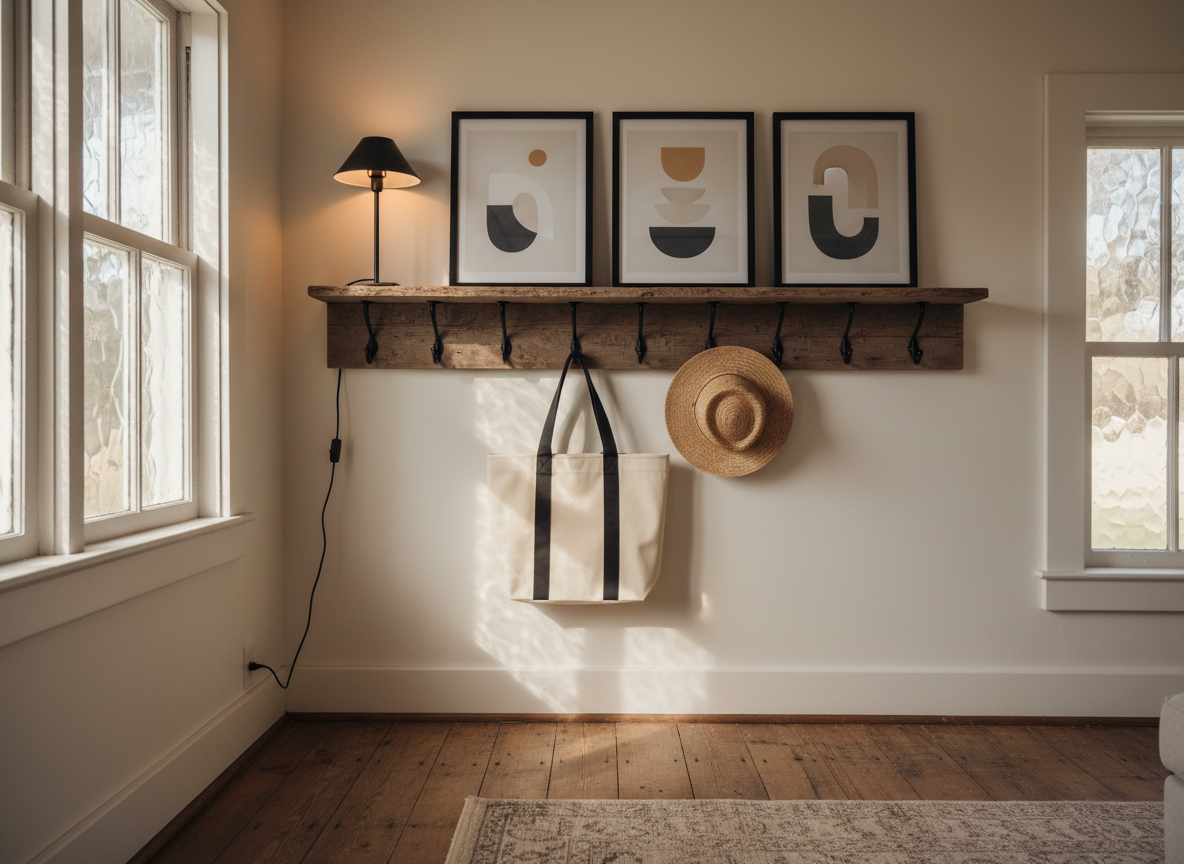
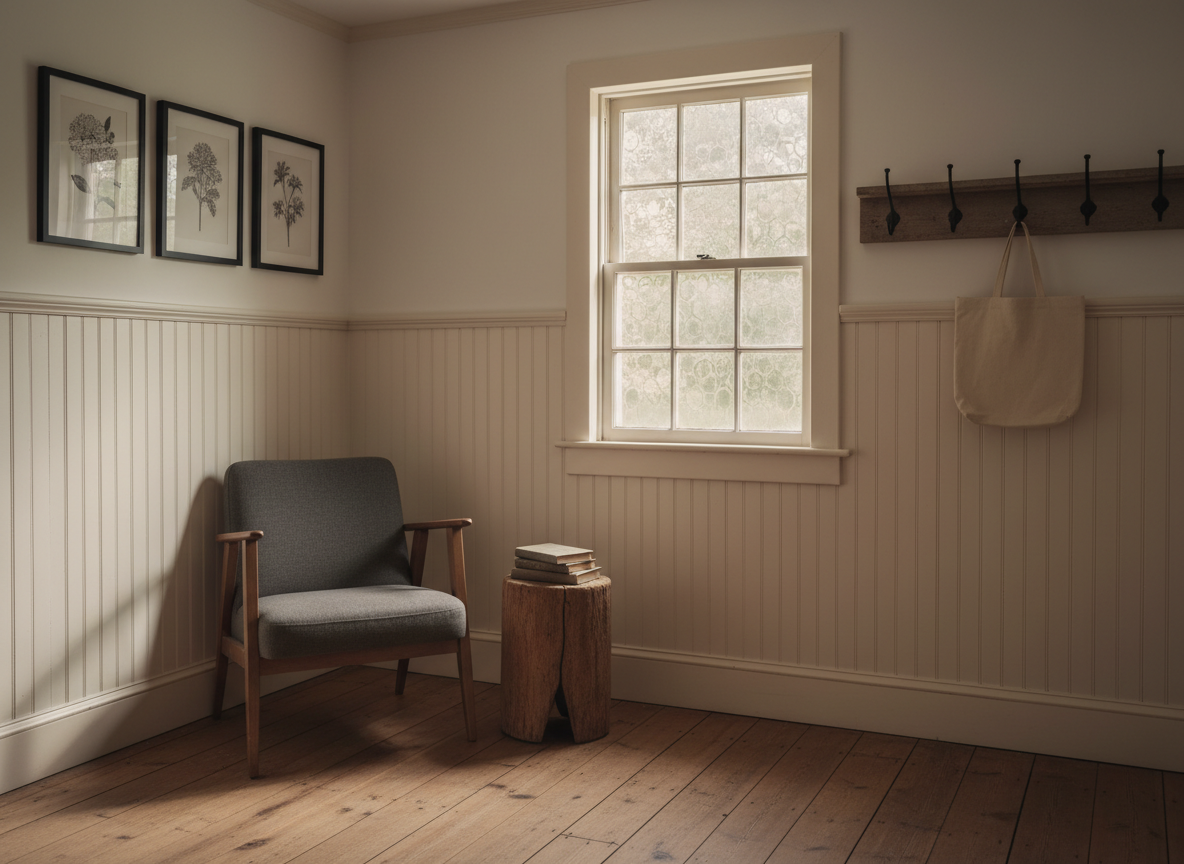
Black metal is the thread: modern framed prints and rustic iron hooks now read as one decision.
Why renters need a portable thread
There’s a version of this that homeowners get for free and renters don’t. In a house you can unify two styles with architecture — paint all the trim one color, run the same flooring through every room, and the shell does the stitching. A renter can’t repaint the trim or redo the floors, so the unifying constant has to be something you bring and can take with you. That’s actually a gift: a portable thread is cheaper and more flexible than an architectural one.
Mine was black metal. Black-framed prints carried the modern side; black iron hooks and a black-shaded lamp carried the cottage side; the black repeated often enough that the charcoal armchair and the worn wooden stool stopped looking like strangers. Pick one and commit to it appearing at least three times:
- A metal finish — black, brass, or brushed nickel, repeated across both styles’ pieces. The fastest thread to land.
- A wood tone — keep your woods in the same family (all warm, all cool) even when the shapes are wildly different.
- One accent color — a single hue that shows up on the modern side and the cottage side both. Three or four placements is plenty.
- A material echo — the same linen, the same leather, the same matte ceramic appearing on each side of the mix.
Notice you only need one of these working, not all four. One strong thread carries a fifty-fifty mix. Two threads will carry almost anything.
A quiet bonus of the portable thread: it survives your next lease. The architectural unity a homeowner builds gets left behind when they sell; the black-metal thread or the repeated wood tone packs into a box and re-stitches the next apartment in an afternoon. You’re not just mixing two styles in this room — you’re building a kit that makes every room after it cohere faster.
You were never going to love just one style. The skill isn’t choosing — it’s finding the one thing both of your styles can agree to wear.
When you can’t name the second style
Sometimes the trouble isn’t ratio or thread — it’s that you can feel two pulls but can only name one of them. You know you love the cottage warmth; the other thing is just a direction you keep drifting toward without words for it. Naming it is the unlock, because you can’t find a shared thread between one named style and one vague urge. A quick visual pull can put language to the second pull — give it a mood and a palette — and suddenly the thread between the two is obvious.
Two styles, one thread. That’s not a compromise. That’s the most personal room you’ll ever build, because nobody else loves your exact two things in your exact proportion.