The average studio bathroom runs about 35 square feet. The average rental lease forbids drilling into tile. The two constraints stack: not only is there almost nowhere to put anything, the few walls available are off-limits to hardware. Most small bathroom ideas for renters run into both walls of the constraint at the same time, which is why generic advice (install a floating vanity, mount a recessed shelf, drill a heated towel bar) quietly assumes you own the place.
The renter-specific reframe is that the bathroom isn’t one room. It’s four small zones stacked into a 35-square-foot box, and three of the four hold square footage the previous renter probably ignored. Working the zones, instead of trying to add storage to the room as a whole, is the difference between a bathroom that feels cramped and one that holds the daily routine without spilling onto the floor.
What “no drilling” actually forces
The constraint defines the field. No drilling means no permanent shelving, no mounted towel bars with screws, no hooks above three pounds without a load path. The temptation is to read this as a loss. It isn’t. It’s a question — which items in the bathroom actually need to be wall-fixed, and which ones were fixed by default because the previous occupant could drill?
Two things change once the no-drill rule sets in. Anything that touches the wall has to be reversible adhesive only, which means thinking in pounds, not in square inches. And the bathroom has to hold its function through items that mostly sit on surfaces or hang from existing fixtures — the shower rod, the door panel, the back of the toilet, the underside of the vanity. The design moves from wall-up to floor-down. The first apartment I lived in had a bathroom barely bigger than a closet, with no medicine cabinet, no vanity drawer, and exactly two square feet of counter. The reorganization that fixed it didn’t add a single hole to any wall.
The four zones — where the real square footage is hiding
Every tight rental bathroom has four zones. One is the obvious working surface; three are square footage the room has been hiding from you. The fastest reorganization audit, before any shopping, is naming what each zone is currently holding and what each zone could be holding.
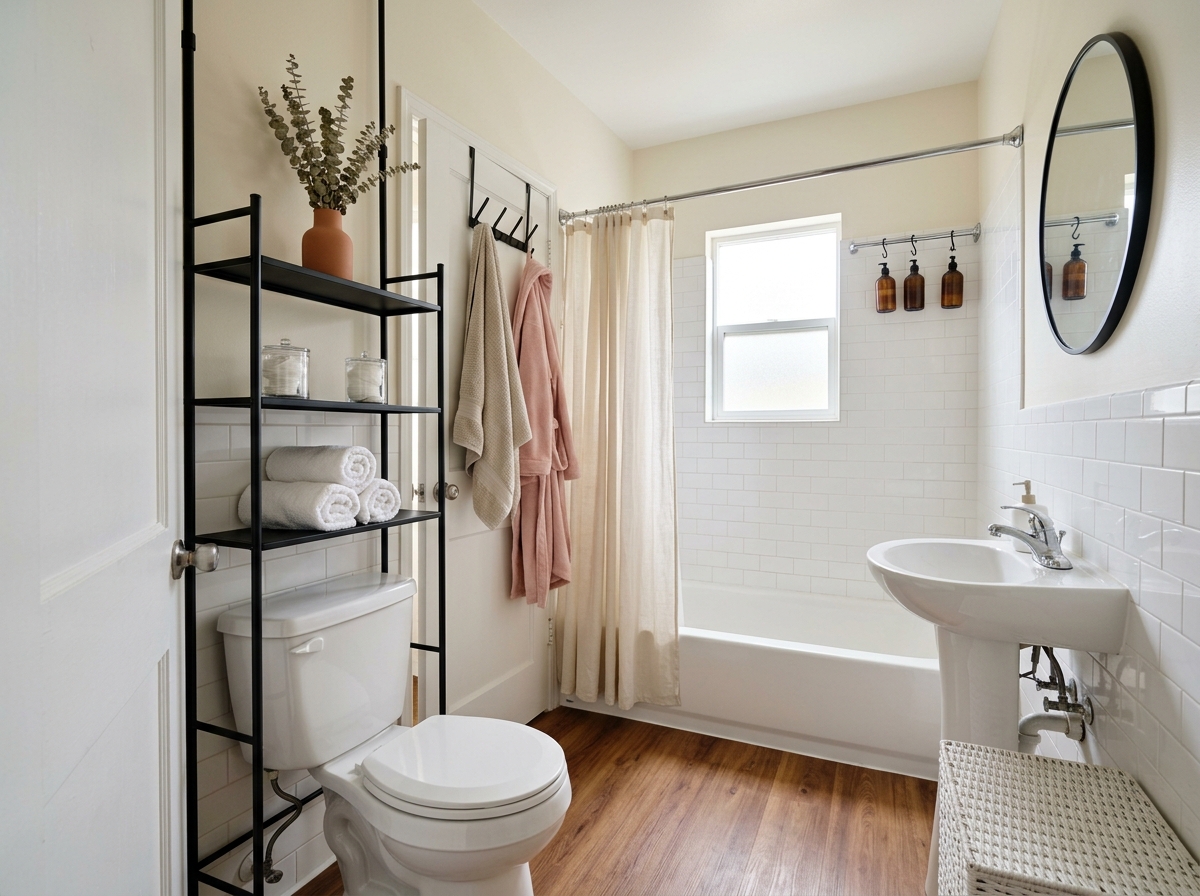
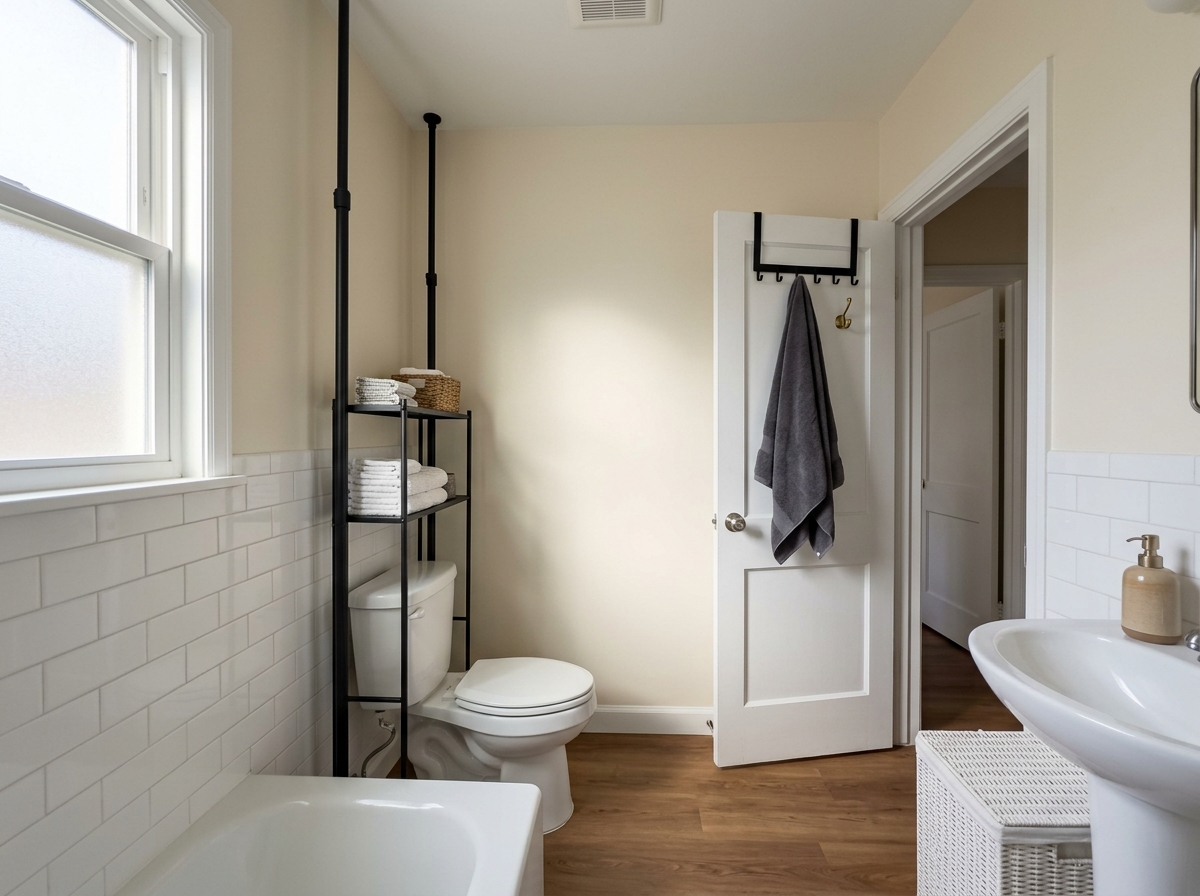
The wall between the tank and the ceiling holds eight to twelve vertical inches of unused real estate in almost every rental.
Renter-safe: a two-tier tension shelf seated on the floor behind the bowl, an over-the-tank rack that hooks on the bowl rim (no fasteners), one small basket mounted with heavy-duty adhesive rated for the wall texture.
The bathroom door panel is an entire vertical surface roughly thirty inches by eighty inches. Most renters use zero of it.
Renter-safe: a slim over-the-door hook bar (zero wall contact), a hanging fabric organizer with five to seven pockets for travel sizes and brushes, a flat mirror that doubles as a styling station.
The existing shower curtain rod is structural. It already holds weight, which means it can hold more, as long as the additional weight doesn’t pull it out of its brackets.
Renter-safe: a slim second tension rod parallel inside the shower for caddies and bottles, S-hooks for loofahs and razors, a hanging shower caddy that slides up the existing rod and rides above the curtain.
Under-sink real estate is sized to plumbing, which is to say poorly. The fix is stackable storage that works around the trap, not big bins that fight it.
Renter-safe: a two-tier sliding bin with a notched back for the drain pipe, command hooks on the inside cabinet wall for hair tools, a small lazy susan in the dead corner behind the trap.
No-drill load thresholds (the part most lists skip)
Most “renter bathroom” content treats adhesive hooks as one product. They aren’t. Bathroom humidity changes the math: standard picture-hanging strips lose roughly thirty percent of their grip in steam-heavy rooms, and that loss compounds over a year. The thresholds below are what actually hold in a small rental bathroom across a full lease.
The items that ignore the thresholds entirely — tension rods, over-the-door anything, hook-over-bowl racks, floor-standing storage — are the load-bearing backbone of a tight renter bathroom. They route the weight to the floor, the door panel, or the rim of the porcelain. None of those count as drilling, and none of them rely on adhesive holding up across a year of steam.
The 90-day version of a bathroom that works
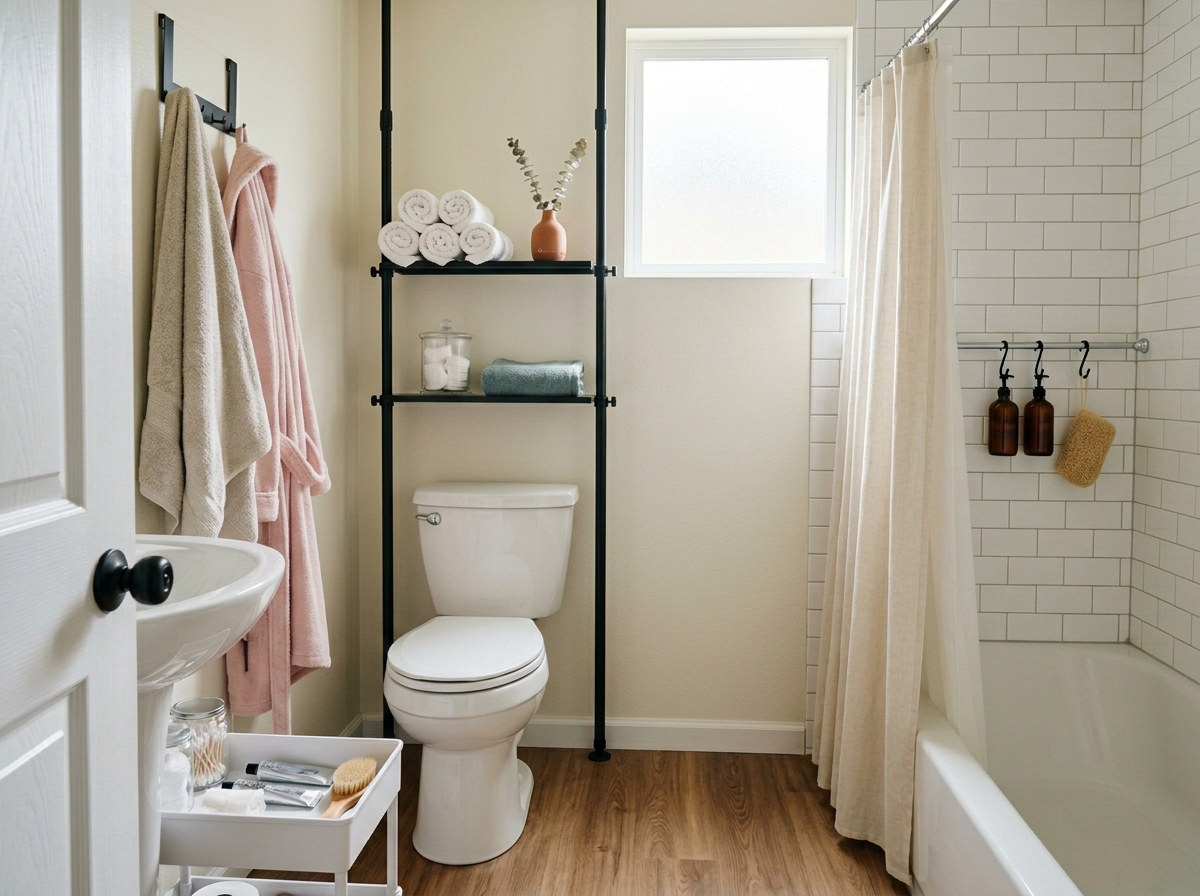
The four-zone audit reframes the bathroom from “no room to add anything” to “three zones I haven’t worked yet.” Most renters discover after the audit that the bathroom never needed bigger; it needed a different organizational shape. The honest sequencing: zone one in week one (toilet zone is the fastest win, ten minutes, fifteen dollars), zone two by week two (the door panel transforms the room), zone three over the first month as the showering routine settles, zone four when the actual contents of the apartment are in the building and the under-sink layout becomes obvious.
Ninety days in, a tight rental bathroom that has been zone-worked stops reading as small and starts reading as efficient. The square footage didn’t change. The constraint of no drilling didn’t change. What changed is that three of the four zones stopped being negative space and started holding their share of the daily routine.