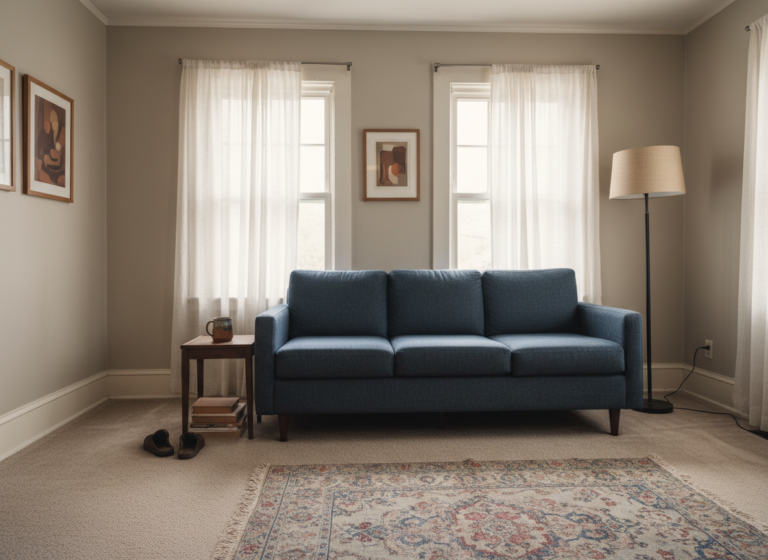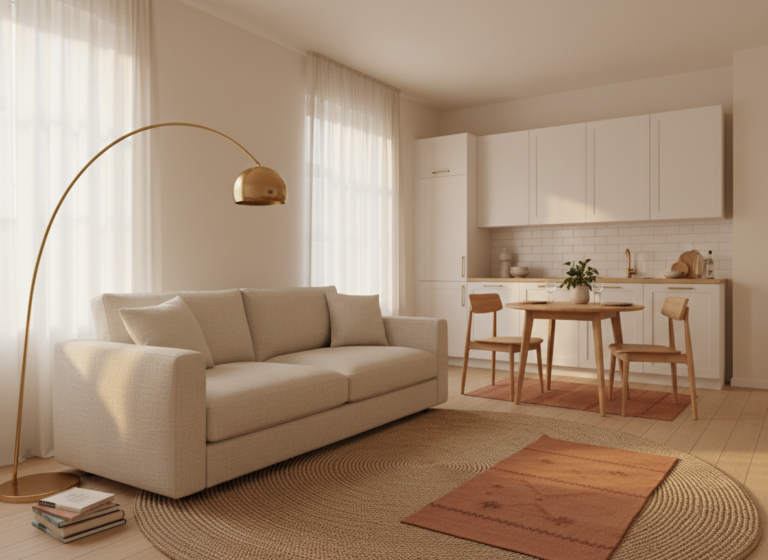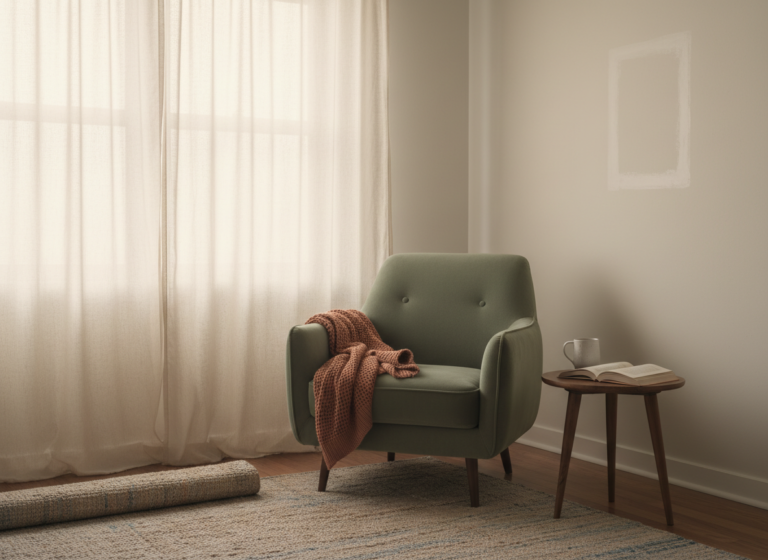
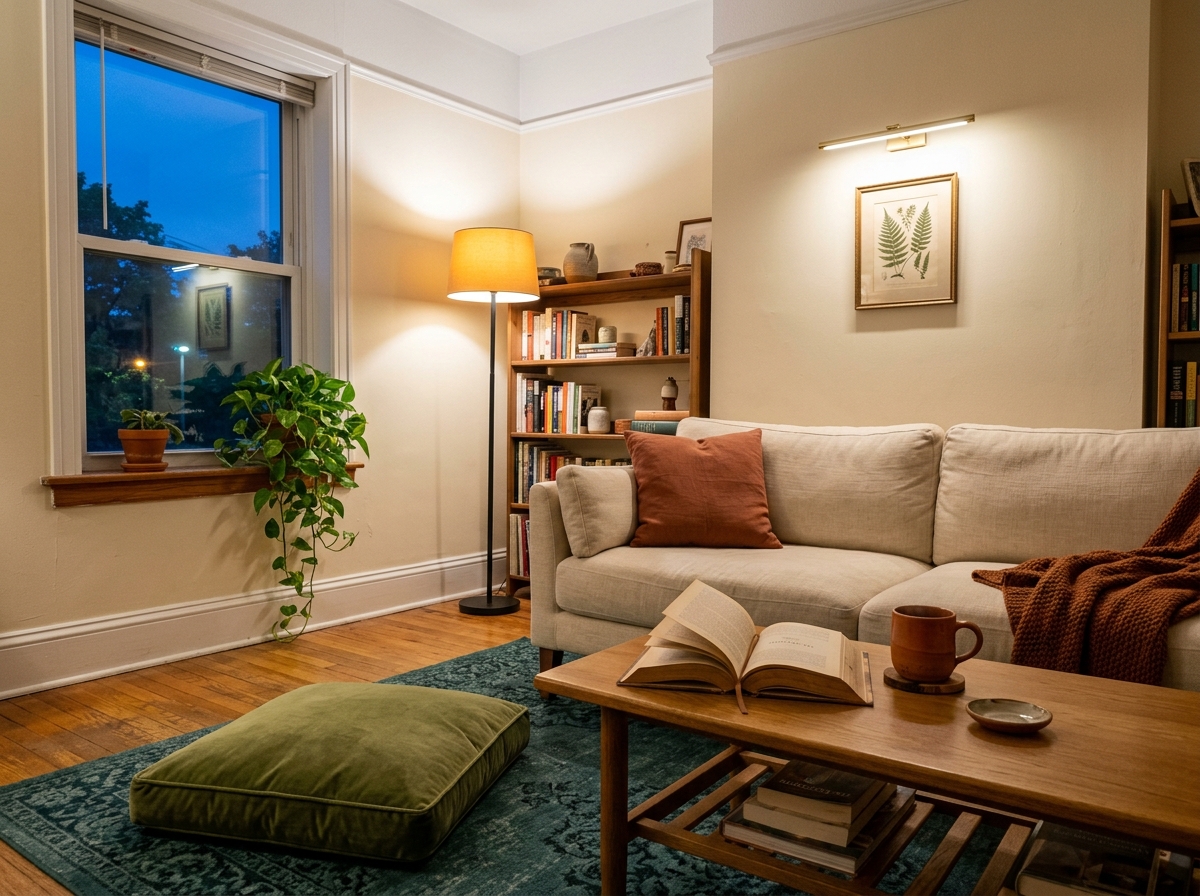
The thought is wrong, and the apartments where it goes unchallenged stay flat for the whole lease. What makes an apartment feel like home isn’t ownership, and it isn’t a longer lease. It’s the willingness to commit to the space as it is, in the time you have it. There’s a name for this willingness once you start practicing it on purpose: Permanence Permission. It’s the move that converts a rental from “the place I live for now” to “the place I live.”
The thought that stops a rental from becoming home
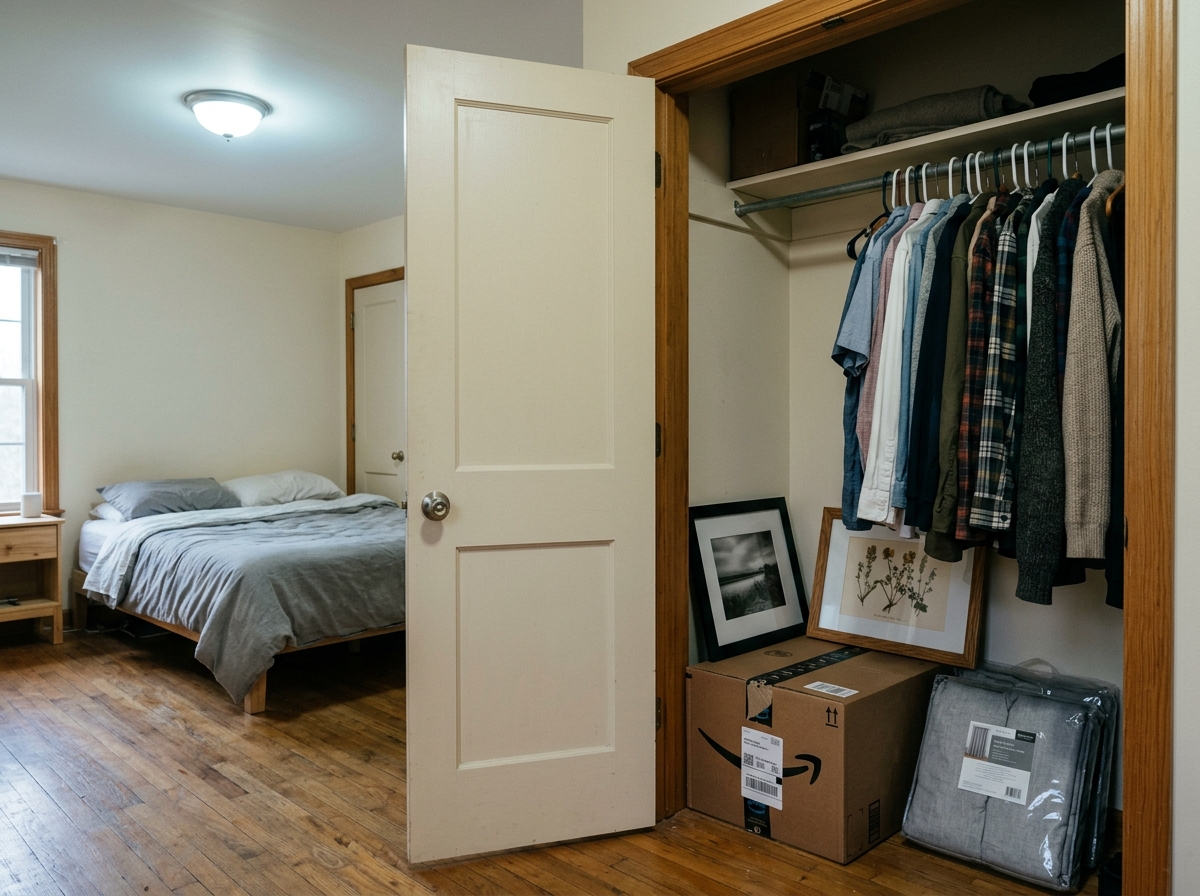
You can identify it by what it stops you from doing. The framed photograph leaning against the back of the closet, two years in. The good lamp still on the wishlist because the next apartment might have different ceilings. The custom-cut blinds priced at $80 that get substituted for the $20 landlord plastic because, well, the landlord plastic comes off and the custom blinds don’t. The wall color picked out on a Saturday, then talked out of by Tuesday.
None of these are decorating problems. They’re all the same psychological move under different objects: a renter pre-grieving an apartment they haven’t left yet. The grief is real. The apartment doesn’t know it’s being pre-grieved; it just sits there, half-decorated, looking exactly like every other half-decorated rental on the floor.
I bought a moss-green velvet floor cushion in 2024, and it sat in its original Amazon box behind the couch for seven months. The reasoning, if you can call it that: I might move within the year and the next apartment might not have a corner that fits a floor cushion. I lived for seven months with a couch I’d already committed to and a cushion I refused to put on the floor next to it. The cushion eventually came out. The next apartment had a perfect corner for it. The seven months in between were the cost of the thought.
The lease math no one runs
The thought survives because it never gets checked against numbers. The average U.S. renter stays in the same unit just over three years. The average first-apartment renter (the demographic most likely to say “I might move”) stays around two and a half. The renter who tells themselves “I might move” almost never moves in the window they’re imagining. They stay through year one. They stay through year two. They stay through a lease renewal they didn’t quite plan for, and another, and then a job shift that makes moving impractical for another year.
Run the math on any individual decision and the case for committing gets embarrassing fast. The $80 custom blinds spread across three years cost seven cents a day. The good lamp at $120, lived with for two and a half years, is thirteen cents a day. The framed art at $40, hung for the duration, is under four cents a day. The framed art still in the closet at the end of the lease cost the same to buy, minus the years of looking at it.
The lease, on paper, says the apartment is yours for twelve months. In practice, statistics say it’s yours for two to three years. The decorating decision is rarely “is this worth it for twelve months.” It’s almost always “is this worth it for the unknown stretch I’m going to actually live here.” Under that frame, almost everything is worth it.
Permanence Permission, defined
Permanence Permission is the permission you give yourself to decorate the apartment as if you’re staying — even though you know you might not. It is not the belief that you’ll stay forever. It is not denial of the move-out clause. It’s a smaller and more useful thing: the permission to act as if this is home, because for the duration you live here it is home, regardless of the term on the lease.
The frame matters because the alternative isn’t “wait until I own a place.” The alternative is “live in a half-finished apartment for the next three years.” Renters don’t actually trade off committing-now versus committing-later; they trade off committing versus not. The cost of not committing isn’t visible because it’s spread thin across hundreds of small evenings of looking at a wall and thinking this still doesn’t feel like mine.
What changes when permission is granted isn’t the budget; it’s the decision-making. The thirty-second pause before adding the lamp to the cart disappears. The framed photograph comes out of the closet. The blinds get measured. None of these are big moves individually. They compound. After about a month of granted permission, the apartment crosses a threshold that’s hard to articulate until you’re standing in it: it stops being a rental that you live in and starts being a home that happens to be on a lease.
If you’ve ever stood in an apartment and felt that specific flatness, the existing piece on why your rental doesn’t feel like home yet names three concrete fixes (the blank wall, the office-grade lighting, the unclaimed surfaces). This post sits one layer underneath that one. The fixes work; what makes them happen is the permission to do them in the first place.
Three permissions worth granting yourself today
Permission as a concept is too abstract to act on. So here’s the practical version: three specific permissions, each one a single decision you can grant yourself in the next ten minutes. Try one. The smallest of the three is enough to start.
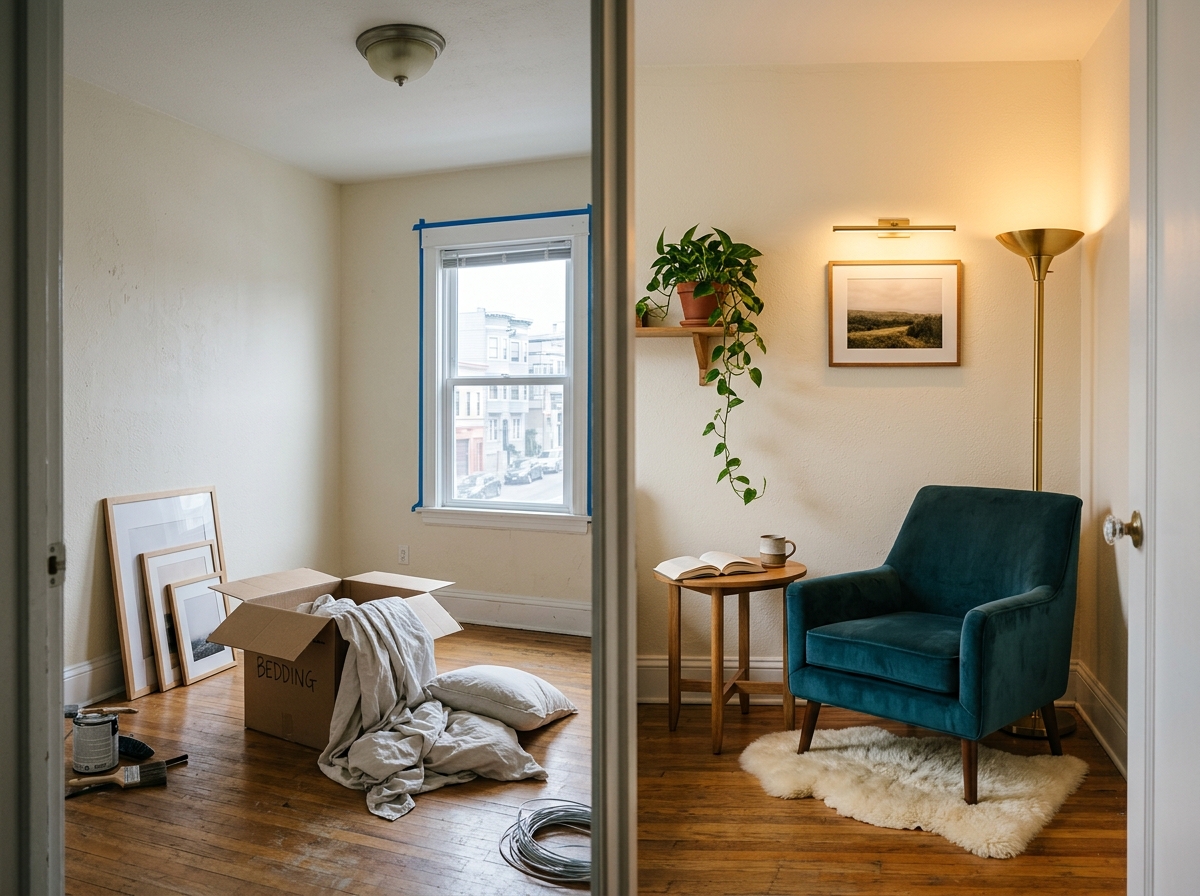 The three permissions are not a checklist. They’re a vocabulary. Once you have words for the kinds of decisions you’re refusing, the refusals get harder to hold onto. This isn’t a permanent purchase, so I shouldn’t make it is a sentence that loses its grip the moment you can answer it with this is permission #2; the cost is the apartment’s, not the move’s.
The renter who lets the framed photograph stay in the closet for three years lived three years without the photograph on the wall. The renter who hangs it up lives three years with it. The lease is one day at the start and one day at the end. Everything between is yours. The permanence isn’t in the wall — it’s in the choice to commit anyway.
join.cozyclub →