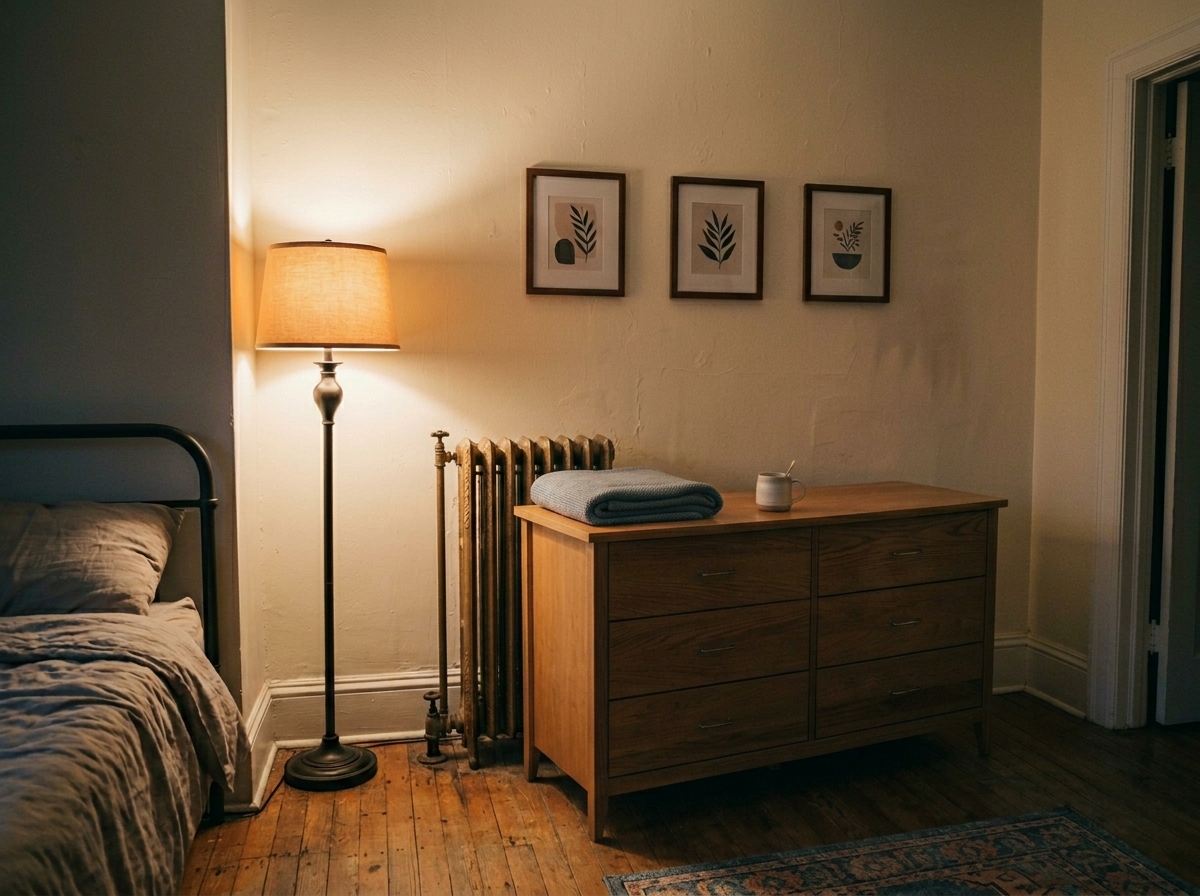
Saturday night, late. I pointed my phone at the corner of the bedroom that had bothered me for three years (the one with the dresser shoved at a slight angle against the radiator, and a wall above it that looked like a thrift-store mood board nobody had finished) and uploaded the photo to AI Room Snapshot. Four minutes later it gave me three notes I had half-known, and one I had genuinely never seen.
Thirty days later I have made four of the seven moves it ranked, skipped two on purpose, and added one of my own the Snapshot never suggested. This is what the diagnostic actually does, what it got right, and where it missed. Written for renters trying to decide whether a free AI room diagnostic is worth the email opt-in.
What AI Room Snapshot actually does
Room Snapshot takes one photo of one room and runs it through a four-category audit: layout, light, color, and visual weight. The output is a single-page interactive dashboard. Your room scored across the four categories, three to five ranked moves under each one, and a short note on why each move was prioritized over the alternatives. It is a diagnostic, not a redesign. Not a shopping list. Not a virtual stager.
What you do not get: AI-generated rooms that look like someone else’s apartment, retail product picks from a brand kickback list, or a paywall at the end. What you do get is an opinionated read of your specific room, generated in one session, free, email-gated. Plain enough that it took me longer to upload the photo than to read the output.

What it got right after 30 days
Three of the Snapshot’s calls turned out to matter more than I expected, in roughly the order it ranked them.
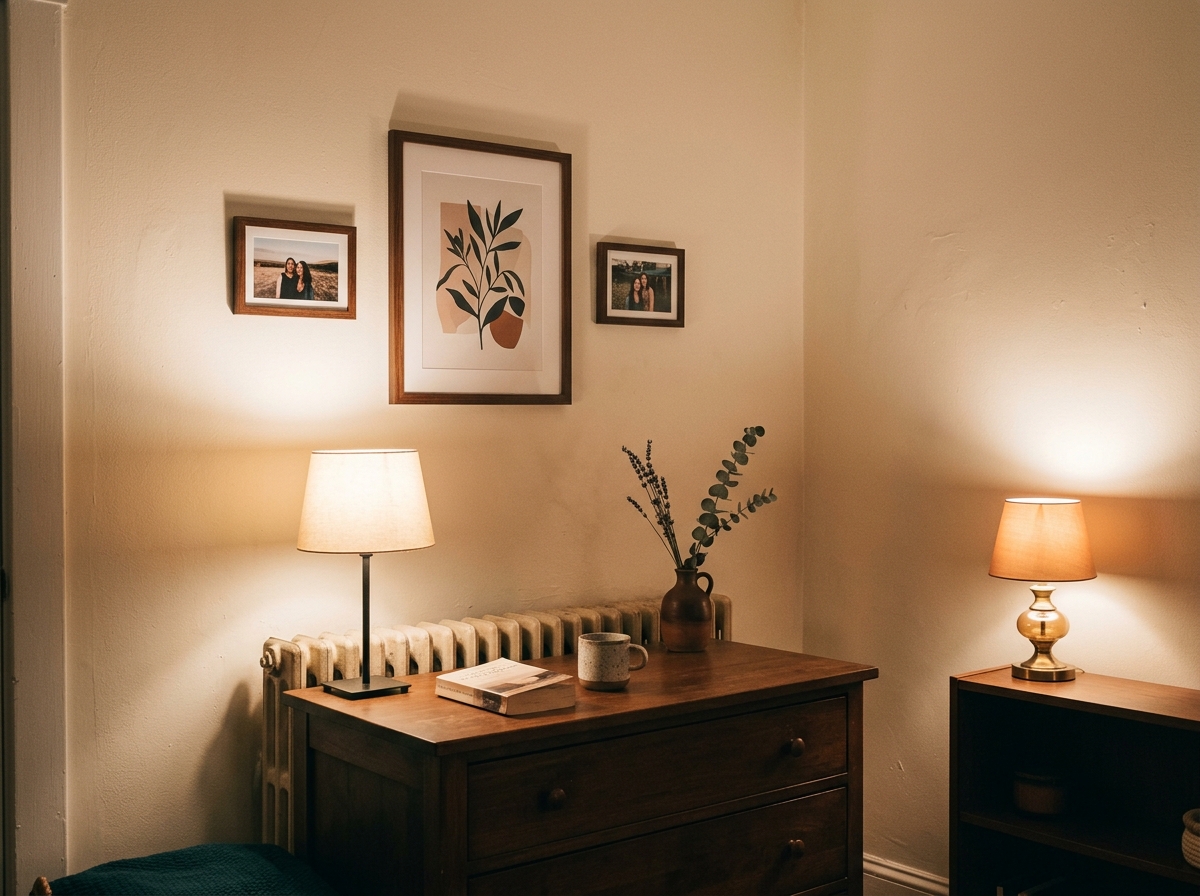
The dresser angle. It flagged that the dresser was sitting noticeably off-square because the radiator behind it stopped it sitting flush, and that the tilt was making the entire wall above it feel unanchored. The recommended move was either to relocate the dresser entirely or to hang the art above it tilted to match the dresser line. I did the second. The wall stopped reading like a thrift-store mood board within an hour, and the change cost zero dollars.
The light temperature. It flagged that my single floor lamp was the only warm light in a room otherwise lit by a cool ceiling fixture, and that the contrast was making the room read as institutional after dark. The recommended move was a second warm bulb on the opposite wall to balance the temperature. Thirty-four dollars at a thrift store the next weekend, plus a 2700K bulb I already had. The bedroom reads twice as warm in the evening now and I stopped flipping the overhead on out of reflex.
The frame stripe. The thing I had genuinely never noticed: the three frames above the dresser were all the same width, which was creating a horizontal stripe that flattened the entire wall. The recommended move was to swap one frame for a taller piece to break the stripe. Nine dollars for a secondhand print at a Sunday market. The wall finally looks like a wall.
Where the Snapshot missed
Two things it did not catch. Worth naming because they expose where any single-photo AI diagnostic has a ceiling.
It did not see the bed. Not literally; the bed was in the photo. But the audit focused almost entirely on the dresser-wall, and weighted the bed the same as any other rectangle in the frame. A 30-day-in renter cares about where they sleep more than where they store t-shirts; the audit did not. If your room’s actual problem is bed orientation, headboard scale, or a mattress positioned under a bad window, the Snapshot will probably under-rank it because a still photo flattens the most-used object into just-another-object.
It cannot see time of day. The photo I uploaded was taken at 2 p.m. on a sunny weekend. The audit’s color recommendations all assumed that lighting condition, which meant the warm-light fix it ranked for the evening was the right move. The daytime palette notes, though, turned out to be wrong for the room as it is actually lived in (mornings before work and evenings after dark, almost never midday). A second photo taken at 8 p.m. would have changed half the recommendations.
| Snapshot move | Verdict (30 days in) | Cost |
|---|---|---|
| Match the dresser-line in the art | Held. Still right call. | $0 |
| Add a second warm light | Held. Biggest single change. | $34 |
| Break the frame stripe | Held. Wall finally reads. | $9 |
| Daytime palette swap | Skipped. Wrong for the lived hours. | n/a |
| Move the bed (own add) | Done myself. Snapshot did not flag. | $0 |
The honest answer on whether AI Room Snapshot is worth the email opt-in: yes, if you want a sharp second opinion on a room you have been staring at long enough to stop seeing. No, if you want a full-room redesign or a shopping list. The four-category audit is precise about what it can see in one photo and silent about what it cannot. Skim, do the two or three moves that match what you already half-knew, ignore the rest. Three of seven still hold thirty days in — and the ones that held cost forty-three dollars combined. That ratio is what a free diagnostic is for: signal, not prescription.
- swap to an 8×10 rug minimum
- weight the wall opposite the window
- warm the lamps to 2700k