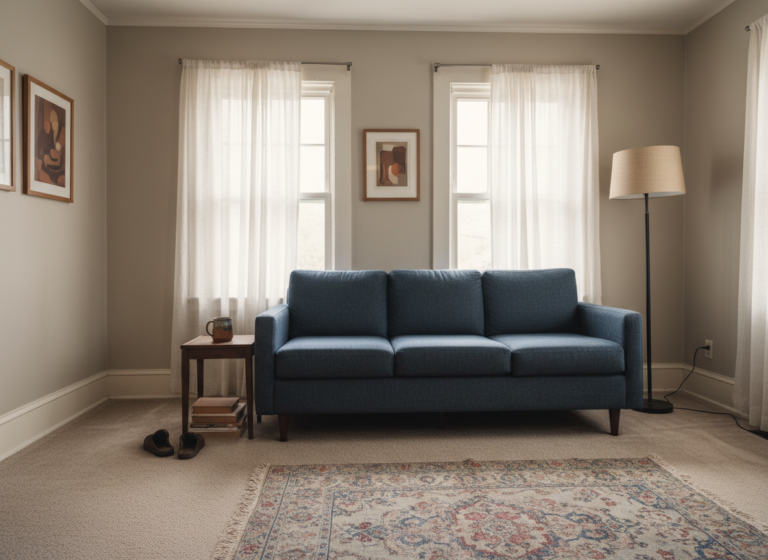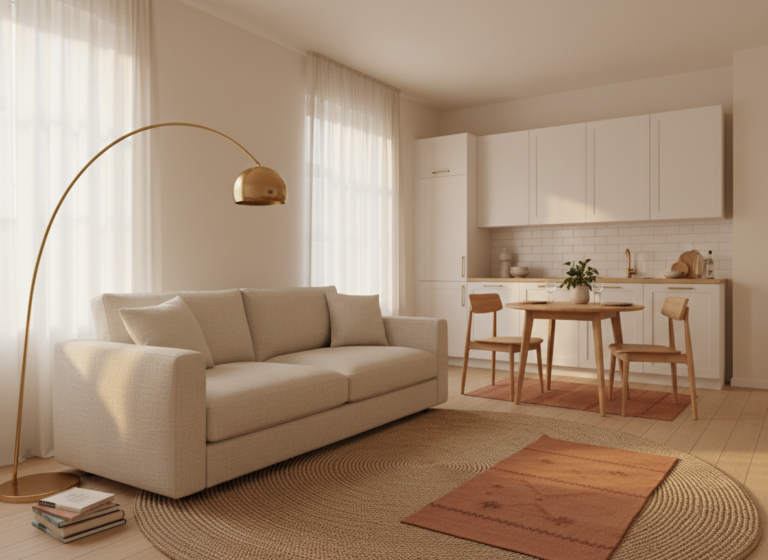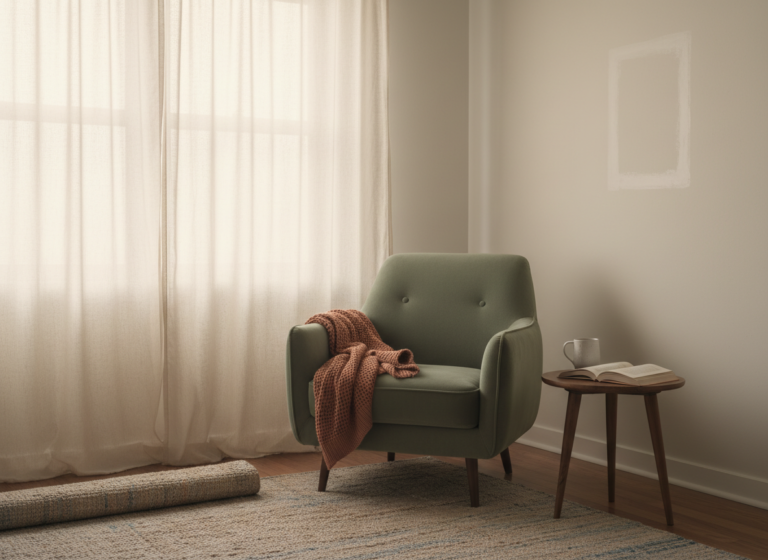
Last March I ran my one-bedroom apartment through RoomGPT, one of the most-recommended “AI interior design” tools online. The render came back gorgeous: navy paint on the accent wall, white wainscoting under a fresh chair rail, a built-in bookcase running the length of the short side. None of it was legal. My lease forbids paint, anchored shelving, and anything past a small nail hole. The AI had cheerfully redesigned the parts of the room I will never own.
That render is what most “AI interior design” tools are selling right now, and it’s why so many renters bounce off them feeling vaguely scammed. The tools were built for homeowners. They redesign the shell of a room: paint, mouldings, built-ins, structural changes. If you live in a rental and you’ve felt that strange let-down clicking through generated images, this is why.
What “AI interior design” actually means in 2026
Two categories of tool are getting marketed under the same phrase, and the difference matters more than any review will tell you.
Image-generation tools. RoomGPT, Decor8 by Spacely, Reimagine Home, Collov. You upload a photo, pick a style, get back a rendered version of your room redesigned. Genuinely useful if you can paint, mount, demo, or build-in. Mostly noise if you can’t. The model has no concept of what “renter-safe” means, so it will move walls and call it a refresh.
Conversational AI tools. ChatGPT, Claude, and the planning kits built on top of them. You describe your room, your constraints, your budget, and the AI returns moves, sequences, and shopping vocabulary. The output is a plan, not a picture. This is the part of AI that actually adapts to a rental, because the constraint can be written into the prompt and the answer respects it.
The honest framing for a renter searching “ai interior design” in 2026: image generation is fun, occasionally useful for mood-finding, almost never actionable. Conversation is where the real work is. The picture is the dopamine hit. The plan is the thing that changes the room you wake up in.
Three jobs AI is actually useful for in a rental
Kept in its useful zone, AI quietly does three things that I’d otherwise have paid a designer or just guessed at.
Diagnose what’s off. A photo and a written description are enough for a conversational AI to score the basics: palette balance, scale of furniture against the room, lighting layers, where visual weight is too heavy or too light. When I ran my own living room (about 11 by 14 feet, north-facing, one window), the diagnosis flagged a rug visually half the size of the seating area, and a wall opposite the window with no contrast against an already-cool palette. Obvious in retrospect. Not obvious when you’re the one living in the room.
Size furniture against constraints that are real. Tell the AI your dimensions, the door width, the radiator that cannot move, the closet door swing, and ask what fits. You get specific shapes back: “a sofa under 76 inches deep with raised legs to keep the floor visible.” That’s the answer that prevents a sofa-shaped return shipment.
Translate vocabulary into product search. I described my apartment as “warm, lived-in, a little eclectic, sage and rust.” The AI returned strings I could paste straight into Etsy: jute area rug, clay terra cotta vase, vintage sage curtains, woven floor lamp. Half of finding the right piece is finding the right words for it. (Long version of this point: how to find your interior design style.)
The pattern across all three jobs: AI is good at narrowing. It is bad at deciding what your apartment should look like. Use it as a filter, not a source.
If you’ve never sorted these tools yourself, here’s the cheat sheet I wish I’d had on day one.
| Tool type | Best for | Renter-useful? |
|---|---|---|
| Image-generation (RoomGPT, Decor8, Reimagine Home) | Mood-finding, homeowner renovation previews | Rarely. Most output requires paint, mounting, or structural work. |
| Conversational (ChatGPT, Claude) | Diagnosis, planning, shopping vocabulary | Yes. Renter constraints belong in the prompt and the answer respects them. |
| Renter-built prompt kits on top of conversational AI | Guided room consultations with constraints baked in | Yes. Fastest path if you don’t want to engineer your own prompts. |
If you take one thing from this post: try the conversation route before you try anything else. The image generators are entertaining. The plan is what changes the room you wake up in tomorrow.