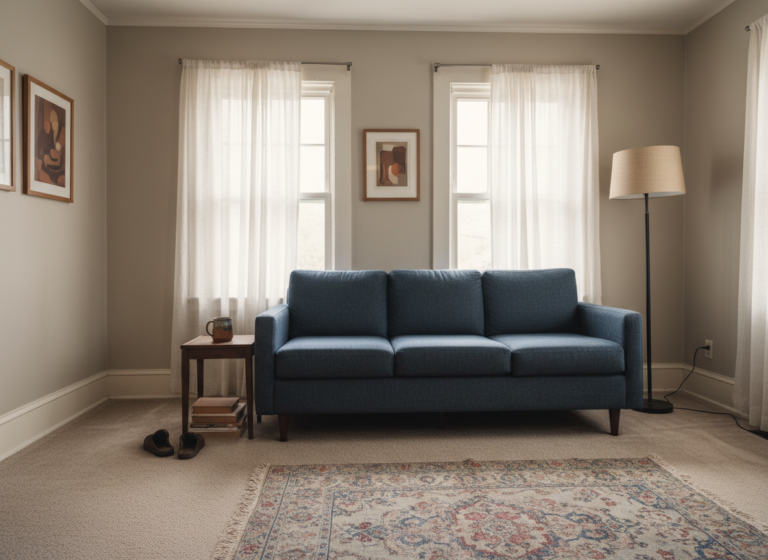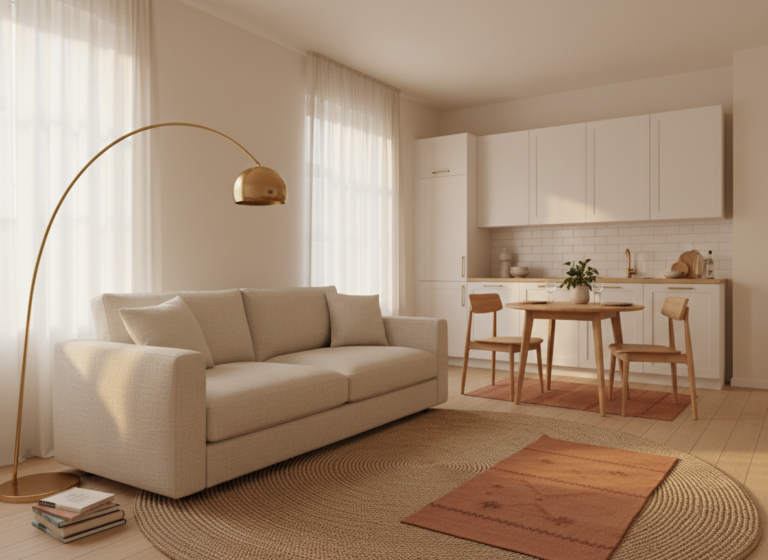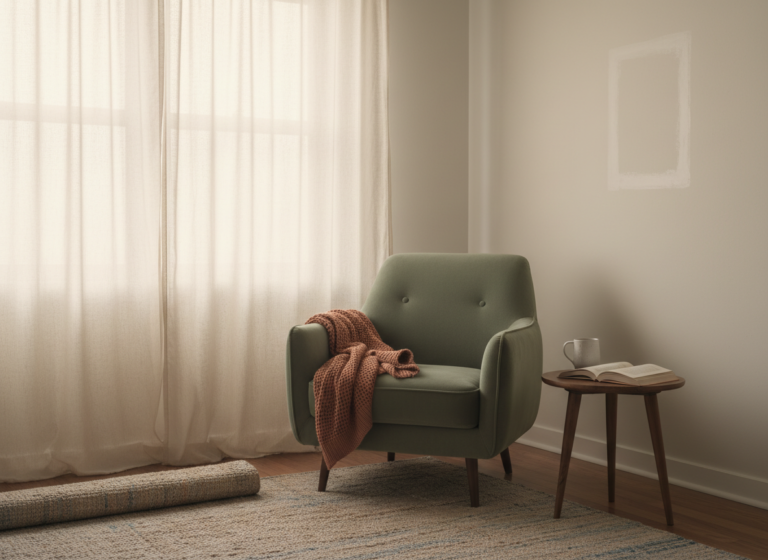
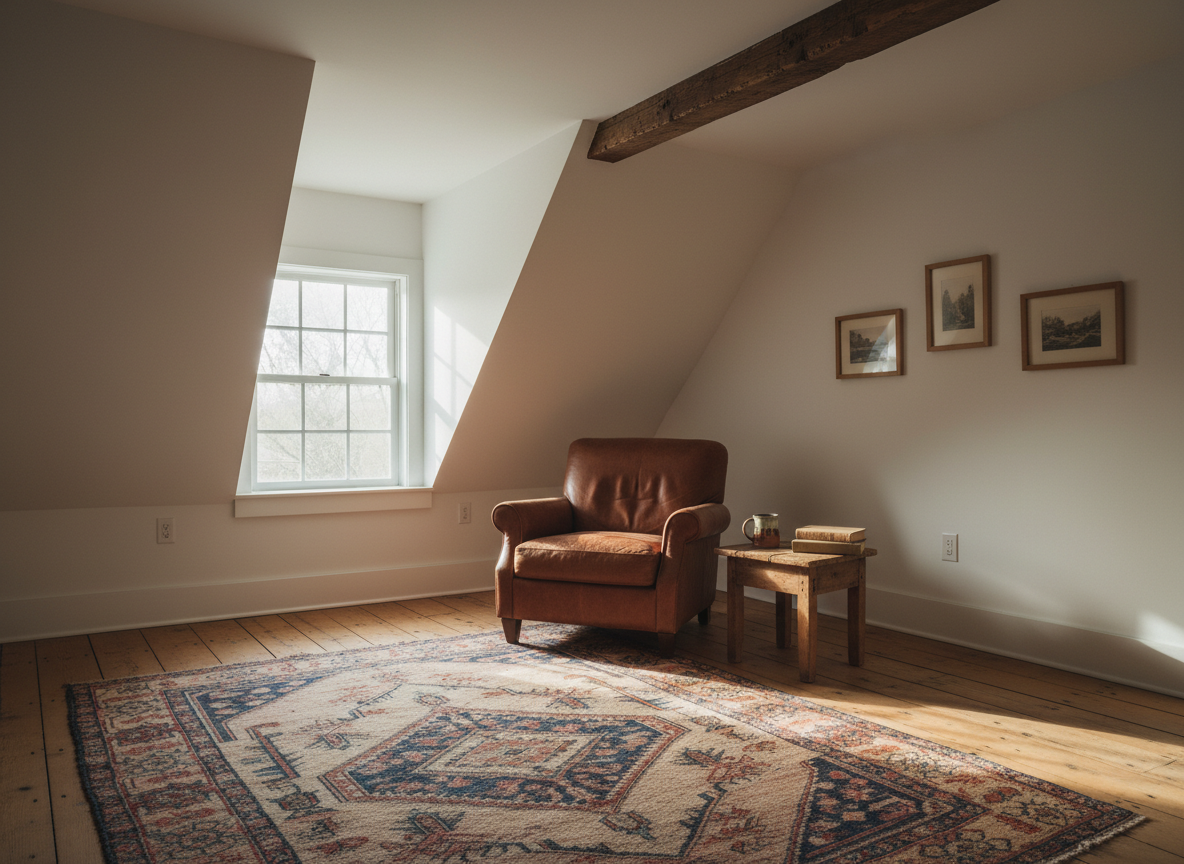
There was a room I lived in for a year that I kept trying to buy my way out of. It felt off — not ugly, not empty, just slightly wrong in a way I couldn’t name. So I added: a plant, then a second plant, then a throw, then a print I didn’t love but the wall was bare. None of it worked. The afternoon I finally fixed it, I didn’t buy anything. I dragged the one chair eighteen inches so it faced into the room instead of out the window, and the whole space exhaled.
When a room feels off, the instinct is to assume it’s missing something. Usually it isn’t. Usually it’s missing a decision — and you’ve been papering over the gap with purchases. Before you buy one more thing to fix the feeling, it’s worth diagnosing what’s actually causing it, because most of the real culprits cost nothing to fix.
“Off” is a furnished room that was never composed
Here’s the reframe. A room that feels off is almost always a room that got furnished but never composed. Every object in it arrived as the answer to a small question — I need somewhere to sit, I need a lamp, the wall looked bare — and not one of them answered the big question the room was quietly asking: where is the eye supposed to land?
That’s why adding more rarely helps. Another object is another small answer in a room that’s drowning in small answers. What the space needs is an edit and a focal point — one thing the room is built around, and a clearing-away of everything competing with it. The good news for a renter is that this is the cheapest kind of fix there is. It’s mostly moving and removing.
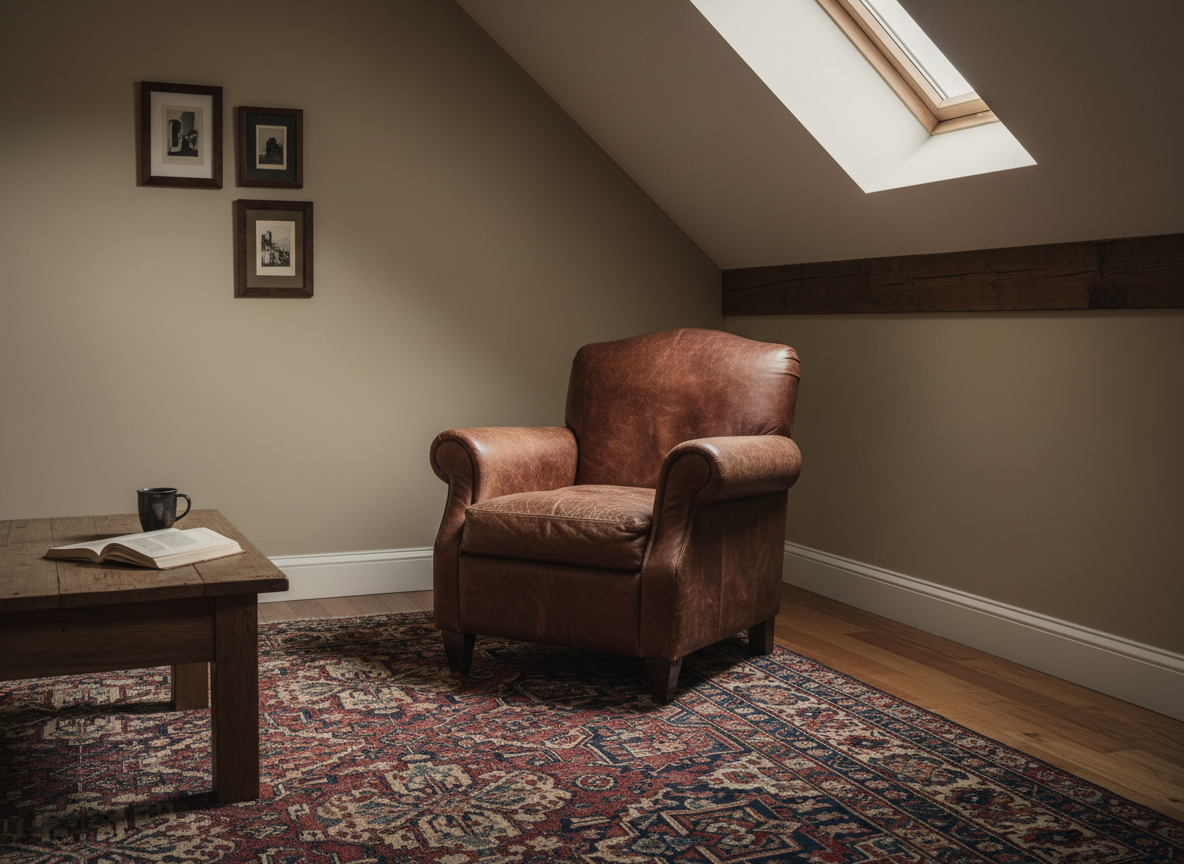
Same furniture, one decision: the chair now faces in, and the room has a centre.
The five culprits, in the order to check them
Run these top to bottom and stop at the first one that’s true — it’s usually the whole problem, and fixing it makes the rest matter less.
- No focal point. Nothing tells the eye where to go. Pick one thing — the window, the bed, the one good piece — and arrange everything to point at it. This is the fix that worked on my year-long off-feeling room.
- Everything pushed to the walls. Furniture lined up against the perimeter makes the middle a dead zone. Pull at least one piece in. A floating chair feels intentional; a ring of furniture feels like a waiting room.
- One flat light source. A single ceiling fixture flattens everything it touches. One lamp at table height changes a room more than any object you could buy. Renters underrate this constantly.
- Everything at the same height. Lamps, frames, plants all hovering at eye level reads like a store shelf. Drop something low, lift something high.
- It’s clutter, not decor. If five things are out, the room can’t show you the two that matter. Clear the surface to one or two objects and the off-feeling often just leaves.
Notice that not one of those starts with “buy.” The frames hung too high get moved, not replaced. The chair gets turned. The lamp you already own gets relocated to where the room is darkest. A diagnosis tells you what to fix first — and “first” is rarely a purchase.
A room that feels off isn’t asking for more. It’s asking you to choose what it’s about, and then defend that choice against everything that’s crowding it.
When it really is a missing thing
Sometimes, after the edit, a genuine gap remains — a window with no softness, a corner with no light, a wall the room truly wants something on. Buy then, into a space you’ve already composed, and the purchase lands because it’s filling a decision instead of dodging one. That’s the whole difference between a room that’s finished and a room that’s just full.
The test I use now, before any “fix it” purchase, is one question: am I adding this because the room needs it, or because buying something feels like progress and moving something doesn’t? Most off-feeling rooms have been over-shopped and under-arranged. The fix that feels too small to count — turning a chair, clearing a surface, lowering a lamp — is almost always the one that was missing.
join.cozyclub →