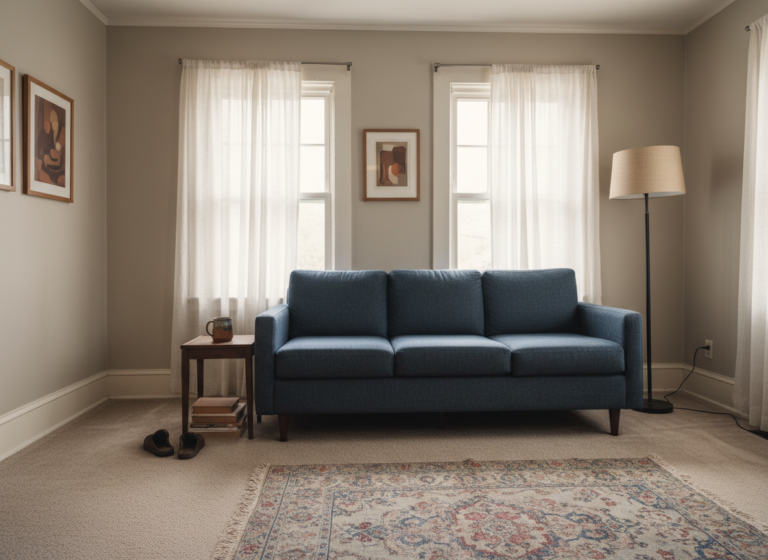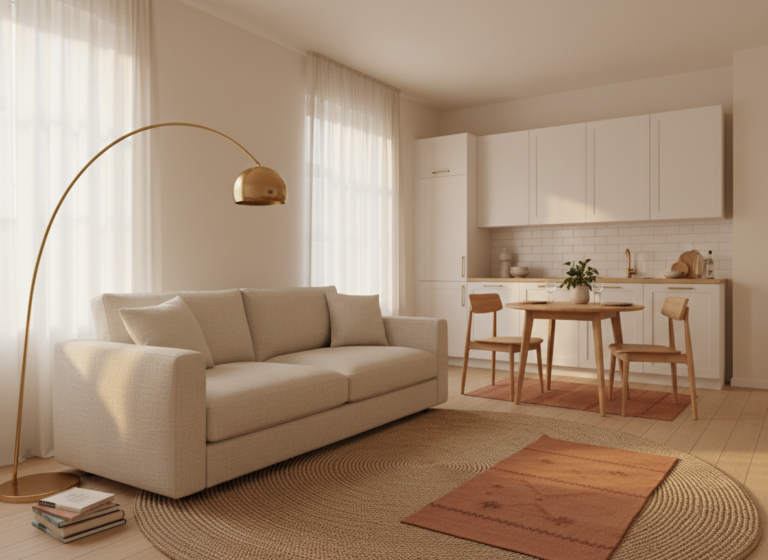
A studio I rented after college was about 350 square feet, and I spent three months convinced I needed a bigger place. The thinking was simple: I have too much stuff for this footprint. The actual problem was different. I had been measuring my apartment in square feet when the relevant unit was cubic feet. The floor was full. The walls, eight to ten feet of clearance up to the ceiling, were almost entirely empty.
That apartment had nine vertical feet of dead space running around the entire perimeter. Once I started using it, the place got bigger without changing size. This post is the playbook I wish someone had handed me at month one: concrete, renter-safe, vertical-first.

1. Stop optimizing the floor. Look up.
The default mistake in studio apartments is treating storage as a floor-plan problem. You play Tetris with your existing furniture, buy a smaller couch, donate clothes. None of it solves the real issue, which is that you have a lot of cubic feet you’re not using.
The vertical span between the top of your tallest piece of furniture (usually a dresser or bookshelf, around four feet) and the ceiling (eight, sometimes nine or ten) is the largest unused zone in almost every studio I’ve lived in. It stays untouched because it needs either drilling, which you can’t do, or stacking, which feels precarious. Both are solvable. The first move is just noticing the zone exists.
Walk through your apartment and look at every wall above shoulder height. How many linear feet sit empty between six feet up and the ceiling? In most studios, twelve to twenty. That’s the storage you have. You just haven’t claimed it yet.
2. The dead-zone audit: where storage hides in studios
Before buying anything, do an inventory. Five reliable vertical dead zones show up in almost every studio apartment, and they’re the same regardless of layout.
Above the door frame. Most interior doors top out around 80 inches, leaving a band of about 16 inches up to the ceiling. A single floating shelf or a slim tension-rod-mounted ledge holds a surprising amount: out-of-season shoes, file boxes, archival paperwork. Anything you check on once a quarter.
Above the kitchen cabinets. If your cabinets stop a foot or more below the ceiling (most do), the gap is prime for stackable bins. Label the bins so you actually find what you put up there. The number of people storing waffle irons they’ll never see again above their cabinets is enormous; labeling is what separates “storage” from “hoarding.”
Above the bathroom door. Same as the above-door rule with a higher humidity tolerance. Backup toilet paper, extra towels, spare toiletries.
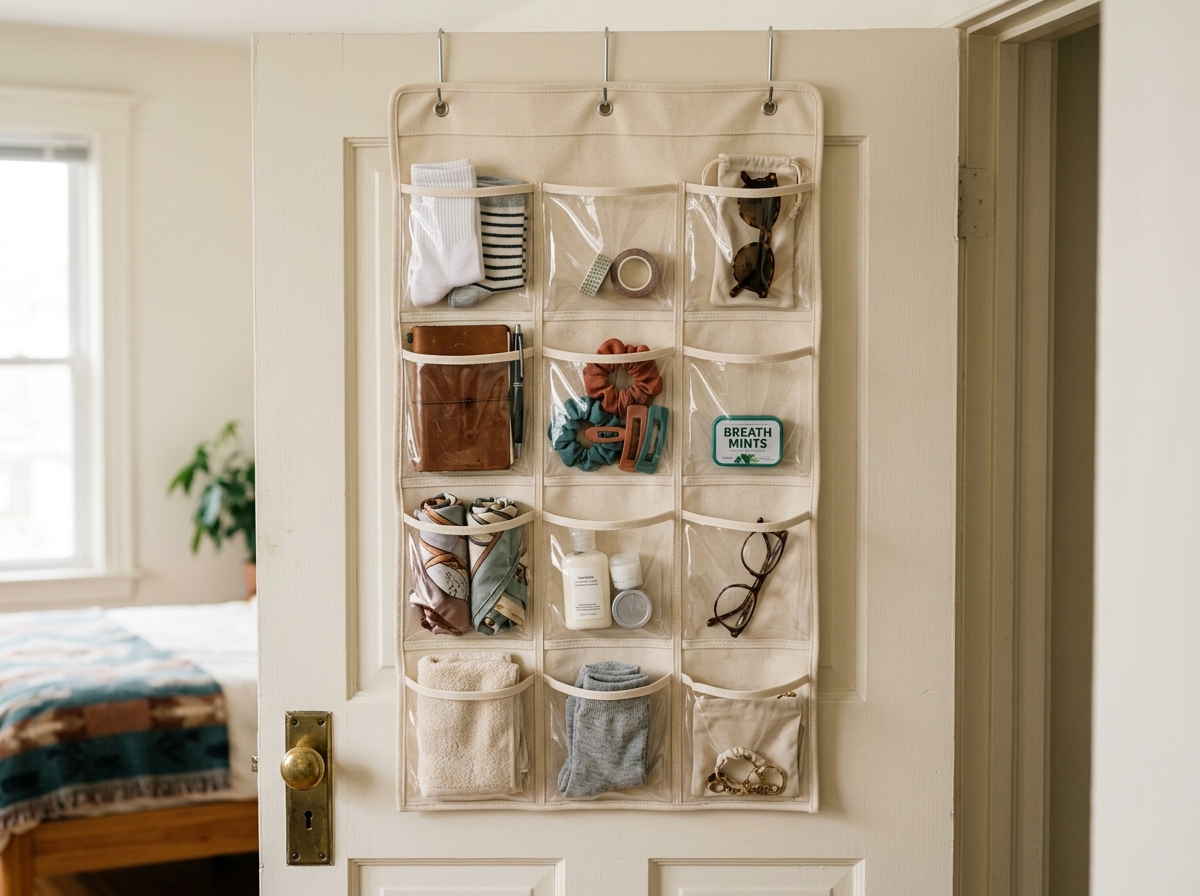
Behind the bedroom door. Not technically vertical, but it’s wall space that’s structurally there and almost universally ignored. Over-the-door pockets hold shoes, scarves, accessories, cleaning supplies. Twelve to fifteen pockets. One piece of hardware.
Above the bed. This is the divisive one. People are afraid of stuff falling on them. The fear is reasonable for wall-mounted shelves; less so for freestanding stacked storage cubes pushed against the wall and stopped a foot below the ceiling.
Five zones. Fifteen-plus cubic feet of storage if you’re being conservative. That’s a closet’s worth, hidden in plain sight.
3. Renter-safe systems that actually work above six feet
Three categories of vertical storage are reliable in rentals. I’ve used all three across multiple apartments and not lost a deposit on any of them.
Freestanding tall storage. A bookshelf that reaches the ceiling, a wardrobe with a stacked top section, a tower of stackable cubes. Same footprint as the shorter version; you trade horizontal sprawl for vertical density. Anchor-strap to a wall stud for stability (Command-style adhesive anchor straps exist and are landlord-safe). IKEA’s BILLY at 79 inches is the workhorse: five shelves, almost no width, holds an embarrassing amount.
Tension rod systems. A horizontal tension rod jammed between two walls, ceiling-to-floor, holds nothing on its own. Clip S-hooks or bins onto it and it becomes a vertical shelf rail. Pantry storage in narrow gaps, closet doubling, even art hangers all work this way. I’ve used them in three apartments. None ever fell.
Over-the-door organizers. The single highest storage-per-square-foot category in any rental. Twelve to fifteen pockets on the back of every door: bedroom, closet, bathroom, pantry. Buy the metal-hook kind, not the cheap plastic ones. The cheap ones don’t last past one move.
What doesn’t work in a rental: anything that requires drywall anchors above 25 pounds. Wall-mounted shelves with screws. Floating shelves rated for “decorative weight only.” Most won’t survive the actual load you want them to carry, and none survive a real move-out inspection.
4. What to hide, what to leave visible
The last piece is curatorial. Vertical storage works in a studio only if you split the inventory into “visible” and “behind-doors.” Visible storage looks like decor. Behind-doors storage looks like nothing at all.
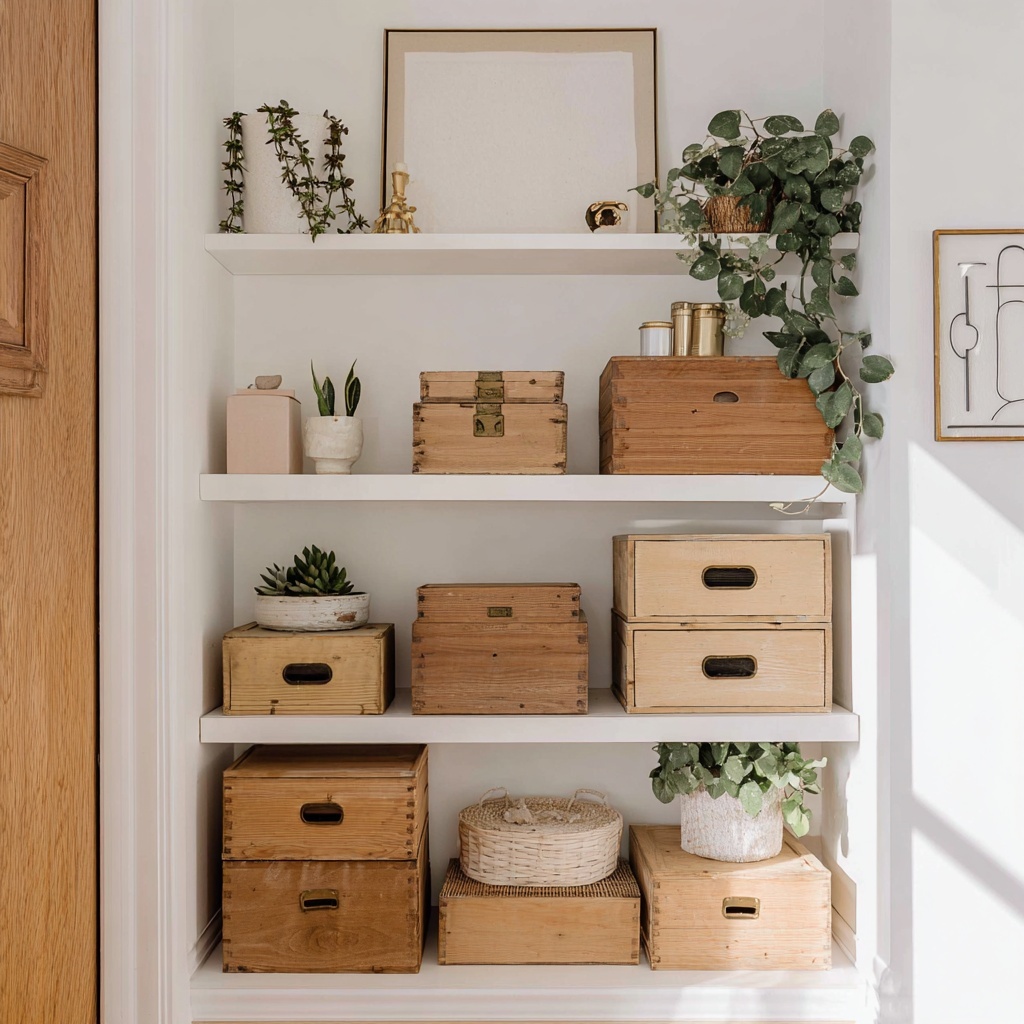
The split I use: anything I touch weekly goes on open vertical shelving, styled like it’s there on purpose (books, ceramics, a few baskets, a trailing plant). Anything I touch less than monthly goes in labeled boxes on the highest shelves, in bins above cabinets, or behind closed cabinet doors. The eye reads the visible layer as “lived-in apartment.” The hidden layer holds the volume.
This is the part most studio storage advice skips. Adding cubic feet isn’t enough; the cubic feet have to read as design choices, not warehouse overflow. A wall of identical labeled boxes at ceiling height looks intentional. A wall of mismatched plastic tubs looks like you ran out of room. Same capacity, opposite signal.

A studio apartment isn’t small. It’s flat. The fix isn’t more square footage — it’s adding the dimension you haven’t been using.
The 350-square-foot apartment didn’t get bigger. I just stopped pretending the ceiling didn’t exist. The vertical-first move isn’t a hack. It’s a measurement correction. Count cubic feet instead of square feet, and the apartment you’re renting today is already 30 to 40 percent bigger than it feels. The storage is on the walls above shoulder height, waiting to be claimed.