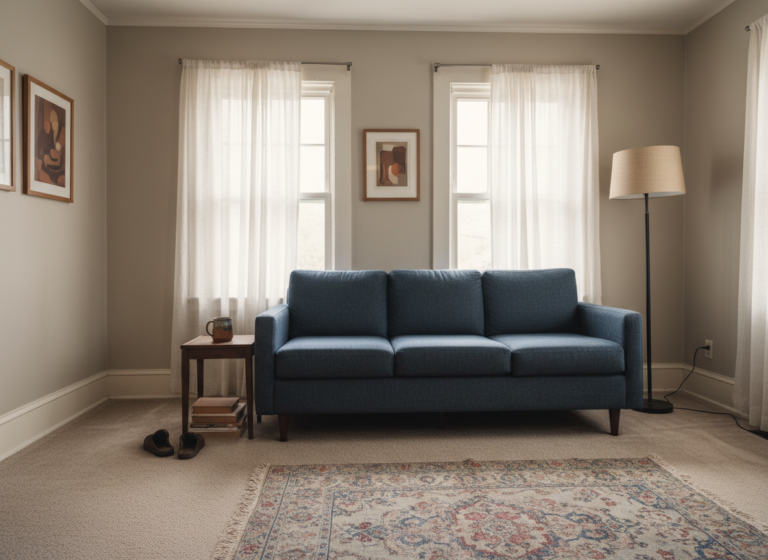
Every rental I’ve started in, I made the same move in the same order: I bought the thing I wanted before I’d decided the thing the room needed. A rug, usually. It would arrive, I’d unroll it, and only then notice the radiator ate eight inches of the one wall it was supposed to anchor. The rug was fine. The order was wrong.
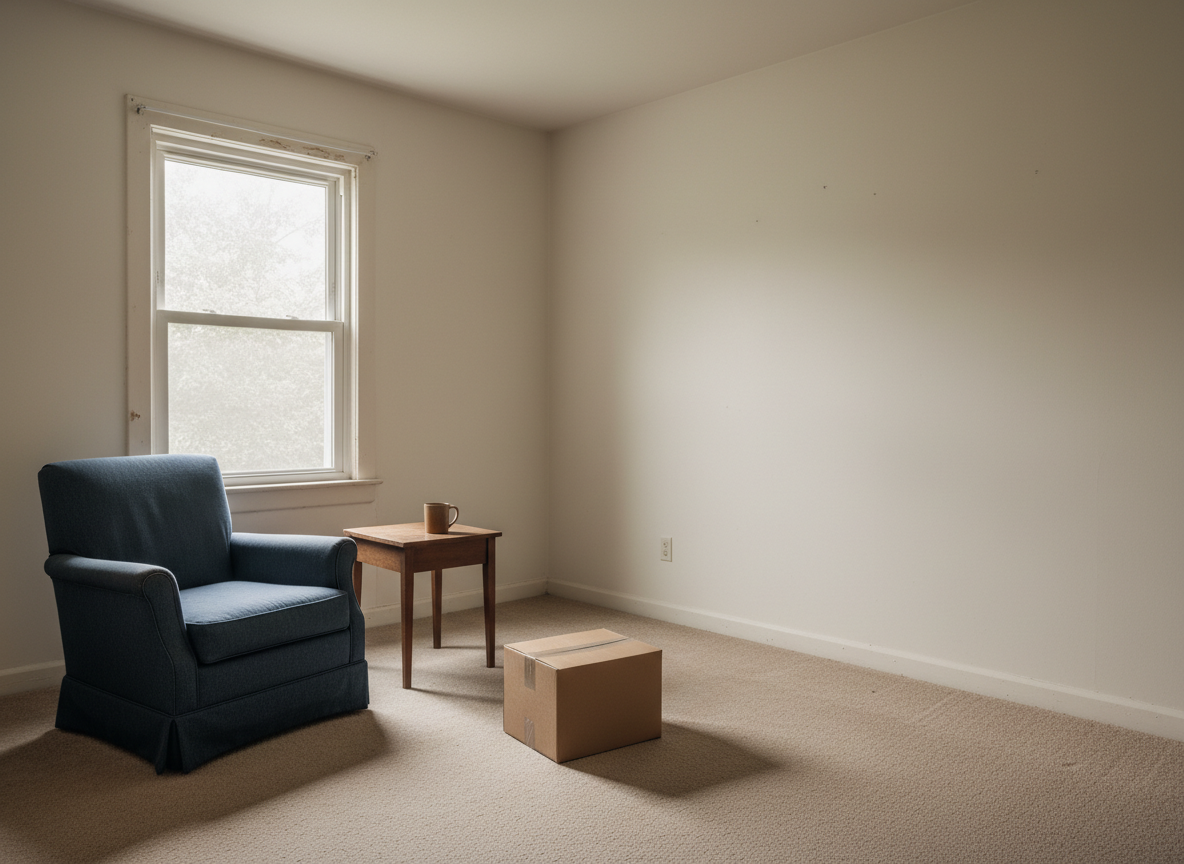
If you’re staring at an empty room wondering where to start decorating, almost every guide online will tell you to start with an inspiration piece, or the sofa, or the lighting. That advice assumes the room is yours to change. A renter’s room isn’t — there’s a floor you didn’t pick, a wall you can’t drill, a window in the only spot it was ever going to be. So the order of operations is different. You decide the things you can’t change first, and you let everything you can change bend around them.
Decorate in reverse order of permanence
Here’s the reframe that saved me from the rug mistake on every move after the first one: sequence your decisions by how permanent they are, not by how exciting they are. The least changeable thing in the room gets decided first, because everything else has to live with it. The most swappable thing gets decided last, because by then it’s just filling in a plan that already works.
Most “where to start” lists are sorted by category — walls, furniture, textiles, decor. That sorting feels logical and quietly wastes money, because it lets you buy a category you love before you’ve made peace with a constraint you’re stuck with. Permanence-order fixes that. It’s slower for about a day and saves you a return trip for weeks.
- 1The un-changeables. Floor, the worst wall, the light you’re given, the one window. You’re not buying anything yet — you’re deciding what each one forces. The radiator wall can’t hold a tall bookshelf; the dark corner needs a lamp, not a plant.
- 2The anchors. The biggest piece each zone needs — bed, sofa, table. Placed to work with step one, not against it. This is where most of your money goes, so it goes after the constraints are known.
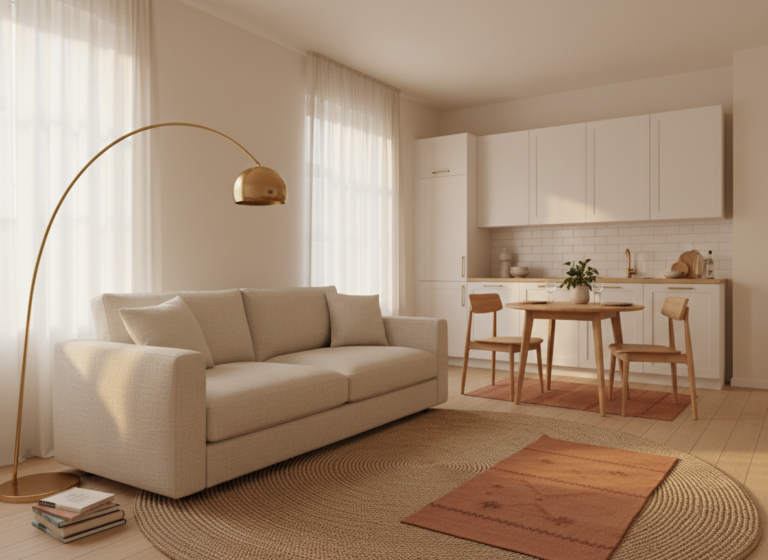
- 3The softeners. Rug, curtains, lamp. The layer that makes a room read finished. A $90 rug, $40 curtains, and a $30 lamp do more for “done” than one expensive anchor in a bare room.
- 4The swappables. Art, cushions, the small things. Decided last, on purpose — they’re the cheapest to change your mind about, so they carry the least planning weight.
Notice what this does to the rug. In a category list, the rug is “textiles,” and you buy it when you get to textiles. In permanence-order, the rug is step three — which means you’ve already clocked that the radiator steals eight inches, and you buy the runner that fits, not the nine-by-twelve that doesn’t.
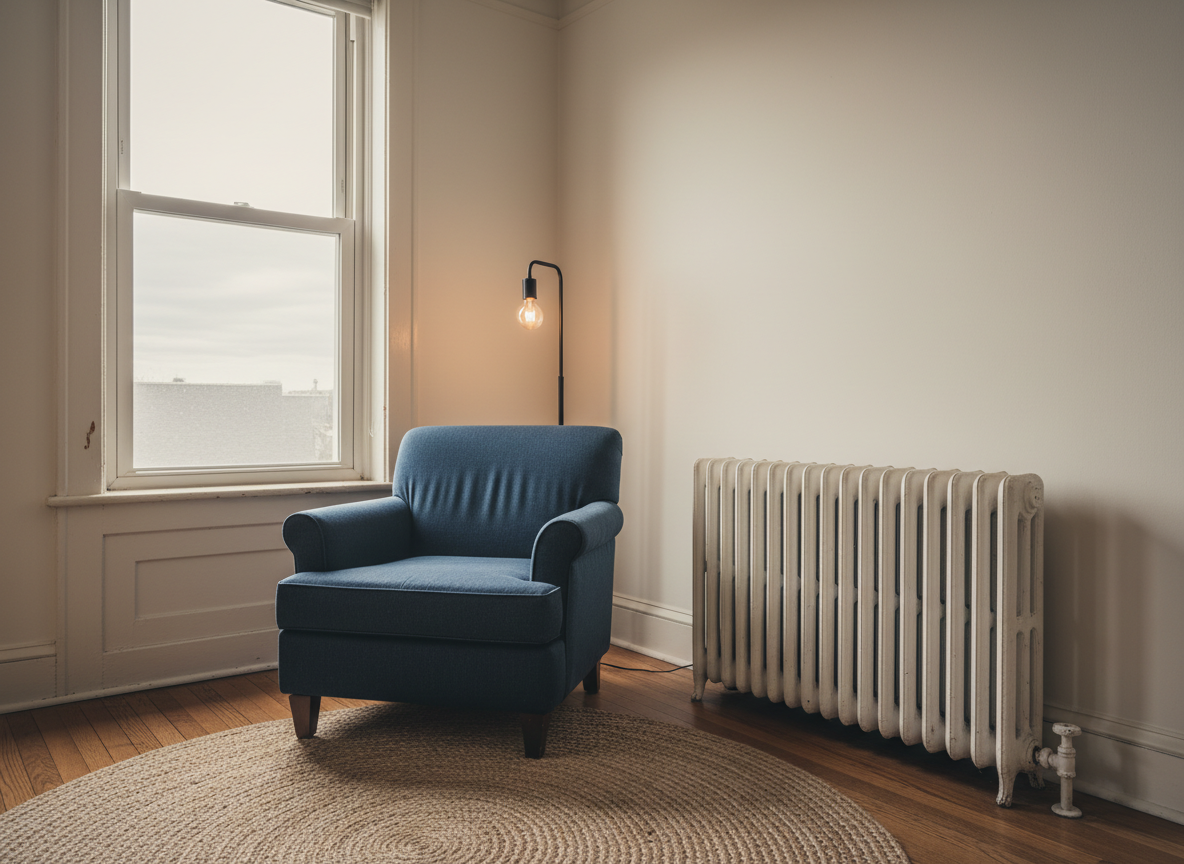
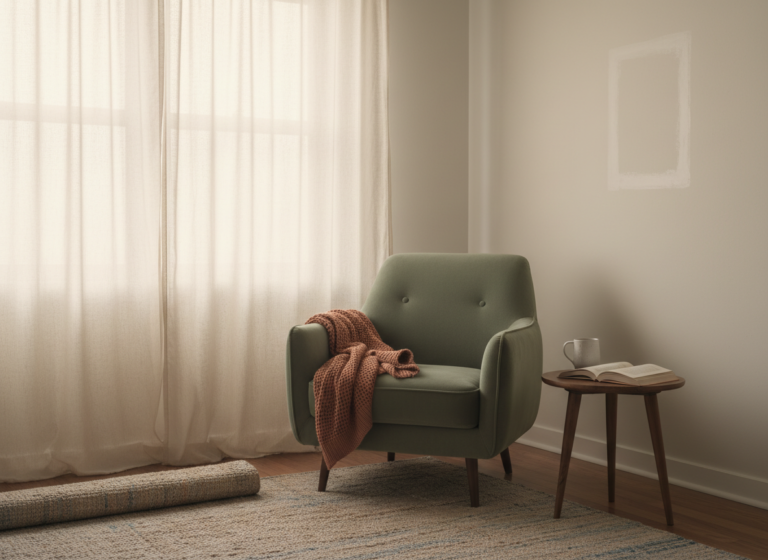
The rug stops short of the radiator wall on purpose — that’s a step-one decision paying off at step three.
What to fix first when the room already has stuff in it
Not everyone starts from empty. If you’ve lived in the room a while and it just isn’t working, the order still holds — you’re just running it as a diagnosis instead of a shopping list. Walk the same four layers and find the first one that’s broken. Nine times out of ten it’s not the swappables you keep rebuying. It’s an un-changeable you’ve been decorating around instead of with: the bad overhead light you never replaced, the wall you treated as off-limits, the layout that’s been pushed flat against the perimeter since move-in day.
Fixing the earliest broken layer is almost always cheaper than the third throw pillow you were about to buy to make the room feel “more pulled together.” The pillow was never the problem.
You don’t need to know your whole plan to start. You need to know which decision comes before which — and to stop letting the fun ones jump the line.
Start small, but start at step one
The smallest honest first move isn’t buying anything. It’s standing in the room and naming the three things you can’t change, out loud, so they stop being background and start being the plan. Once you’ve done that, the order tells you what’s next — and you stop spending money to solve problems one layer down from the real one.
Good rooms aren’t a burst of taste. They’re a sequence, run in the right direction.
And if even step one feels stuck because you can’t picture where the room is headed, that’s not a sequencing problem — it’s a direction problem. Naming the mood you’re aiming for comes before the order of operations, and it’s the easiest piece to lock first.