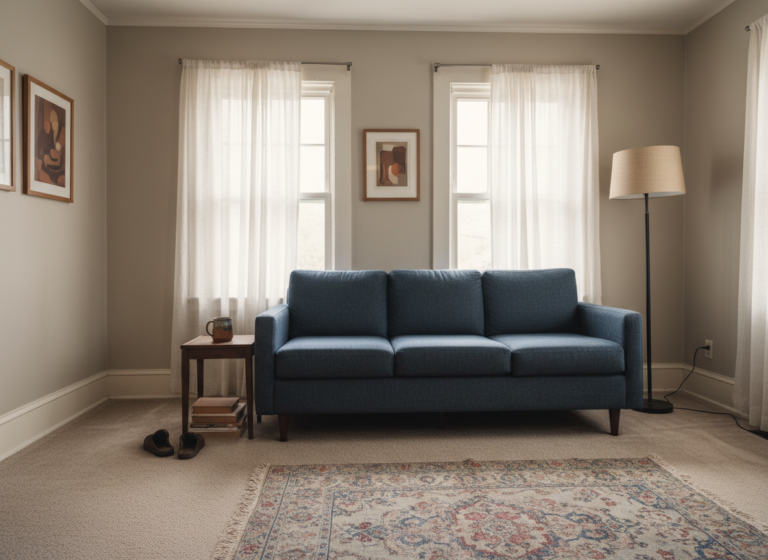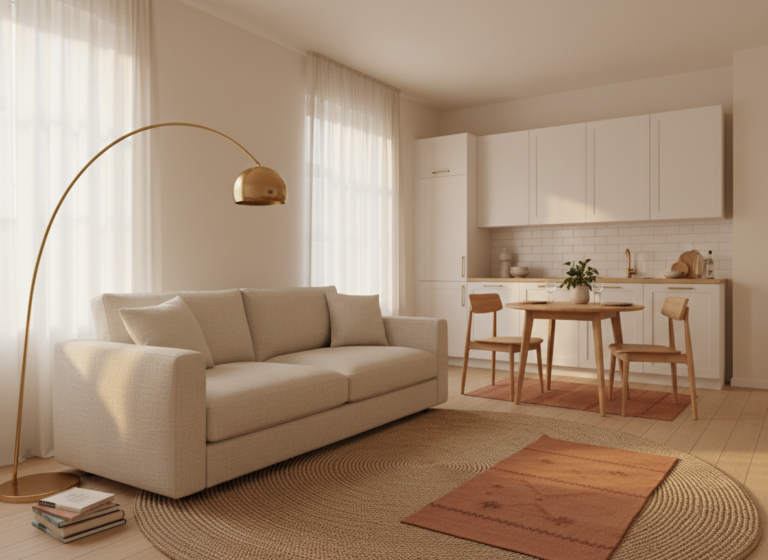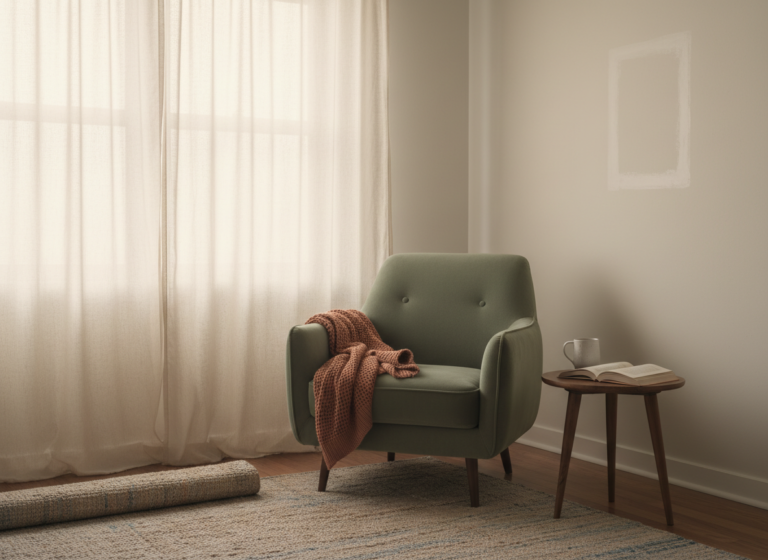
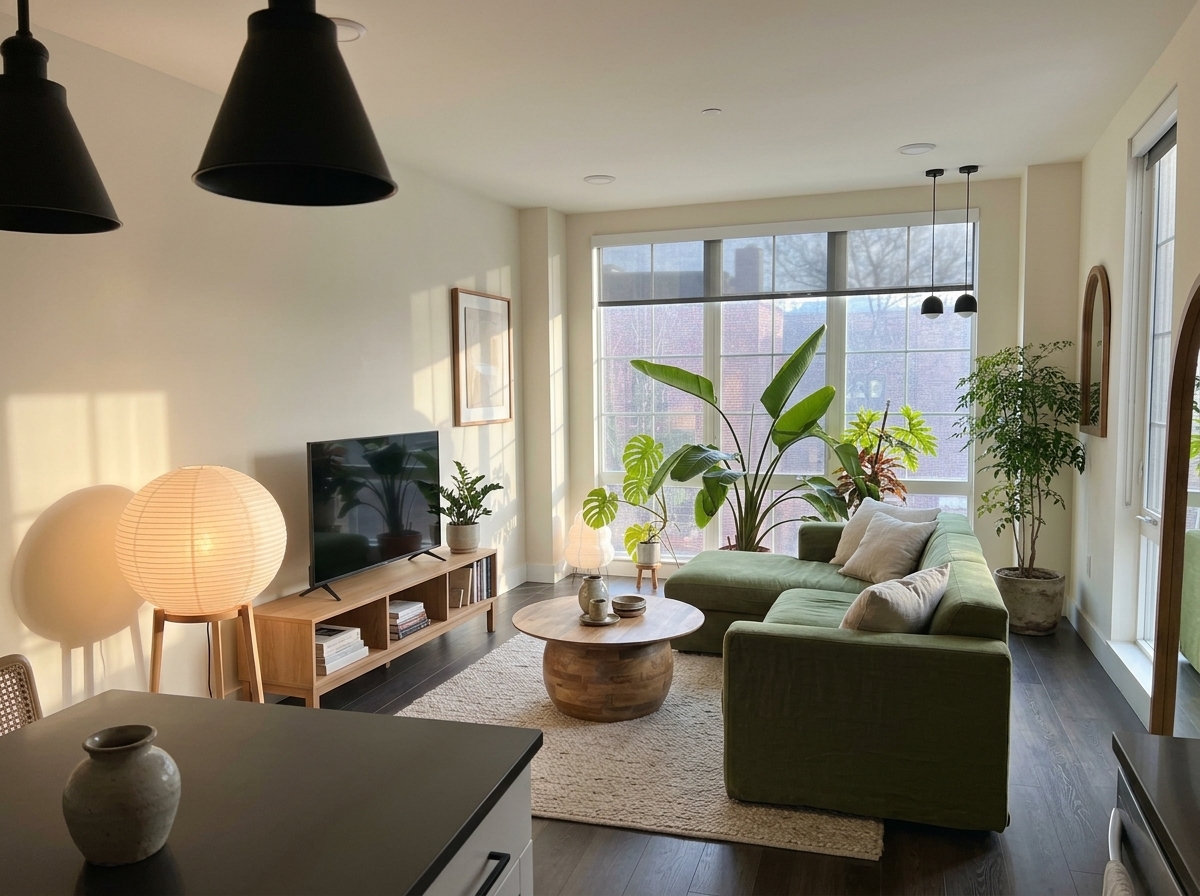
Japandi is the aesthetic most often described as “minimal Scandinavian crossed with Japanese wabi-sabi.” The descriptions usually open with what to buy: a pale oak credenza, a small ceramic vase, an indigo linen runner. The framing is wrong. Japandi isn’t a furniture list. It’s a discipline about what gets removed from a room, what stays visible, and what’s allowed to age.
The reframe matters specifically for a small rental apartment. A homeowner can knock down a wall, install bamboo shelving, swap in a tatami platform, paint everything off-white. A renter can’t. The temptation, after reading three Japandi guides, is to assume the aesthetic isn’t reachable without the renovation budget. It is — but only by separating the principles from the furniture. The list of Japandi-coded items at West Elm isn’t the aesthetic. It’s the souvenir.
What makes Japandi Japandi (three principles, not a furniture list)
The aesthetic rests on three structural moves that work across budgets, room sizes, and lease statuses. None of the three require new furniture.
First, negative space is the design. Not the absence of design — the design itself. A Japandi room is composed around the empty floor between two pieces and the visible wall above the bookshelf as much as around the bookshelf itself. The eye gets to rest. Most apartment-decor guidance fights this instinctively — every wall must hold something, every corner must work harder. Japandi inverts the rule. Empty is the headline.
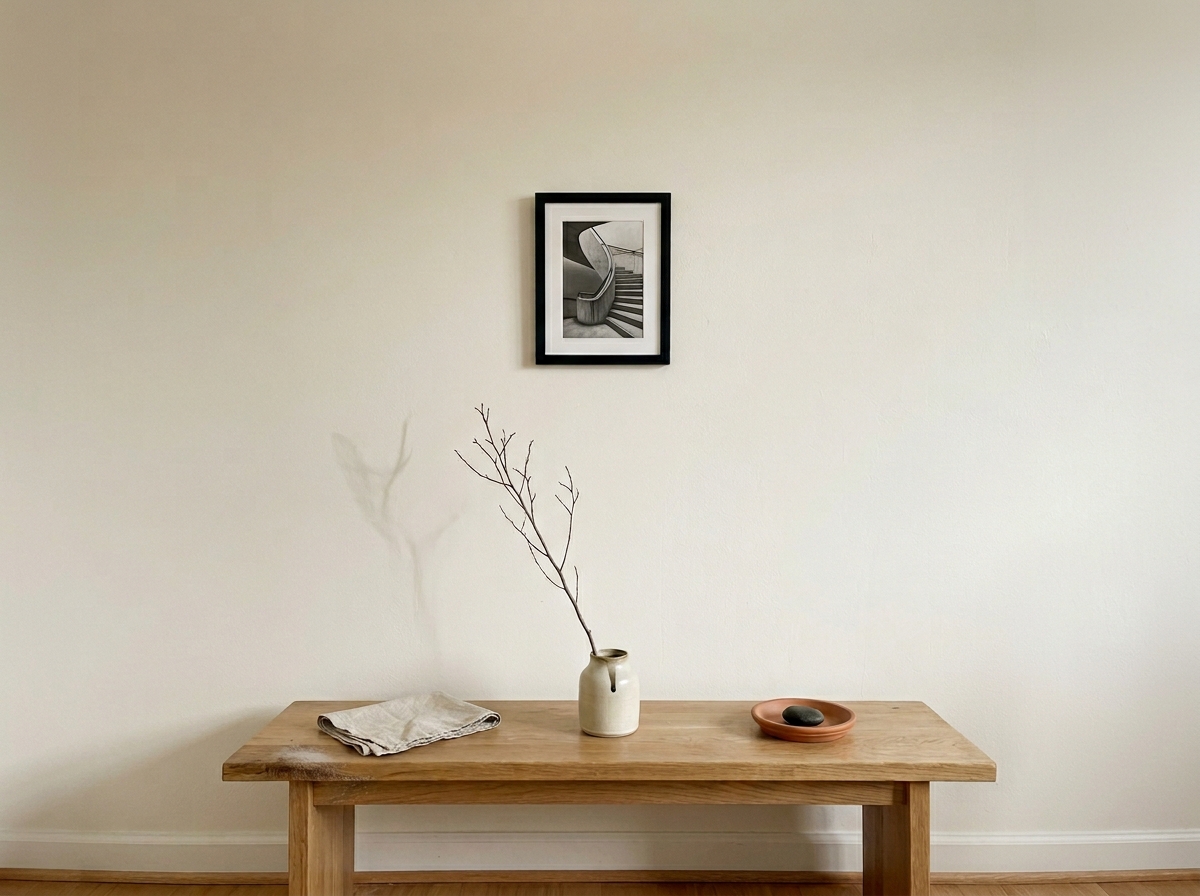
Second, honest materials. Wood that looks like wood, linen that creases like linen, ceramic with visible glaze pooling at the rim. The materials are the personality of the room — not the paint color, not the pattern on the throw pillow. Japandi avoids plastic, glossy laminate, and anything pretending to be a different material than it is. That principle alone disqualifies most rental-grade furniture from the Japandi version of the room — but it also means existing wooden pieces (even worn ones) are already in the aesthetic before any purchase.
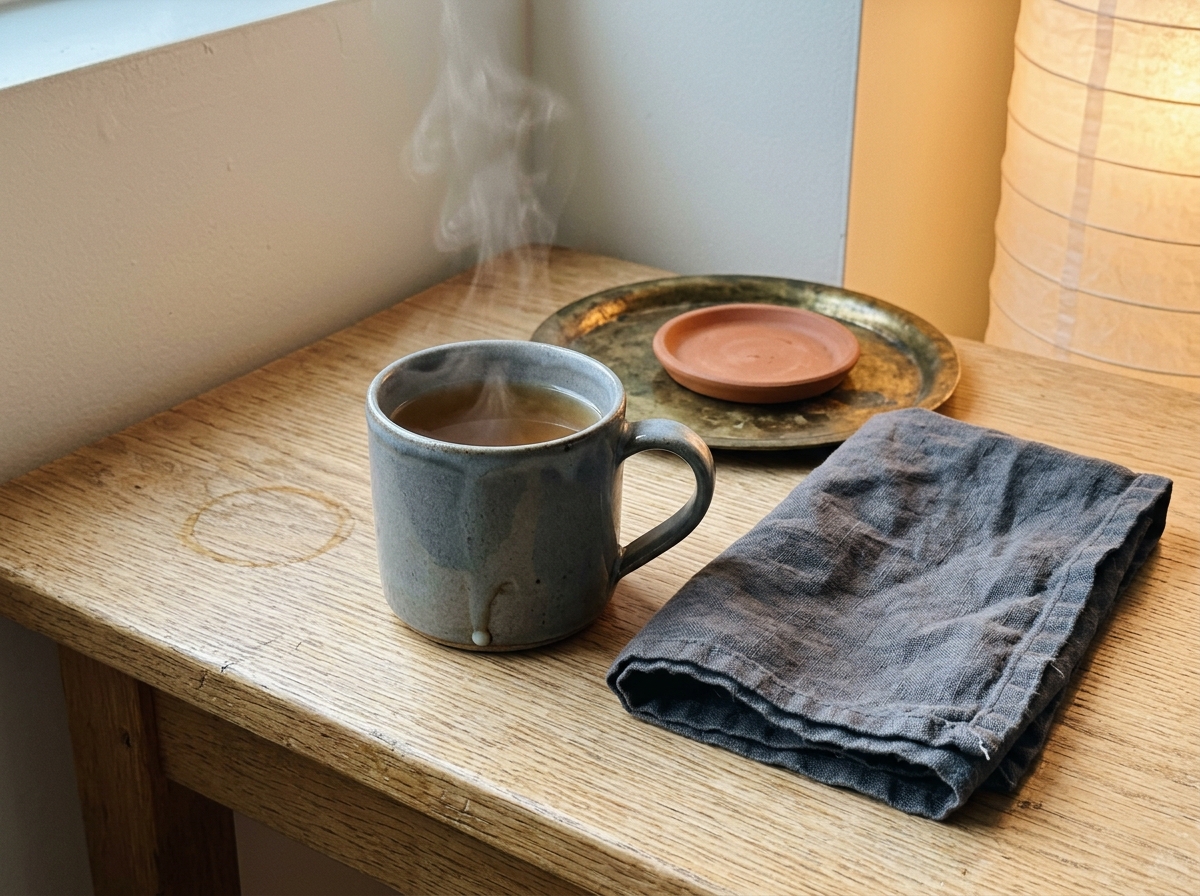
Third, quiet contrast. One warm tone (oak, oat, sand, terracotta) paired with one cool tone (charcoal, slate, deep teal, ink). Never three palettes fighting each other. Never an “accent wall” doing the job of contrast — Japandi reaches the same effect through textile, lamp, and wood tone. The contrast is the third thing in the room, not its loudest decision.
What it looks like in a rental — four practical translations
Apply the three principles inside the rental constraint and four specific moves emerge. None of them require permission from a landlord, anchoring into a wall, or buying any furniture that won’t move with the lease.
Resist the apartment-decor instinct to fill the empty wall. Leave the bare cream-painted wall above the bookshelf alone. Take down one out of every three frames currently up. The room reads Japandi the moment it has visual room to breathe — and editing costs nothing, takes ten minutes, and requires no landlord permission.
The existing materials in the apartment are often more Japandi-ready than they seem. Sand and re-oil the wooden coffee table from a previous place. Swap synthetic throws for linen. Replace plastic kitchen canisters with a single stoneware crock. The materials shift; nothing gets anchored to the wall, and the existing furniture earns its place in the new aesthetic instead of being thrown out.
The biggest single Japandi win in a rental is lighting temperature. Swap the cold-blue rental overhead bulbs for 2700K warm bulbs. Add one floor lamp with a paper shade. Suddenly the cool grey of unrepainted rental drywall becomes the cool half of the contrast, and the warm lamp does the rest. No paint, no construction, two-hour install — and the room shifts more than a five-hundred-dollar furniture order would.
Japandi reads as Japandi partly because the room has texture from time — patina on brass, soft creasing in linen, a hairline crack on a stoneware bowl. The renter instinct is to hide wear because it reads as “rental-grade.” Japandi reframes wear as evidence the room is lived in. A wooden table with a few water rings is more Japandi than a glossy new replacement.
The buying rules (and what to skip)
For purchases that actually need to happen, three rules cover most of it. Lift over anchor: anything that touches the wall or floor structurally is the wrong purchase for a rental — pick the lamp that sits on a side table over the wall sconce that needs drilling. Warmth via textile: color and warmth come from linen, wool, paper — not paint, not built-in shelving. A single oat-toned linen throw shifts a room more than a Pinterest-pinned accent wall would. One material per layer: not three competing wood tones in one room, not five throw textures on the sofa. The discipline is restraint, and restraint photographs better than abundance anyway.
What to skip: the all-Muji-haul instinct (one trip, twelve identical small storage boxes, and the room reads like a catalog instead of a home). Plastic anything that pretends to be wood. Glossy finishes on any large surface. The single “statement wabi-sabi vase” that costs more than the rest of the room and undoes the discipline of the aesthetic by being deliberately performative — wabi-sabi is the opposite of a statement piece.
The Japandi version of the 520-square-foot studio I’ve lived in for the past year — with cream landlord paint, terrible 4000K overhead bulbs, and a hand-me-down oak side table — shifted from “rental-grade beige” to “Japandi-quiet” in two hours, before any new furniture moved in. Three 2700K Edison bulbs, one paper-shade lamp, and the deletion of four out of seven frames already on the walls. Total spend: about thirty dollars. The discipline did the rest.
Japandi in a small rental apartment isn’t a furniture purchase. It’s a sequence of decisions about what to remove, what to swap, and what to leave alone. Done well, the room reads Japandi without a single permanent change to the apartment — which is the point. The discipline lives in the renter, not in the lease.