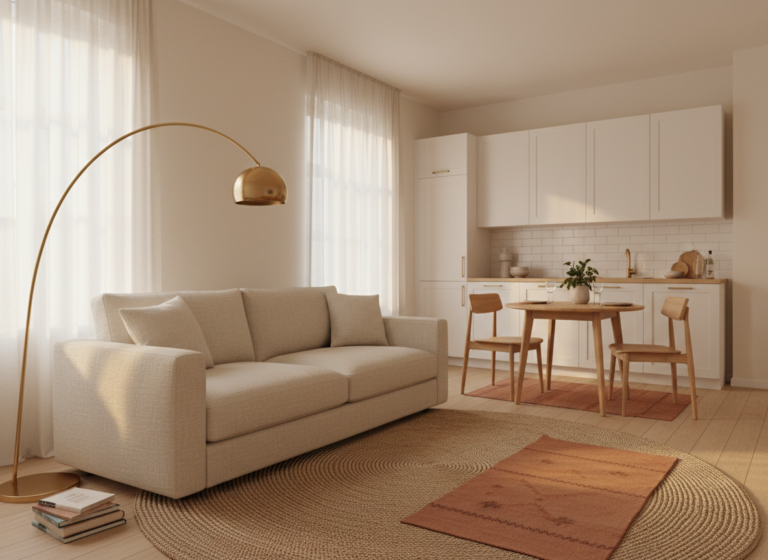
The first thing I noticed in the apartment after he moved out wasn’t what was missing. It was the angle of the couch. We’d spent two evenings the previous fall arguing about whether it should face the window or face the bookshelf, and we’d settled on a compromise that worked for two people watching a movie together on a Saturday. With one person in the apartment, the compromise made no sense. The couch was facing nothing. The room had been organized around a configuration of life that wasn’t there anymore.
Most of what gets written online about decorating after a breakup or divorce treats the apartment as the patient. Paint the accent wall. Buy new sheets. Splurge on a bed frame as a permission slip to start over. None of that is wrong, exactly. But it’s solving for symptoms. The actual problem in the apartment after the breakup is structural: the place was designed as a two-person system, and the system no longer matches the person living in it. That’s not an emotion to decorate around. It’s a layout to redesign.
Most breakup decor advice solves the wrong problem
Open three different lifestyle articles on decorating after a divorce and they’ll recommend roughly the same moves: change the bedding, hang new art over the bed, rearrange the furniture, treat yourself to one nice thing. The implicit theory is that the apartment is sad and needs to be made less sad. The faster you cosmetically refresh the surface, the faster the heart catches up.
That theory misreads what’s actually wrong. The apartment isn’t sad. The apartment is mis-fitted. The reading chair lives in the corner that used to be the second person’s reading corner, which means it now sits in dead space. The kitchen has a coffee maker and a second espresso machine that nobody’s used in three months. The bedside table on the left is bare because nobody sleeps on the left side anymore. None of those are aesthetic problems. They’re system problems. The system was built for two and now serves one.
The reframe that actually moves you out of the post-breakup stall isn’t make the apartment feel new. It’s rebuild the apartment around the person who actually lives in it now. Aesthetic refresh comes later, almost as a side effect. The hard work is structural — and the structural work is the part you can actually finish.
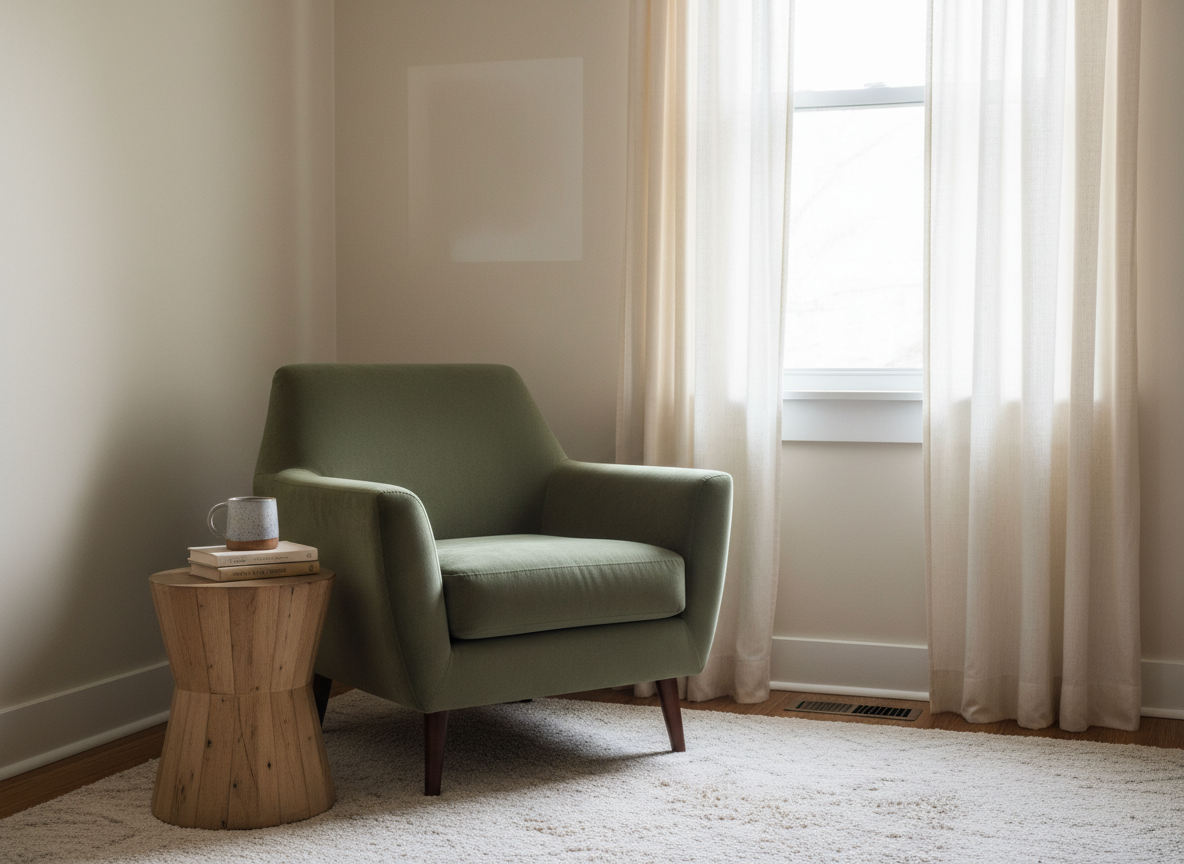
The rebuild starts with the person, not the room — what stays, what goes, what was never really yours.
Sort what’s already in the apartment before you buy anything
Before any purchase, before a new bed frame or a fresh rug or a single candle, sort what’s already in the apartment into three piles. Not literal piles, necessarily, though a real Saturday afternoon spent doing this physically isn’t a bad idea. The piles are decisions:
Keep. Things you chose, that work the same whether the apartment has one person in it or two. The lamp you bought the week you moved in. The mug you actually drink out of. The painting you hung the weekend before you met them. These stay. Don’t let post-breakup momentum throw out objects that have nothing to do with the relationship. Strip too far and the room loses you, not them.
Relocate. Things that are objectively fine but sit in a place that triggers an old script. The chair that lived in his corner of the living room. The reading lamp set up for the side of the bed nobody sleeps on. The kitchen stool that pulled up to the counter where two people cooked together. Move them. The object isn’t the problem; the location is. Most relocations cost zero dollars and change the room more than a new throw pillow ever will.
Replace. Things that were theirs and have stayed by inertia, or things the relationship picked over your actual preference. The art that was a compromise. The set of plates from their grandmother. The colored throw that never matched the room you would have decorated alone. Replace these, but slowly. One a month, not all in a weekend. The room needs time to settle between decisions, and your bank account needs the pacing.
The order matters more than the categories do. Most people skip straight to Replace, because Replace is the satisfying part. You buy something new. Something feels accomplished. But replacement without relocation produces a room where you’ve bought a new chair and put it in the same dead corner the old chair was in. The space hasn’t changed; only the object in it has. Relocate first. Live in the rearranged room for two weeks. Then notice what the room still needs. Then replace, slowly, what’s actually missing.
Rebuild the room around the person who actually lives there now
After the sort, the apartment starts to feel less haunted but possibly more disoriented. That’s normal. Empty corners. A bedroom with one nightstand. A dining table that doesn’t get used because it was for hosting, and hosting was a two-person activity. This is when most people panic-buy. Don’t.
What the apartment needs at this stage isn’t filling. It’s a redesign around the inhabitant. The questions are practical:
What does your real day look like now? Not the day the relationship had. The day you actually wake into. Coffee at the kitchen counter or on the couch? Reading before bed or in the morning? Eating dinner at the table or on a tray in front of a show? The room should be set up for the actual day, not the hosted version of it.
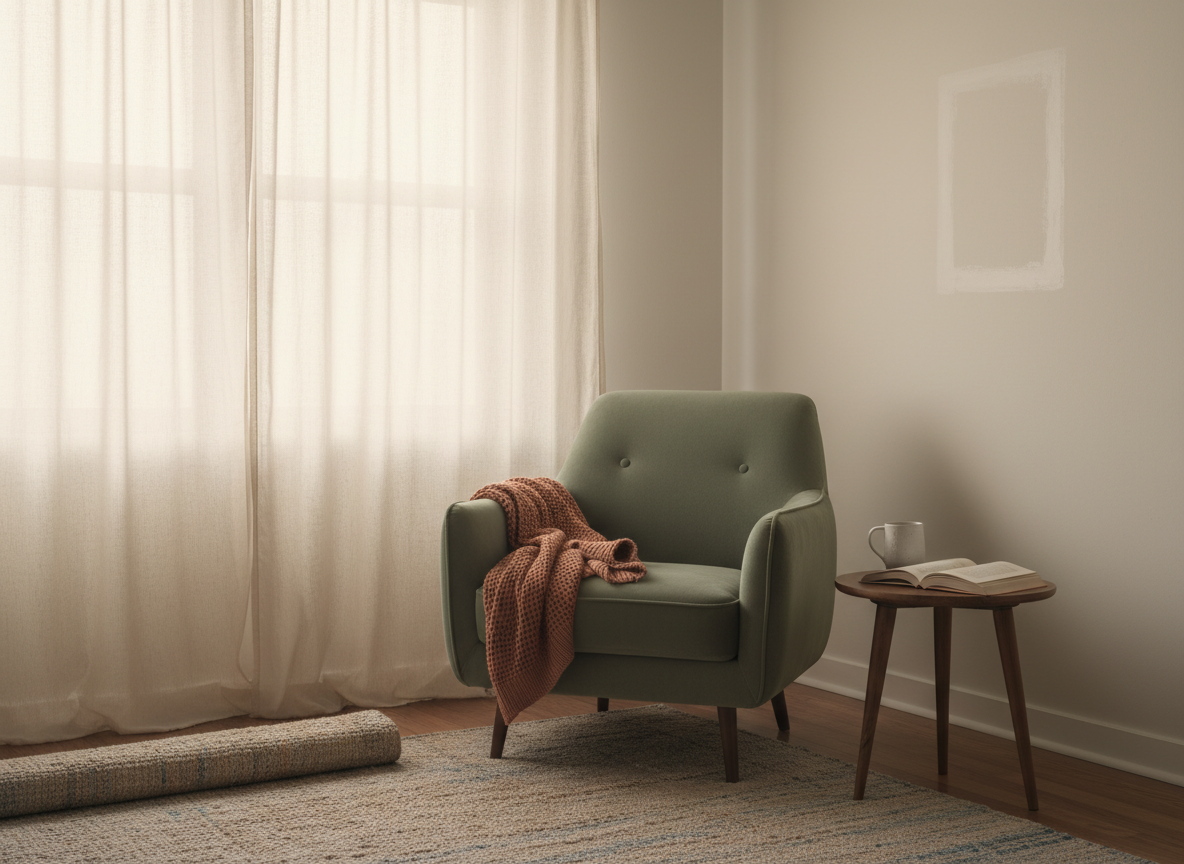
A friend going through a divorce moved her reading chair from the living room into the bedroom three months in. The living room had been the two-of-them room — movies, conversations, the long Sunday afternoons that no longer happened. The bedroom corner near the window was where she actually read, every night. Relocating the chair cost nothing. The living room felt less empty, because the chair wasn’t sitting in it being useless. The bedroom felt like hers, because the chair was finally in the room she actually used.
Most of the structural rebuild is moves like that. Furniture doesn’t need to be replaced; it needs to be relocated to fit one person’s actual day. The dining table can become a desk. The second nightstand can become a small bookshelf. The empty wall in the hallway, the one that used to hold a poster you bought together on a trip, can stay empty for a few months while you figure out what wants to live there. Empty walls are okay. Not every wall needs to be solved this week, and the playbook for filling them later, when something you actually love shows up, lives in our renter-friendly wall decor guide.

Six months in. The walls don’t have to be filled to count as decorated.
The honest test: what is the apartment telling a visitor right now?
Six months into the rebuild, walk into the apartment like a stranger. This is the identity check, and it’s the one that decides whether the rebuild actually finished or just stalled at functional. (We’ve written about the three versions of “done” a renter has to navigate in a companion piece; identity done is the third one.)
A first-time visitor (a coworker dropping off a package, your cousin’s friend in town for the weekend) picks up a thread from the room within about thirty seconds. The question to ask is what thread they’re picking up.
If the room is still telling the relationship’s story (same arrangement, same art on the walls, same dishes, same configuration of nightstands) the rebuild stopped at sorting. Functional but unchanged. If the room has been gutted into anonymity, bare walls and beige sofa and nothing personal on any surface, the rebuild overcorrected and stalled at hotel. Neither is the goal.
The goal is for the apartment to telegraph the person who lives in it now. Specific things, not vague ones. What you read. What you cook. What you keep next to your bed. What’s on the wall above your desk. A stranger should be able to walk in and pick up three concrete things about you within a minute, and those three things should be true of who you are post-breakup, not nostalgic for who you were inside the relationship.
The apartment isn’t healing you. You’re rebuilding the apartment to fit who lives in it now. The system is the project. The system is the part you can actually finish.
None of this happens on a single weekend. The rebuild after a breakup or divorce takes months, not days, and that’s the part most refresh-advice misses. The internet wants you to fix the apartment in one transformative Saturday because that’s the satisfying narrative shape. The actual rhythm is slower: one relocation this week, one replacement next month, one decision about the empty wall in February. The apartment becomes yours through the accumulation of small honest moves, not one dramatic reveal. A year in, you walk through the door and the rooms feel like they were chosen by the person currently living in them. Which, finally, they were.
join.cozyclub →