Most renter decor content is built around a weekend fantasy. Move in Friday, paint Saturday, hang art Sunday, post the reveal Monday morning. The implicit promise: a whole apartment, ready in seventy-two hours. The math doesn’t work, the budget doesn’t work, and the result almost never holds up past month three.
A year is closer to the truth. A year of decor plan — twelve months phased into four distinct quarters — is how rentals actually get finished, not the way they get photographed. The honest plan acknowledges that a room lived in for nine months is a different room than the one toured on a Saturday afternoon. Some of what it needs you couldn’t have known on move-in day. That’s the design, not the delay.
Why a year, not a weekend
The weekend-reveal genre has a vested interest in compressing the timeline — content runs faster, the before-and-after sells the rest. The renter on the other end gets a slow, expensive lesson in why a room ordered all at once tends to look like a room ordered all at once. The proportions are off because nothing was measured in context. The palette is flat because every color was chosen in the same hour. The pieces don’t earn their place because nothing was tested against living.
A year fixes most of that for free. The room gets to teach what it needs — which corner runs cold, which wall holds afternoon light, where dust collects, where foot traffic actually goes. Decisions made in months seven through twelve are calibrated by nine months of evidence. Decisions made on day three are guesses dressed as choices. The reframe worth holding: a year of decor isn’t slow decorating. It’s accurate decorating.
The four phases of a year-of-decor plan
The year breaks cleanly into four phases, three months each. Each phase is doing something different — and skipping a phase, or compressing two phases into one, is where the budget and the design both fall apart. The point isn’t to follow the months rigidly; it’s to keep the intent of each phase distinct from the others.
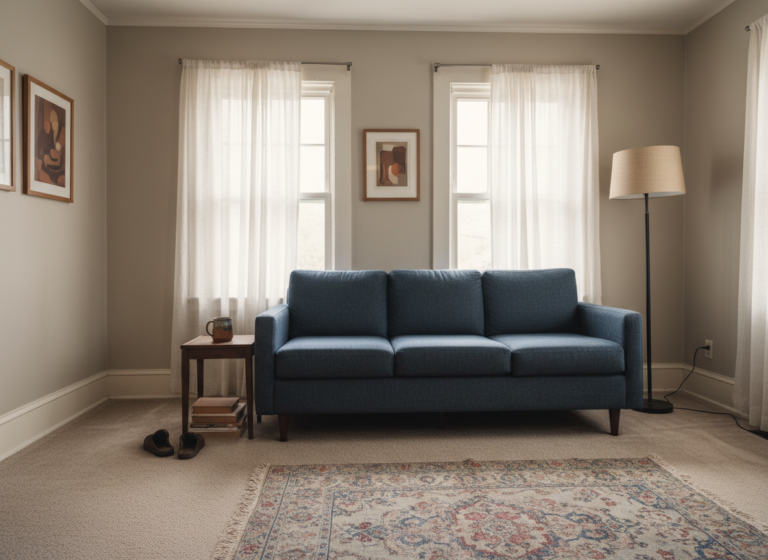
Live with the apartment first. No big purchases. Resist the urge to “complete” a room. The job in this phase is observation — where light comes from at different hours, which existing pieces from the last place fit and which don’t, what the floor plan actually wants to be versus what looked good in the listing photos.
Buy only: storage bins for unpacking, replacement bulbs if the lights are terrible, one set of curtains if privacy is a real problem.
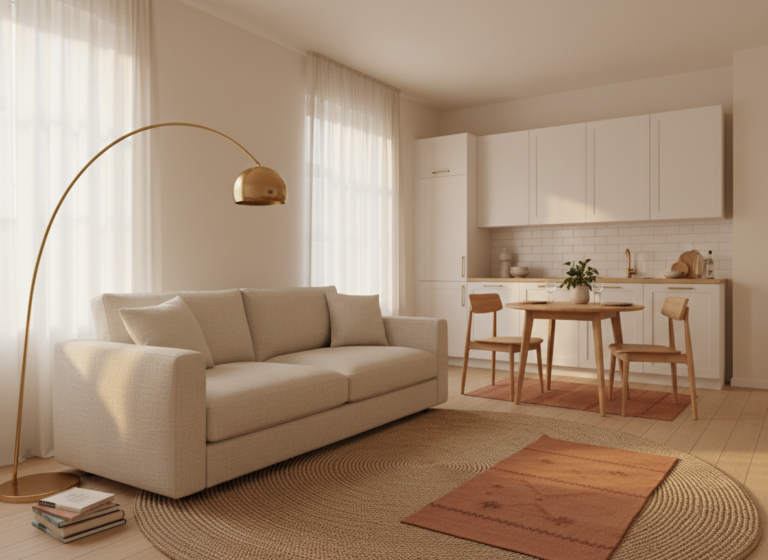
Now the room has taught you what it is. This phase is for the one big anchor purchase per quarter — a sofa for the living room, a real mattress for the bedroom, or a dining table sized to the space you’ve now measured properly. One per month is plenty.
The temptation: buy three. The reality: three large pieces bought in the same six weeks lock in a relationship between them that the room will resist for the rest of the lease.
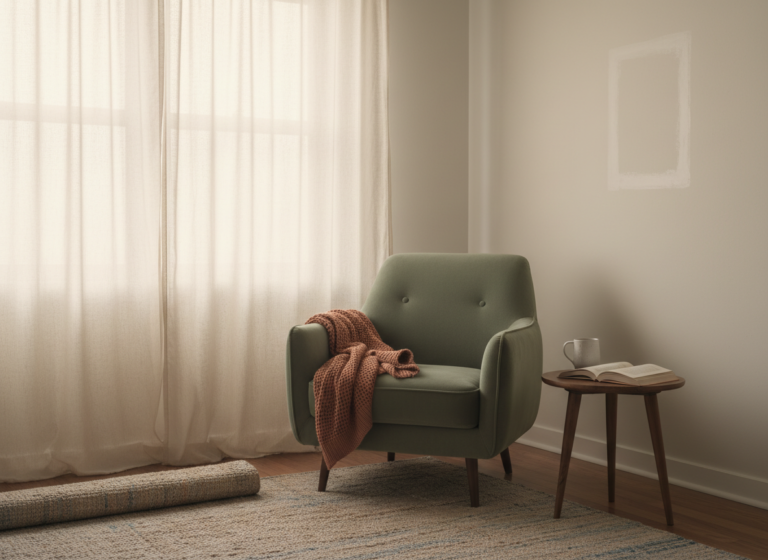
Textiles, lighting, art. The layer phase is where the room starts to look like the tenant, not the previous occupant. Throw pillows, a rug sized correctly because the anchor furniture is finally placed, two table lamps to fix what the overhead bulb can’t, framed prints once the wall-color personality is settled.
Why later: none of these should have been bought in Phase 1 — they’re calibrated against the anchor pieces from Phase 2, and they’re what the room has been waiting for.
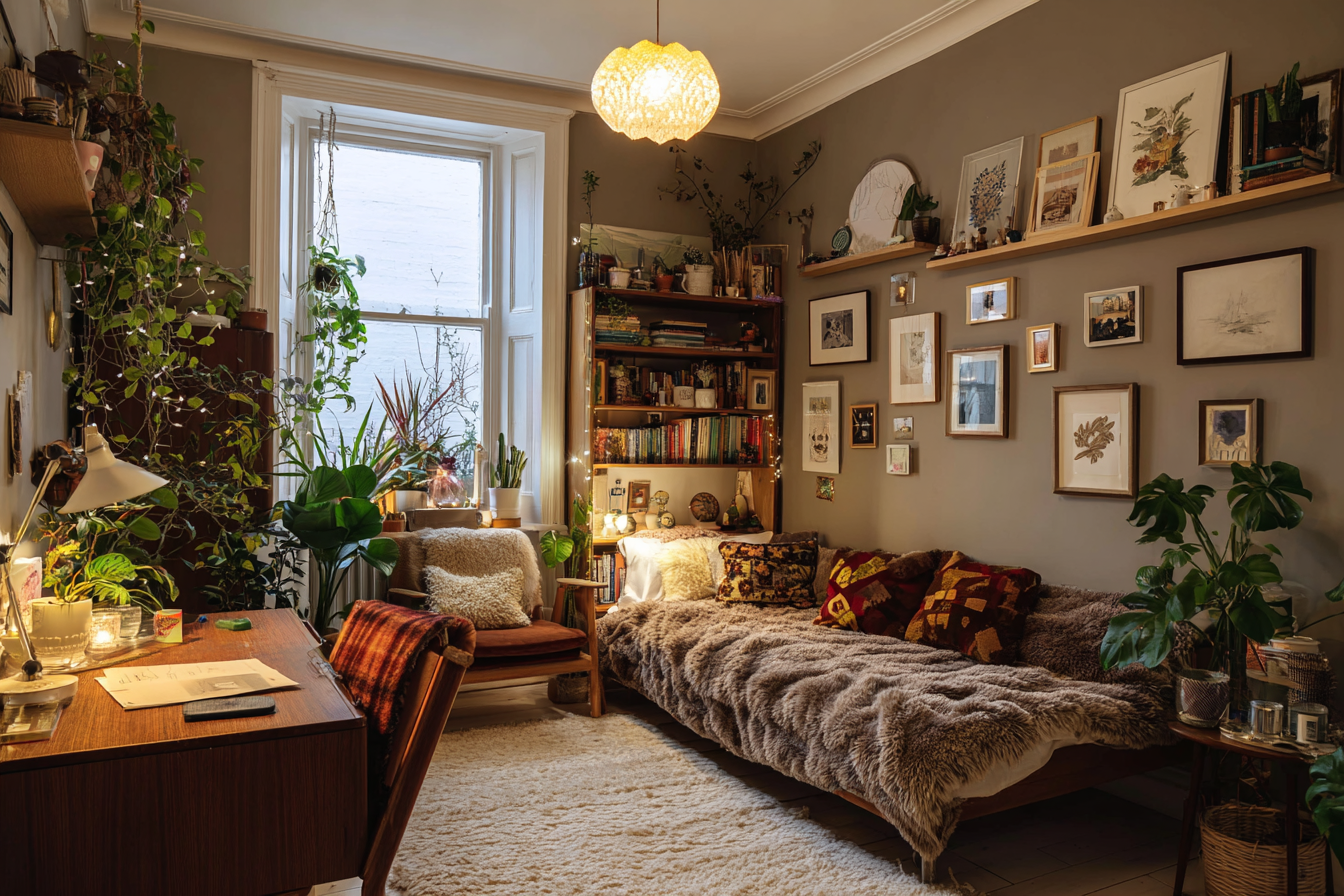
The things you only know you need after nine months of living somewhere. A specific shelf for the awkward gap. A different drawer organizer because the clothes have rearranged themselves. A small lamp for the corner the overhead bulb misses. A second hook by the door because you keep dropping the bag in the same spot.
Why it’s underrated: by month ten the room knows what it actually wants. Phase 4 is small, surgical, and accurate in a way the first nine months couldn’t have been.
What the year actually looks like, month by month
The four-phase plan is the architecture. The lived version is messier — some months you do nothing because the apartment is fine, some months you do three things at once because rent feels manageable. The phase boundaries are guidelines, not gates. What matters is the year-shape: twelve months across four distinct intents, not twelve months of arbitrary purchases ordered by whatever shipped fastest.
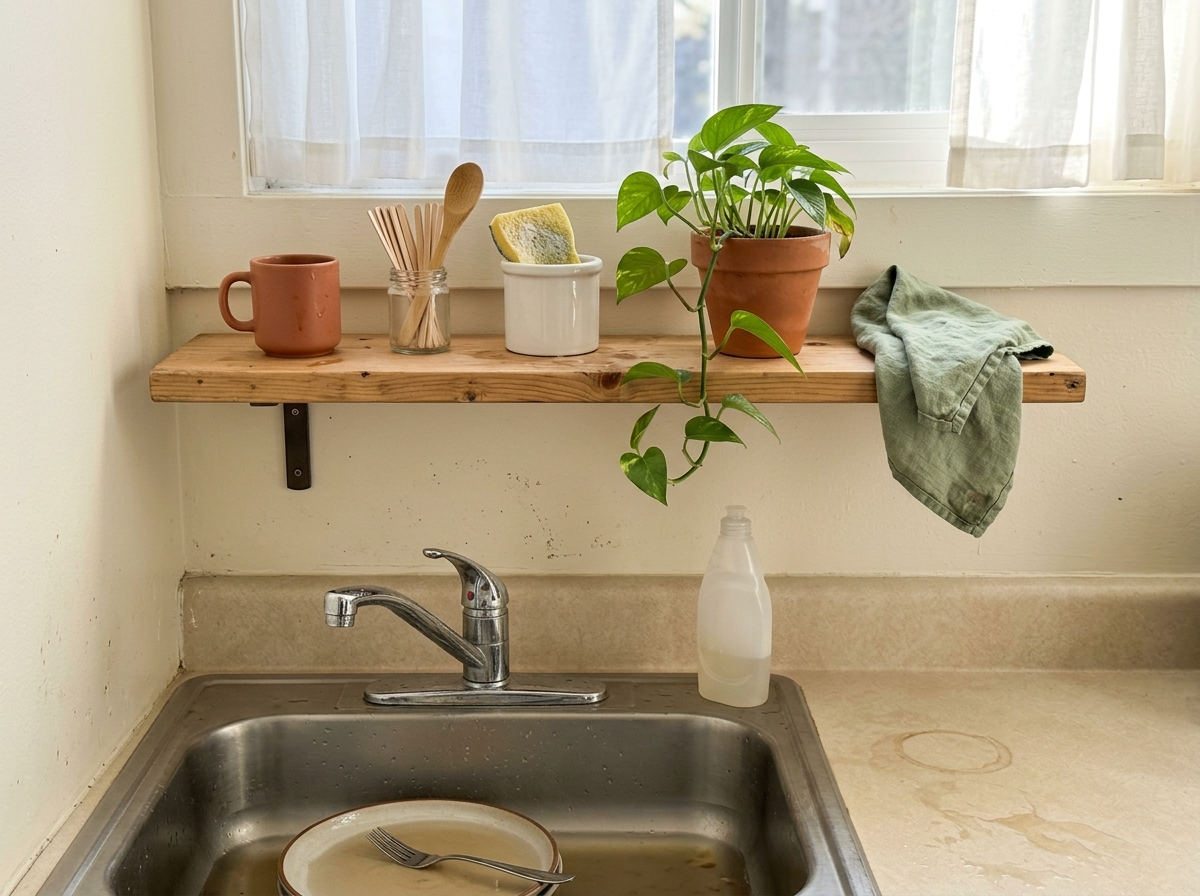
Looking back at the apartment I lived in during my second year there — month four bought the sofa, month six bought the rug that finally made the sofa look right, month eight fixed the bedroom lighting that had been wrong since move-in, month eleven added a small shelf above the kitchen sink that I’d been wanting since week one but couldn’t articulate until I’d watched the morning routine play out three hundred times. None of those individual purchases would have been the right decision in month one. All of them were the right decision in the month they happened.
The year-of-decor plan isn’t slower than the weekend version. It costs the same money — often less, because the year exposes which pieces the room doesn’t actually need. What it produces is a room that holds together because every piece earned its place by being chosen against evidence rather than against inspiration. Twelve months later, the room looks like it was always going to be that room. It just took a year of watching to find out.