The Command strip peeled off the wall fine. The paint underneath peeled off with it. I’d hung the frame on a wall the landlord had touched up two weeks before move-in, and the strip had bonded harder to the fresh paint than the paint had bonded to the drywall. On removal day, a quarter-sized patch of landlord cream came off in my hand, and the deposit conversation gained a new line item, for a frame I’d been told was the renter-safe option.
Most articles on how to hang a gallery wall focus on the install: which fastener, what weight, where to drill. Almost none cover the removal. Which is backward, because in a rental the install never costs anything. The wall is somebody else’s problem until move-out. The deposit decision is made on the way out, not the way in. A gallery wall stays clean only if every method on it has a removal protocol the renter actually follows, and the protocol is different for every method on the table.
How to hang a gallery wall in a rental: the seven-method toolkit
Seven methods cover almost every gallery wall a renter would build. Each has a different weight ceiling, a different mark it leaves when installed, and a different removal protocol. The third column on the table below is where deposits actually get lost. The methods are ranked by weight capacity rather than damage, because in practice what you can pick from is determined by the frame in your hand.
| Method | Holds up to | After install | If removal goes wrong |
|---|---|---|---|
| Push pins | ~1 lb (postcards, paper prints) | Single pinhole | Nothing beyond the pinhole |
| Command picture-hanging strips (S/M) | 4 lb | Nothing visible | Paint pulled in patches |
| Heavy-duty Command strips, doubled | 16 lb (paired strips) | Nothing visible | Same paint-pull, magnified on heavier frames |
| Adhesive picture hooks (3M Damage-Free) | 5 lb | Nothing visible | Sticky residue if left over 12 months |
| Monkey hook / J-hook | ~35 lb | One small pinhole behind frame | Crumbled drywall if pulled instead of bent up |
| Picture ledge (anchored once) | 25–40 lb spread across the ledge | 2–4 bracket holes for the ledge | Spackle + paint dab — under $10 total |
| Drywall anchor + screw (one per frame) | 25 lb per anchor | One anchor hole per frame | Crumbled hole if anchor is yanked out |
The two takeaways most renters miss. First, picture ledges are quietly the highest-leverage option on this table — one install, unlimited frame swaps for the rest of the lease, and the damage scales with the ledge, not with the number of frames. Second, adhesives are not safer than mechanical fasteners on freshly painted walls. The standard guidance — “use Command strips, they’re renter-safe” — was written for cured drywall. A wall painted within the last six months will release the paint before it releases the strip.
The removal protocol every method needs
About four-fifths of damage-deposit deductions from gallery walls come from the removal step, not the install. Every method on the table has a way it wants to come off the wall. Use the wrong removal, and the same method that left no mark on day one leaves a patch on day three hundred sixty-five.
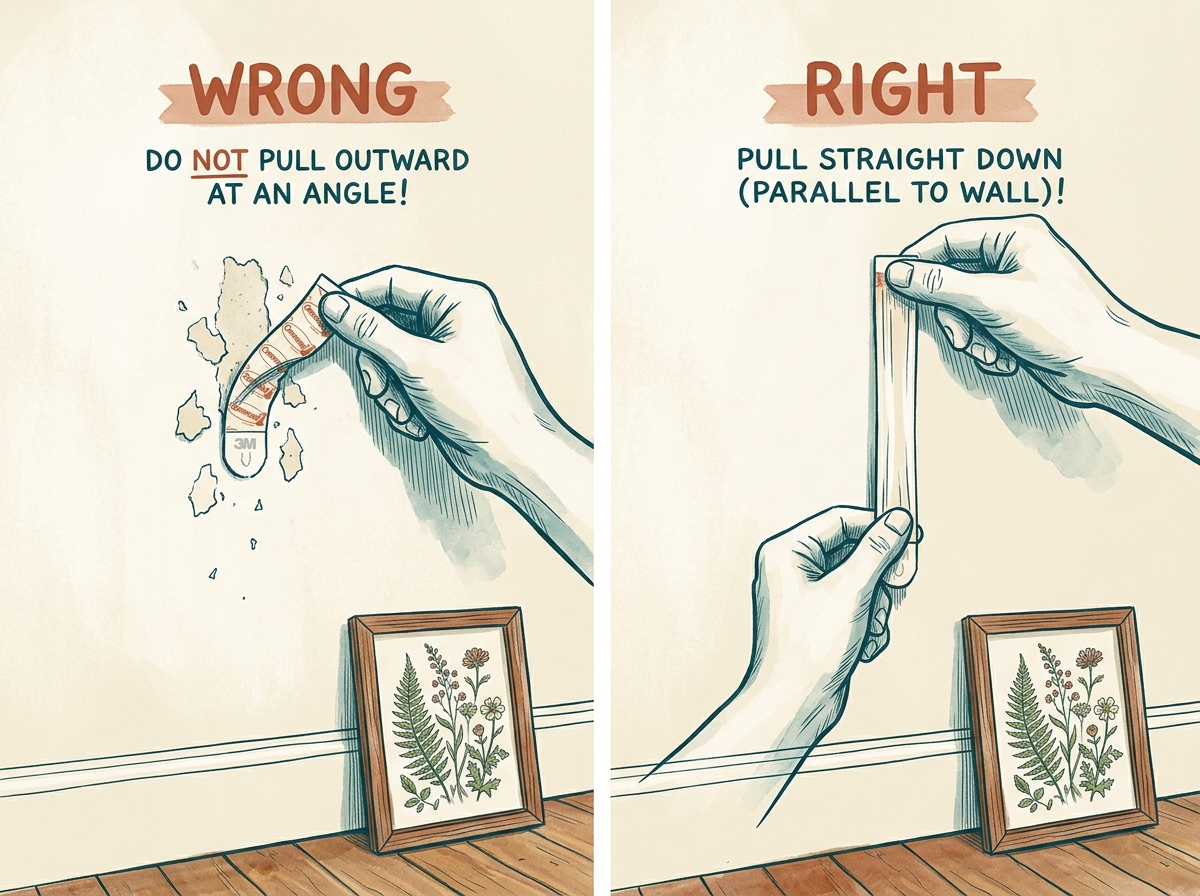
Command strips and heavy-duty doubles. Pull the bottom tab slowly, parallel to the wall, downward. Never outward. The strip wants to stretch and release; pulling outward turns it into a paint-removal tool. If the tab snaps off before the strip releases (and on a strip that’s been up over a year, this happens), slide a thin ruler or fishing line behind the strip and saw downward to break the adhesive cleanly.
Adhesive picture hooks. If they’ve been up more than six months, warm them with a hairdryer for thirty seconds before peeling. The adhesive softens and releases without taking paint. Cold removal is where residue starts.
Monkey hooks. Bend the wire up and back through the hole. Don’t pull the hook outward; the splayed back end is what holds the weight, and yanking it forward enlarges the hole into a crater.
Drywall anchors. Push the anchor further in with a screwdriver until it sits flush below the wall surface, then spackle over it. Pulling an anchor out tears a chunk of drywall paper with it. The chunk costs more to patch than the anchor itself does to leave behind.
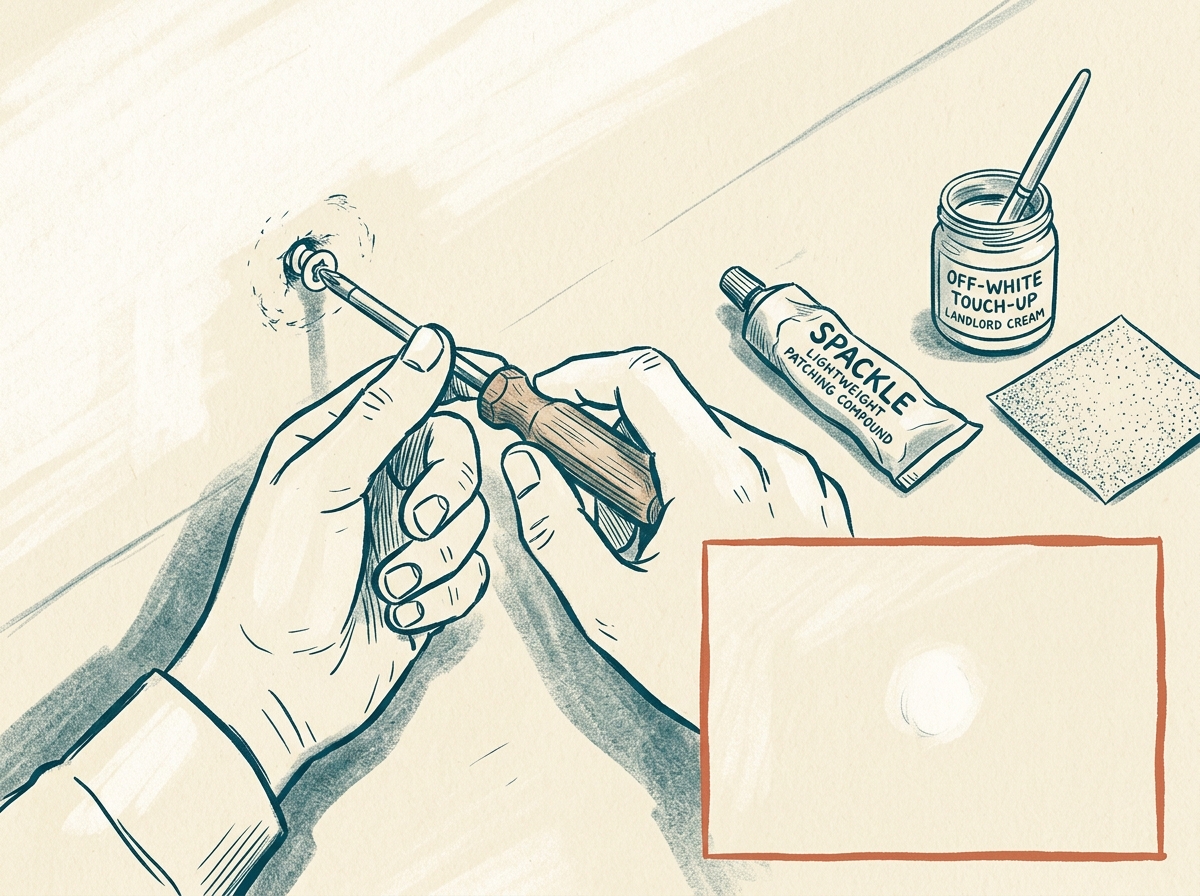
Freshly painted walls (less than six months). Skip adhesives entirely. The paint hasn’t cured. Use monkey hooks or anchors instead. The single pinhole is cheaper to patch than the patch of paint an adhesive will take with it.
When the right answer is no fastener at all
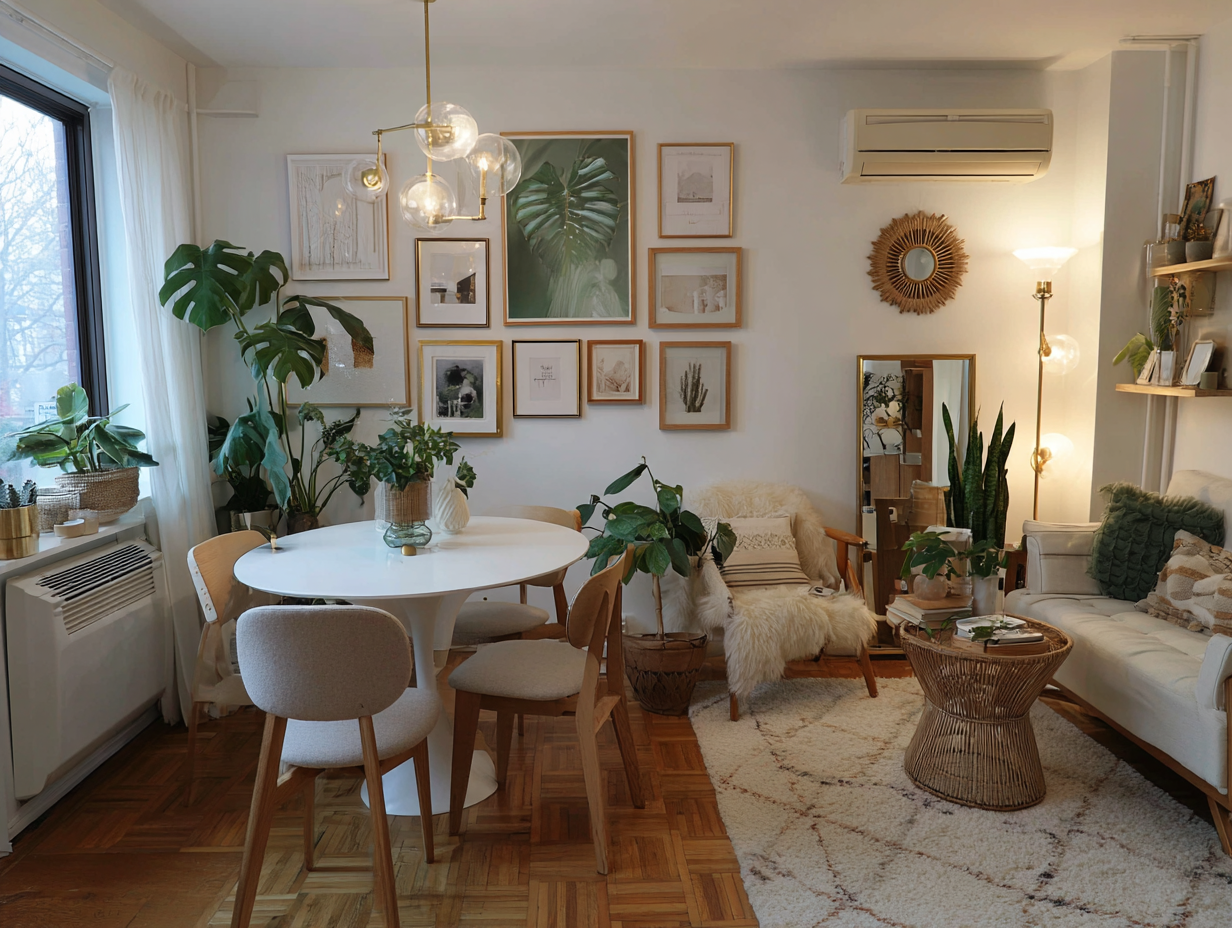
The cleanest gallery wall is sometimes the one where most of the frames aren’t fastened to the wall. A picture ledge installed once carries five to seven frames that swap freely, with no per-frame fastener. Larger anchor pieces lean on a console or sideboard against the wall and never touch it. The wall itself takes one install (the ledge brackets) and then becomes a backdrop, not a load-bearing surface. For renters in textured-wall apartments (popcorn-era buildings, older units) or in places freshly repainted between tenants, this is often the only setup that survives the lease intact. The frame still gets seen. The wall doesn’t get involved.