
The lease said “no painting” twice — once in the standard clause, once underlined in the addendum the landlord handed me at signing. That’s the version most renters get. Statistically, painting an apartment is more restricted than putting holes in the wall. A nail is reversible. A coat of moody green is a security-deposit conversation.
So a working stretch of renter-friendly painting alternatives has to do what paint does — change the temperature, weight, and feel of a wall — without leaving anything the move-out inspection can score against. Most of the alternatives that actually qualify aren’t trying to imitate paint. They route around it. The wall is the canvas; paint is just one of about seven ways to put something on it.
What painting actually does (besides change the color)
When I think about why I want to paint a wall in a rental, the answer is rarely “I want this wall blue.” It’s “I want this room to stop feeling like the last tenant’s room.” Paint is a proxy for the act of claiming the surface — the moment where the wall stops being landlord-issued and starts holding the tenant’s pick.
The reframe matters because most paint alternatives get critiqued for not feeling like paint. Of course they don’t. A peel-and-stick mural is a removable image; paint is a chemically bonded color layer. They aren’t the same physical thing. But the psychological function — turn a wall from anonymous to chosen — is reachable by several other means, and some of them survive the lease better than paint ever could. Paint, by the way, almost never survives the lease cleanly; the standard “I’ll just paint it back to white” plan underestimates how many coats of primer it takes to bring a saturated color back to landlord-spec eggshell.
The seven painting alternatives, ranked by commitment
Most renter-painting content ranks alternatives by aesthetic. Wrong axis. The right axis is commitment — what each option costs in setup time, in dollar outlay, and most importantly in undo cost when the lease ends. Some of these are weekend projects you can dismantle in twenty minutes. Others are six-month commitments to regret if the move date arrives sooner than planned.
| # | Alternative | Setup | Undo cost | Lease risk |
|---|---|---|---|---|
| 1 | Large framed prints / gallery cluster | 30 min | Patch 4 nail holes per piece | Low |
| 2 | Tension-rod fabric panel (gathered behind a rod) | 45 min | Lift rod off, fold fabric | None |
| 3 | Smart-bulb color wash (light, not paint) | 15 min | Unscrew bulb | None |
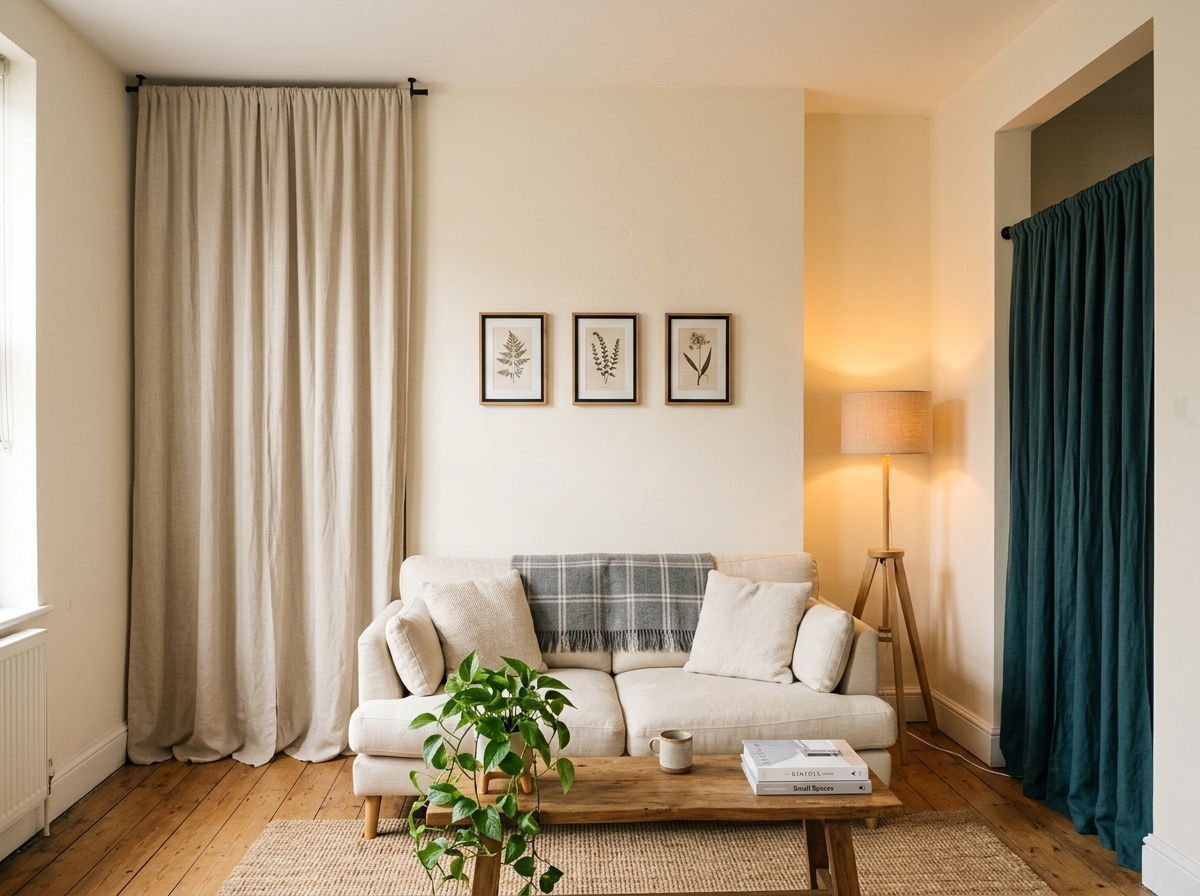
| 4 | Floor-to-ceiling curtains as wall coverage | 1 hour | Remove rod, fill bracket holes | Low |
| 5 | Magnetic or pegboard panel behind furniture | 2 hours | Lift panel — wall untouched | None |
| 6 | Removable wall decals | 1 hour | Peel off (residue risk on textured walls) | Low if rated |
| 7 | Peel-and-stick wallpaper or mural | 3–6 hours | 2–4 hours to remove cleanly | Medium |
The undo column is the one most renters skip on the way in and regret on the way out. Peel-and-stick wallpaper — the alternative most often pitched as “the renter’s answer to paint” — has the highest undo cost on this list. It removes without damage on smooth, fully-cured, primed drywall, which describes about half of rentals. The other half (textured walls, semi-gloss landlord paint, walls that were painted within the last six months) is where security deposits go to die.
What each alternative leaves behind
Setup time is the brochure pitch. What an alternative actually leaves behind on move-out is the part nobody photographs. The honest accounting, in plain terms:
- Large framed prints. Four small nail holes per piece. Standard wear-and-tear in most jurisdictions; the landlord patches with a tube of spackle. Lowest-friction option on the list.
- Tension-rod fabric panels. Nothing. The fabric is gathered behind a tension rod wedged between two walls or ceiling-to-floor; lift it off and the wall is unmarked. The most underrated option here, because it can read like wallpaper from across the room.
- Smart-bulb color wash. Zero. The wall is unchanged; the color lives in the light, not on the surface. The catch: it only works after dark, and the daytime version of the room reverts to landlord cream.
- Floor-to-ceiling curtains. Bracket holes — typically four small screws per rod — plus visible compression marks on cheap rental paint. Usually rolled into wear-and-tear if the rod was mounted into a stud and the holes are clean.
- Magnetic or pegboard panels behind furniture. Nothing visible. The panel takes the hits; the wall is hidden by the bookcase or sofa back. Works best in apartments where one full wall already hosts a piece of furniture that isn’t moving.
- Removable decals. Residue on textured walls and on any wall painted within roughly six months of application. On smooth, fully-cured paint they peel cleanly. The variable isn’t the decal — it’s the wall it was applied to.
- Peel-and-stick wallpaper. Can pull paint off in strips when it removes. Test in a small inconspicuous patch before committing the whole wall. If the test strip pulls landlord paint with it, abandon the plan and pick a different alternative from this list.
The seasonal version vs. the year-round version
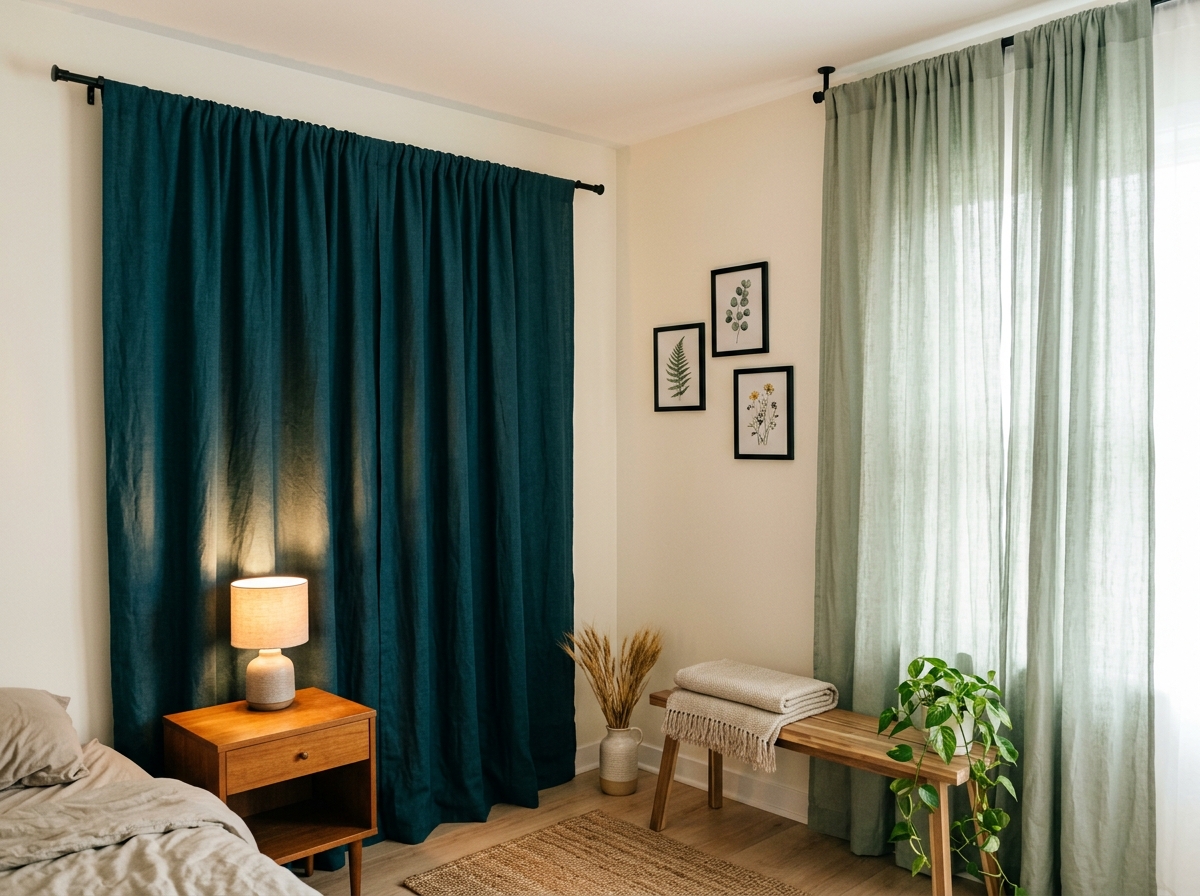
The trap with painting alternatives is treating them as paint substitutes — once on, forever on. They aren’t. Most of them are cheaper to swap mid-lease than paint ever could be. The curtains can change with the season. The tension-rod fabric can rotate. The decals can come down in spring and a different set go up in fall. A renter who has painted a wall has committed to that color for the duration of the lease. A renter who has worked through this list has bought the option to redesign the room twice a year for the price of one paint job.
A modest framing: paint isn’t actually the gold standard for a rental. It’s the option that’s been most aggressively marketed at homeowners and inherited by renters who shouldn’t be reaching for it in the first place. The list above isn’t a set of compromises. It’s a different category — one that respects the lease, the move-out inspection, and the fact that nobody knows what color they’ll want this wall to be in eighteen months.