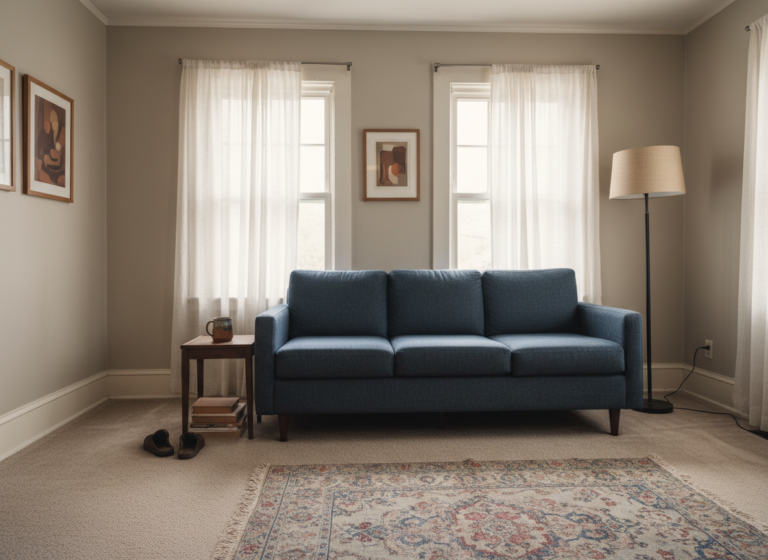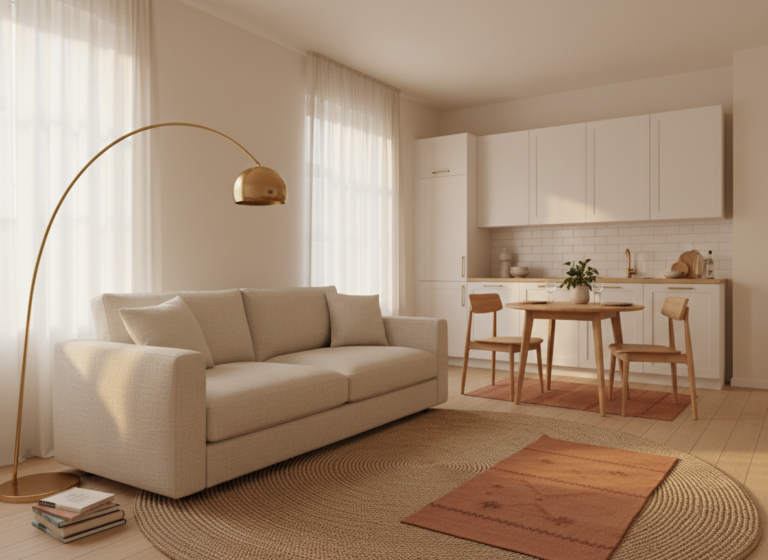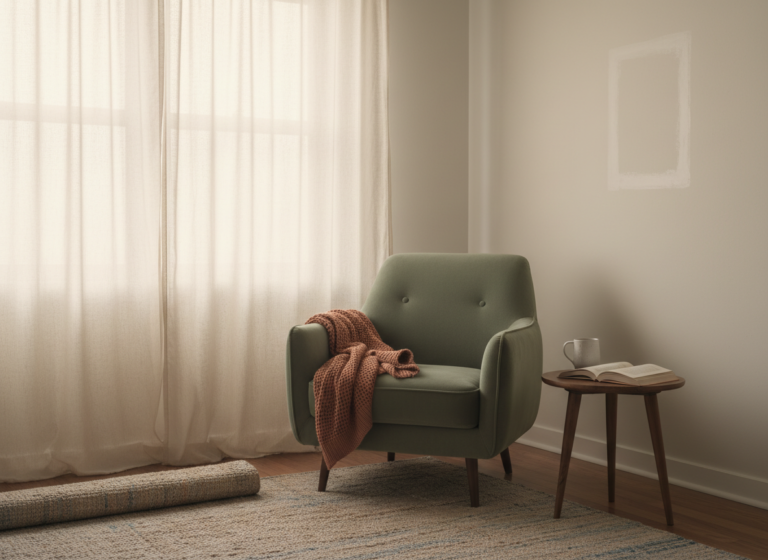
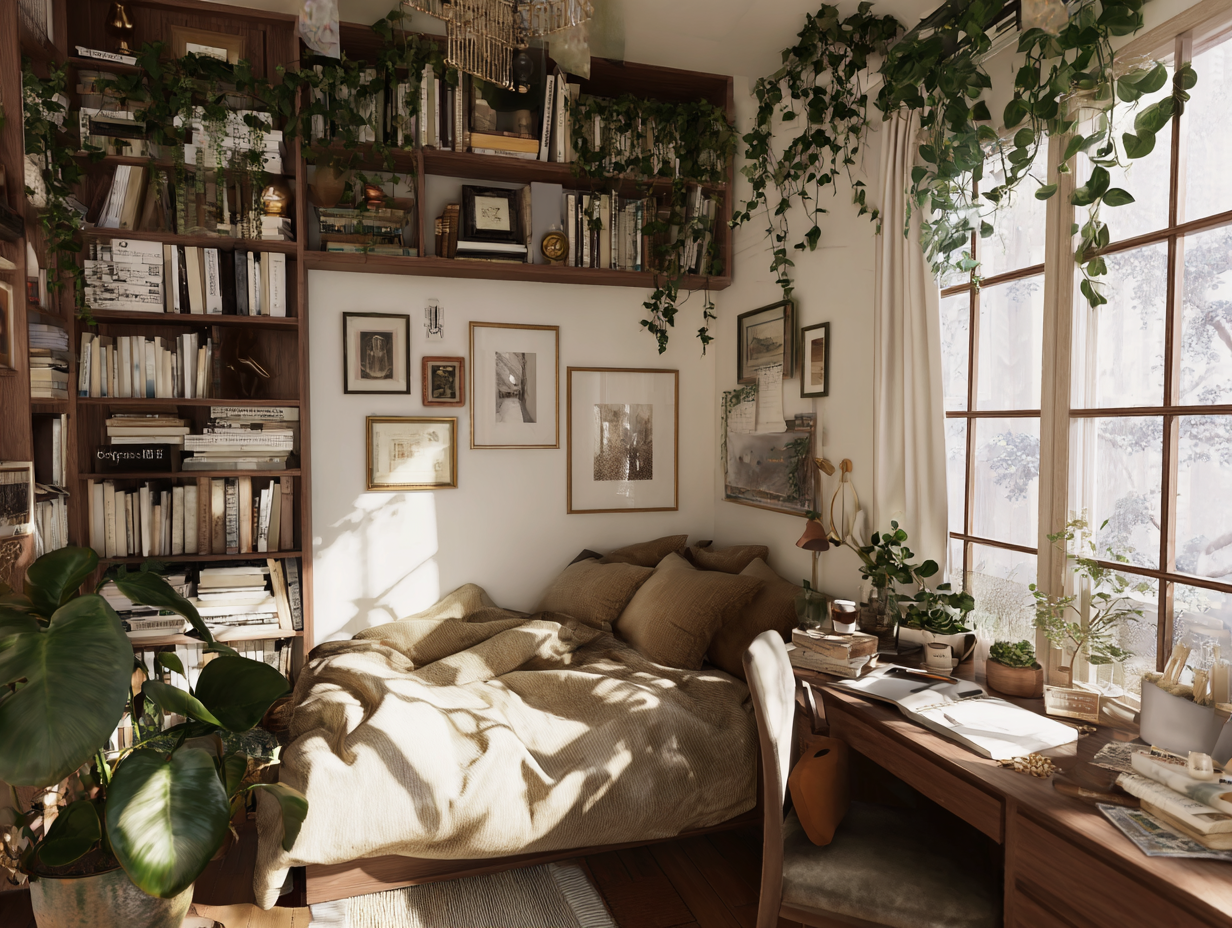
The first sublet I took in this city had walls the color of overcooked oatmeal, an overhead fixture that turned every fabric grey, and a lease line that read no drilling, no nails, no adhesive. Eight months. I wanted the place to feel like a room I had chosen, not a furnished waiting area between life chapters.
The conventional aesthetic advice (paint an accent wall, build a feature shelf, hang a row of plates above the kitchen) was off the table by sentence three of the lease. What those eight months taught me: in a rental, you don’t find your aesthetic by hunting for it on Pinterest. You build it from the four reversible variables you’re actually allowed to touch. The walls aren’t the aesthetic. The light bulb is. The textile is. The art is. The scale of what sits on the floor is. Renters who treat aesthetic as a paint problem fight a battle they can’t win. Renters who treat it as a layering problem can build almost anything.
Why “find your style” looks different in a rental
Most find-your-style guides start with a quiz, a mood board, or a list of named aesthetics: cottagecore, japandi, dark academia, modern organic. The implied workflow is: pick the label, buy the room to match. That works when you can paint, swap the lighting, and drill into studs. In a rental you’re working backwards from a fixed shell: beige walls, white ceiling fixture, builder-grade floors, a kitchen you didn’t pick. Knowing the label doesn’t change the shell.
The cleaner approach is to separate two questions. The first one is what aesthetic am I actually drawn to. We covered that question in How to Find Your Interior Design Style, and if you haven’t landed on a direction yet, start there. The second question is the renter’s: given the direction, which moves are actually available, and which ones do the most aesthetic work for the smallest surface area touched?
Start by auditing the shopping cart you already abandon
Before buying anything, run one quick audit. Open the saved-for-later folder you’ve been building for months. The screenshots, the abandoned Wayfair carts, the Pinterest boards titled “maybe.” Lay them out together and look for the repeated word. Not the styled word like “cottagecore” or “japandi,” but the literal noun that keeps appearing. Linen. Brass. Cane. Black wood. Warm wood. Worn. Glossy. That repeated noun is your aesthetic spelled out in shopping vocabulary, which is what’s useful when you actually have to type something into a search bar.
This is the part most find-your-style advice skips. You don’t need to know whether your aesthetic is “modern bohemian” or “transitional eclectic.” You need to know that you keep saving warm-wood-and-linen-and-brass. That is the shopping list. The Shopper’s Guide to Interior Style Search ties ten common aesthetics back to the actual nouns and search terms that produce them, which is what makes a style shoppable instead of mood-board-able.
Four reversible levers do the actual aesthetic work
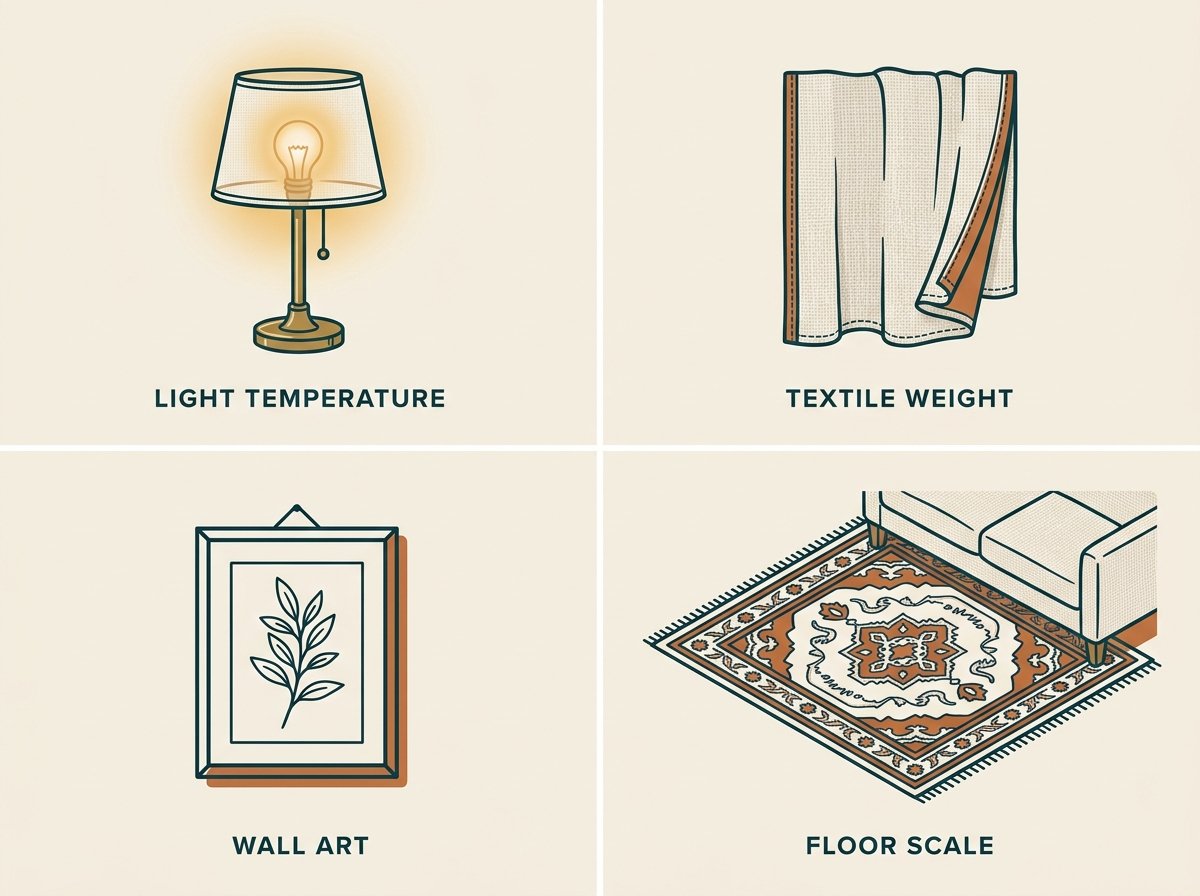
The reason a beige rental can read as a specific aesthetic (cozy, moody, bright, warm) is almost never the walls. It’s the layered foreground in front of the walls. Four levers do most of that work, and every one is reversible.
Light temperature. A 2700K warm-white bulb in the lamps you control changes a room more than any paint job. Cool overhead light flattens everything; warm low light makes the same beige walls read as cream. This is the single highest-leverage move in a rental, and it costs about twelve dollars. Skip the overhead when possible; lean on table and floor lamps instead.
Textile weight. A heavy linen curtain panel that puddles on the floor reads as a different aesthetic than a thin polyester one that hangs short. Same window. Same hardware (or no hardware: tension rods work). Curtain weight, throw weight, rug pile depth. These all signal aesthetic without touching a wall.
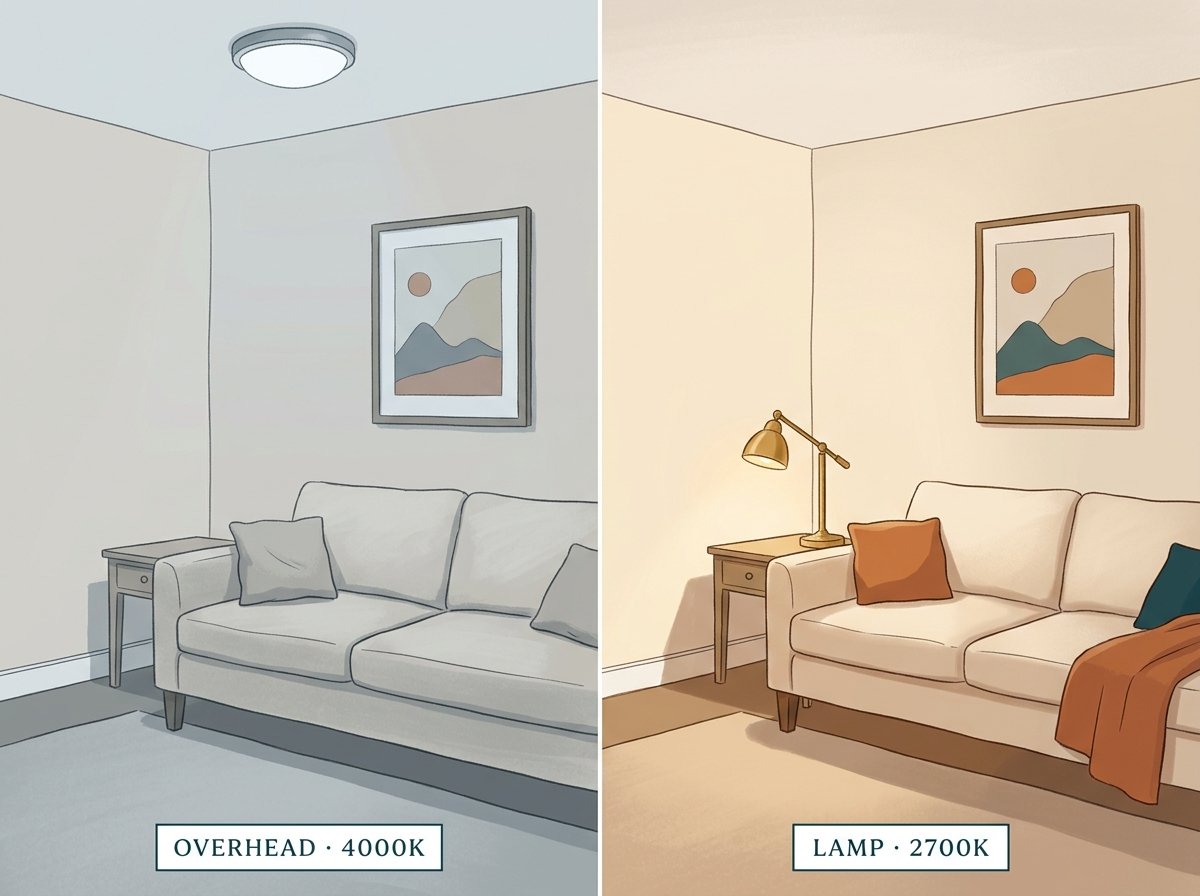
Wall art and what frames it. Wall art carries the loudest aesthetic signal in a room because the eye lands there first. In a rental you’re choosing the framing, the size, the spacing, the height, and the renter-safe mounting. None of which need permission. We’ve covered the mounting side in Renter-Friendly Wall Decor Ideas, but the aesthetic decision is upstream of the mounting: what print, what frame, what size relative to the furniture below it.
Scale on the floor. The size of the rug, the proportion of furniture to room, the negative space around each piece. These tell the eye whether a room is composed or accidental. A too-small rug under a couch reads cheaper than a well-chosen forty-dollar print on the wall above it. Scale is the lever most renters underbuy and it’s the one that fakes a designed room the fastest.
One coherence pass before you check out
The most common rental aesthetic mistake isn’t picking the wrong direction. It’s picking four good things from four different directions and ending up with a room that feels accidental. Before you actually buy anything in the cart, run one coherence pass.
- Do the textiles share a temperature with the bulb you chose? Warm linens under a cold overhead fight each other; the room ends up looking unresolved.
- Does the art’s color story share at least one note with the largest textile in the room? If not, the room reads as two scenes stitched together.
- Is the rug big enough that the front legs of the couch sit on it? A too-small rug undoes most of the work the other three levers do.
- If a friend walked in cold, could they describe the aesthetic in one short phrase? If they’d say “cozy and minimalist and moody,” that’s three rooms, not one.
This is the work the Room Reset does for you in one sitting. You answer a few questions about the room you have, and it returns a seven-day plan around a single style direction that fits within what the lease already allows. The four-lever framing above is what makes any plan executable in a rental; the coherence pass is what keeps the plan from becoming three competing aesthetics in one room.
The sublet with the oatmeal walls ended up reading as warm-linen-and-brass, and nobody who walked in commented on the walls. They commented on the lamp light, the curtains, the print over the dresser. The room I couldn’t repaint became the room I had built. Which, it turned out, was the same thing — only legal.