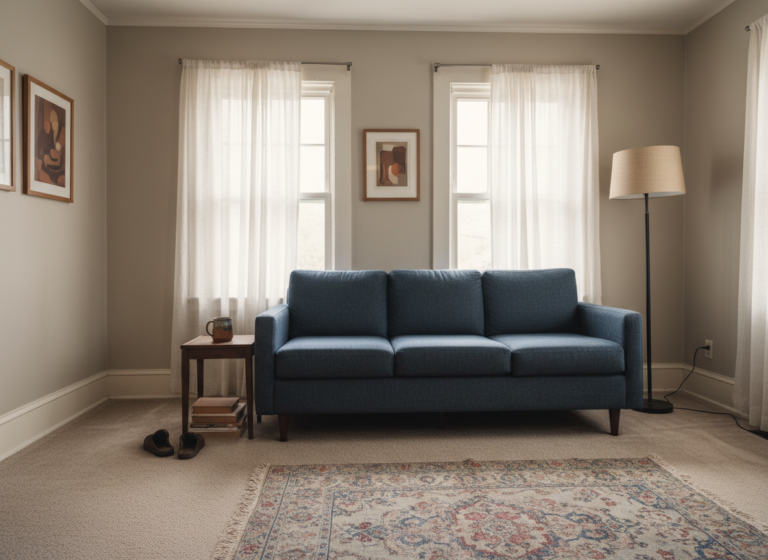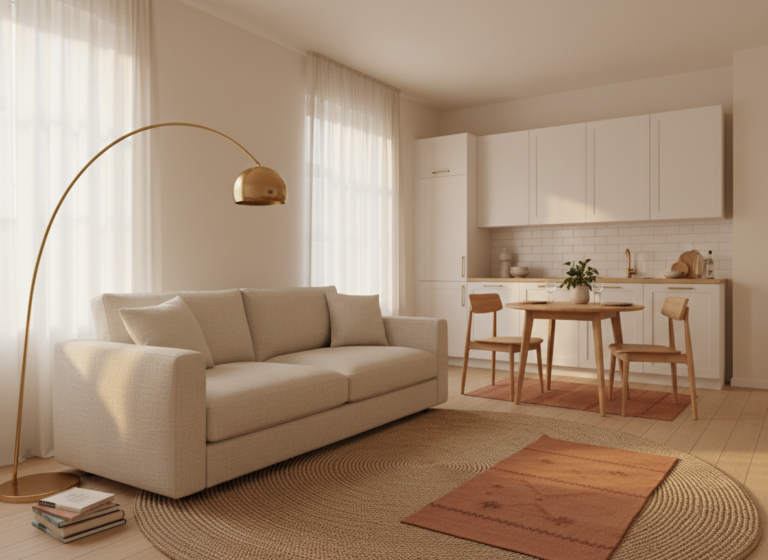
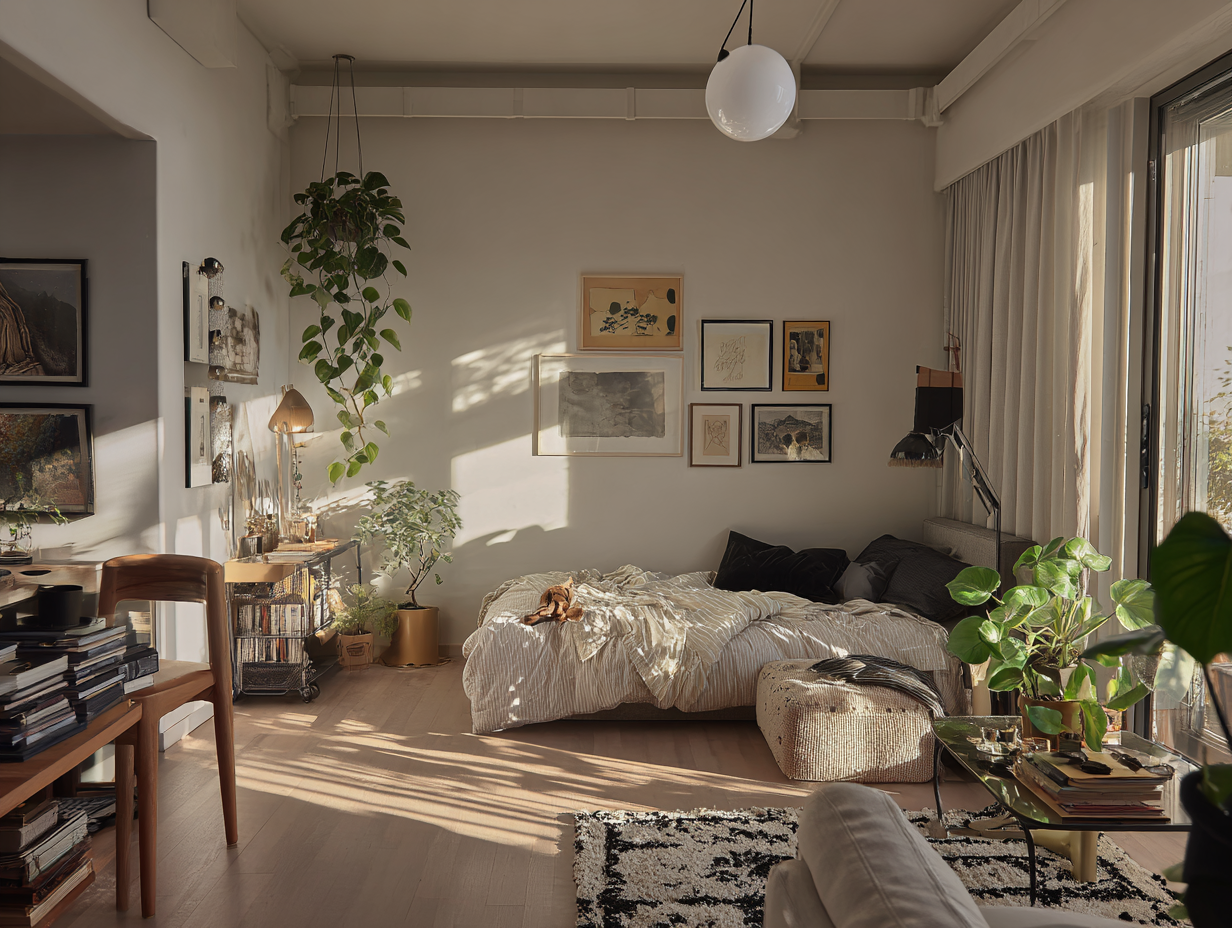
The four layout questions, in the order they have to be answered
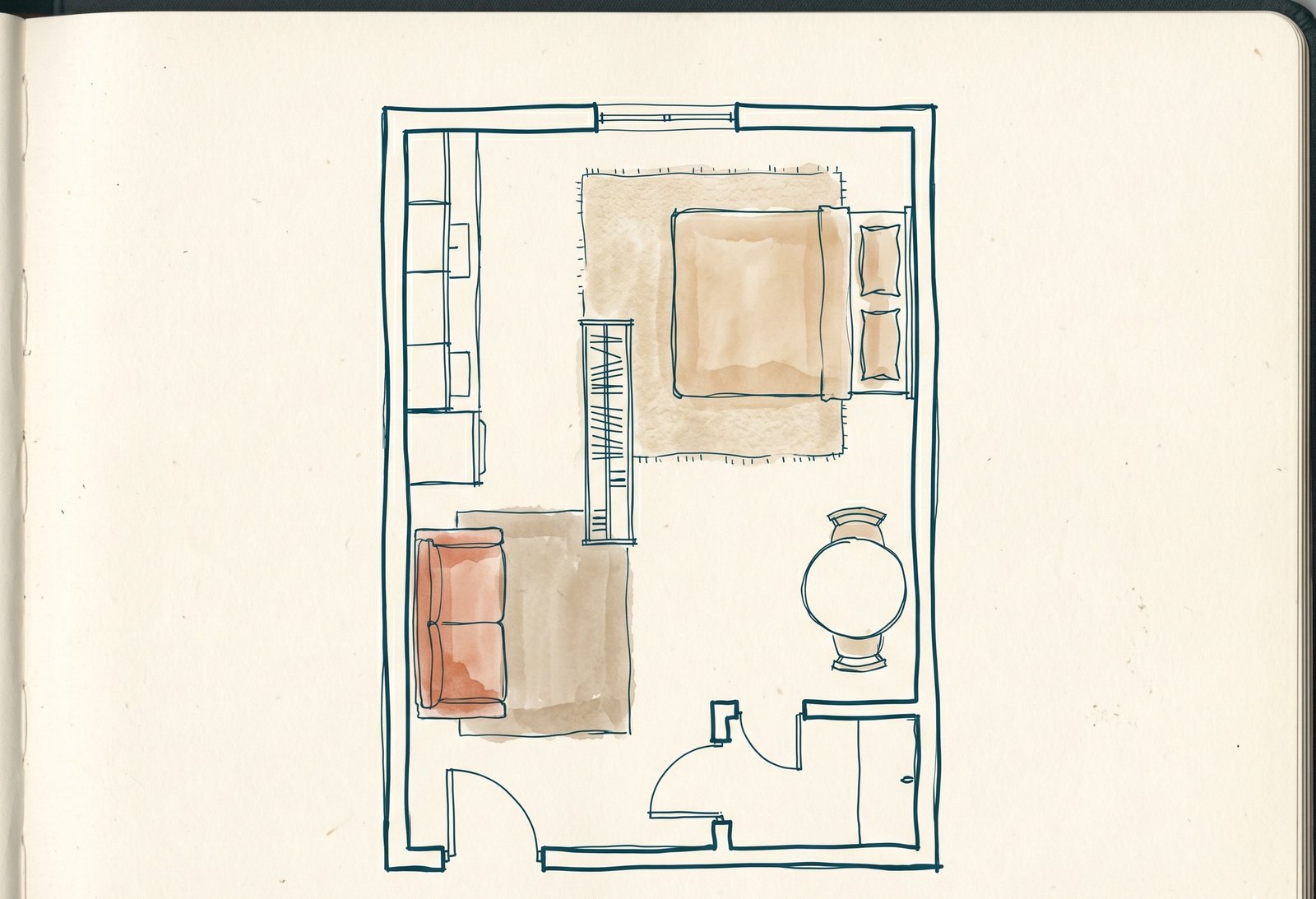 If you re-order these you will buy a couch that blocks a window or a rug that ends six inches short of the bed. The sequence is the thing.
| Order | The question | What it locks in |
|---|---|---|
| 1 | Where does the bed go? | Sets every other zone. The bed is the largest non-negotiable; it goes first. |
| 2 | What does the “sit” zone face? | What you look at when you sit down decides where the couch can be, and therefore where the rug goes. |
| 3 | How do you separate eating from sleeping, visually? | Not with a wall. With a rug edge, a shelf, a lighting change, or a chair turned outward. |
| 4 | What goes against the longest wall? | Storage, almost always. Not a statement piece. The longest wall is your closet substitute; renters don’t get to build closets. |
The bed-first rule is the part most studio guides skip. They treat the bed as a thing to hide or disguise. In a 300-square-foot room, the bed is the room’s center of gravity; trying to hide it means every other choice fights the largest object you own. Place it intentionally, then let the rest of the apartment route around it.
The longest-wall rule is the one renters get backwards most often. The instinct is to put the prettiest thing there, because that’s what the wall “deserves.” Wrong. The longest wall is the only wall in a studio that can carry full-height storage without cramping the room. Use it for storage. Put the pretty thing opposite the bed, where you’ll see it when you sit up.
Zoning without walls: the four moves that do the work
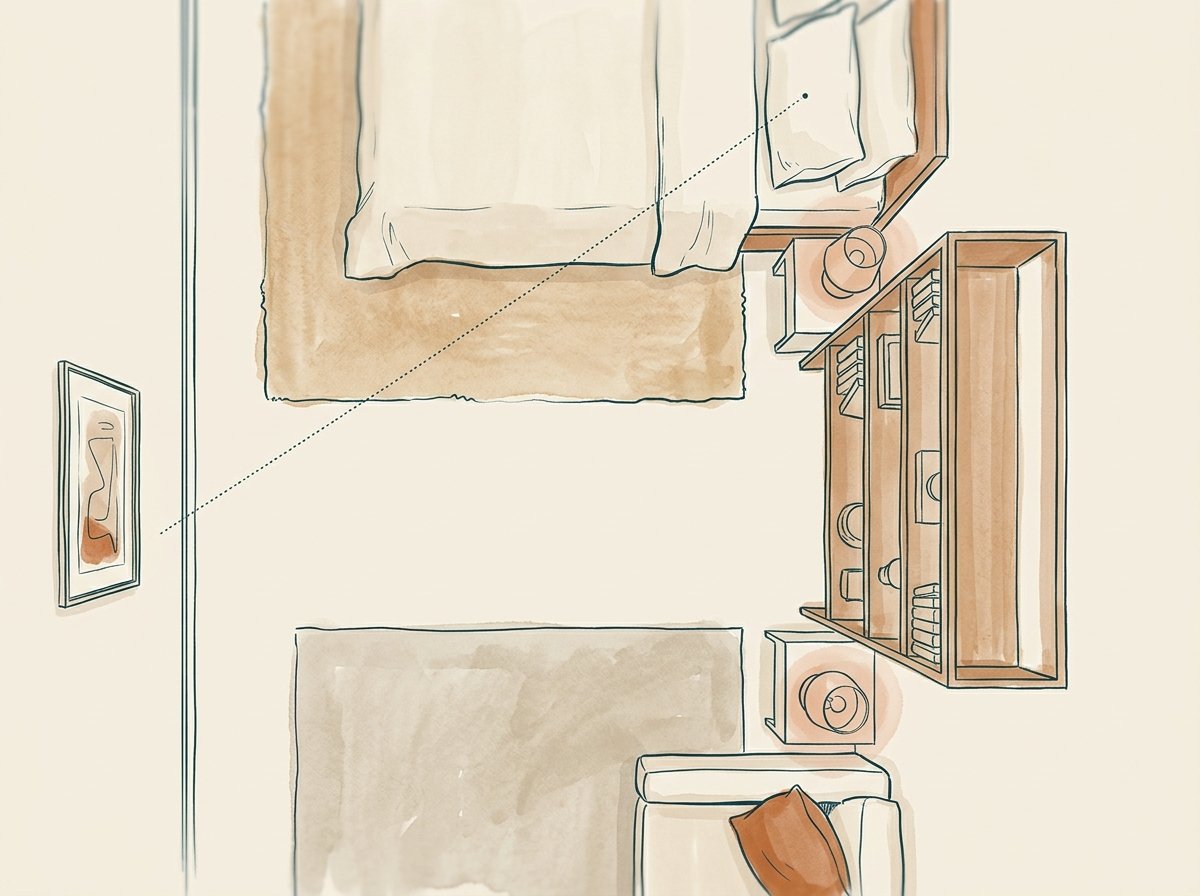 Once the bed and the sit-zone are locked, the rest of the apartment is about making one room read as three or four. None of these moves involve permission from a landlord.
1. One rug per zone. The single biggest layout mistake in a studio is a big rug that covers the whole floor. It collapses the zones. A smaller rug under the bed, a different smaller rug under the sit zone, and bare floor between them does more for the apartment than any single piece of furniture. The eye reads the rug edges as zone edges.
2. An open shelf as the wall you don’t have. A bookcase placed perpendicular to the bed wall, with its back facing the bed and its open side facing the sit zone, gives you two functions: storage behind the bed, visual separator in front. The cheapest possible wall.
3. Lighting layers that follow the zones. Overhead light is neutral, hits everything equally, and makes the room feel like a hotel lobby. One small lamp per zone (one by the bed, one by the couch, one near the eating surface) is what makes one room read as several spaces. Lamps are the cheapest renter-friendly architecture move you can make.
4. The bed sight line. Whatever you can see from the bed, sitting up, should look intentional. Not staged; intentional. A pile of laundry, a sink of dishes, a stack of boxes you haven’t unpacked: that’s what you wake up to. The art opposite the bed, the lamp by the sit zone, the closed cabinet door in the kitchen — those are the morning view. Curate them.
When the playbook isn’t enough
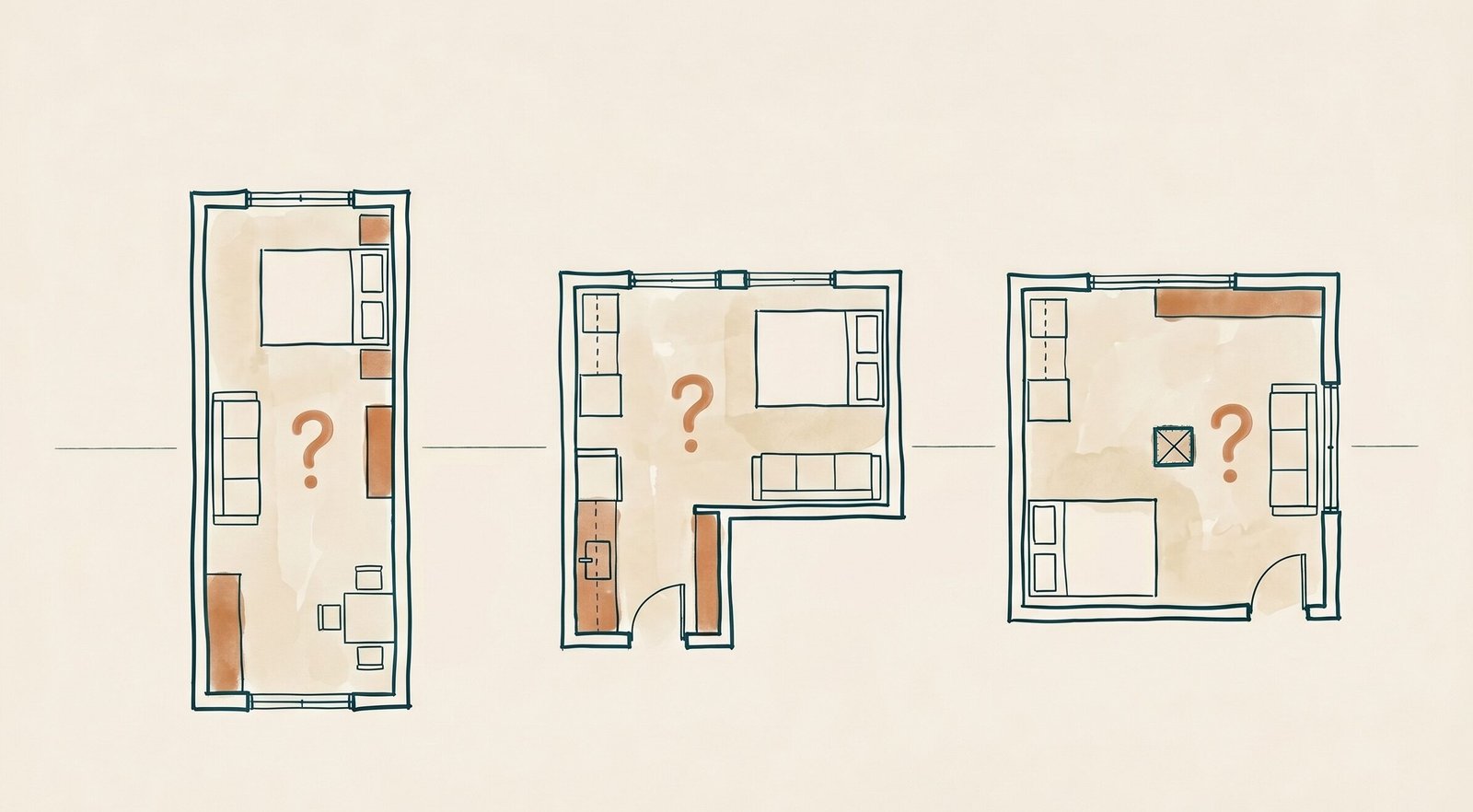 The four questions work for studios with one obvious bed wall and one obvious sit wall. The studios that need more than a playbook are the awkward ones: railroad shapes, L-shapes, studios with a structural column in the middle, studios where the windows are all on one short wall. Those need an actual diagnostic instead of a generic sequence.
Most of the playbook above lives in fuller form in the Apartment Design Action Kit: a printable layout worksheet for the four questions, a visual reference for the zoning moves, a buy-or-pass filter for the furniture that gets bought wrong in studios most often (the wrong-size couch, the wrong-shape coffee table, the rug that’s two inches too small). No subscription, yours to print and re-use across studios. Studios are the apartments you tend to repeat: first solo place, first move to a new city, the year between roommates. The playbook earns its keep across several leases.
A studio doesn’t need more furniture. It needs the four questions answered in order, and a rug heavy enough to keep them there.