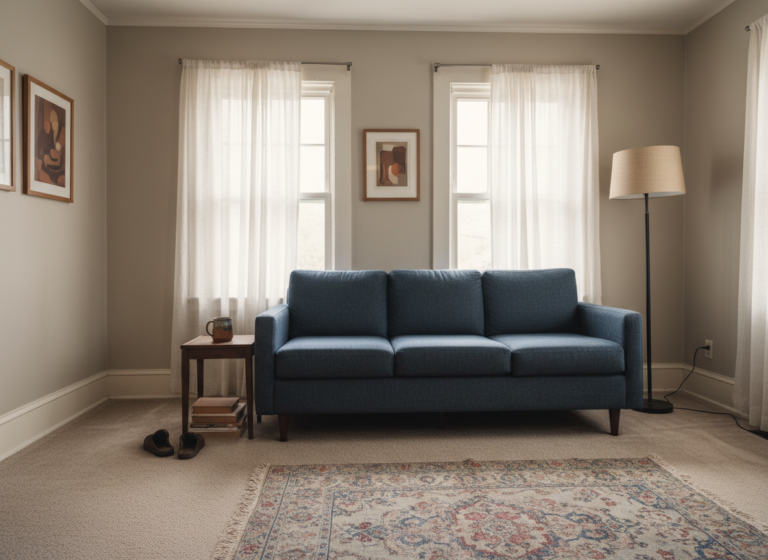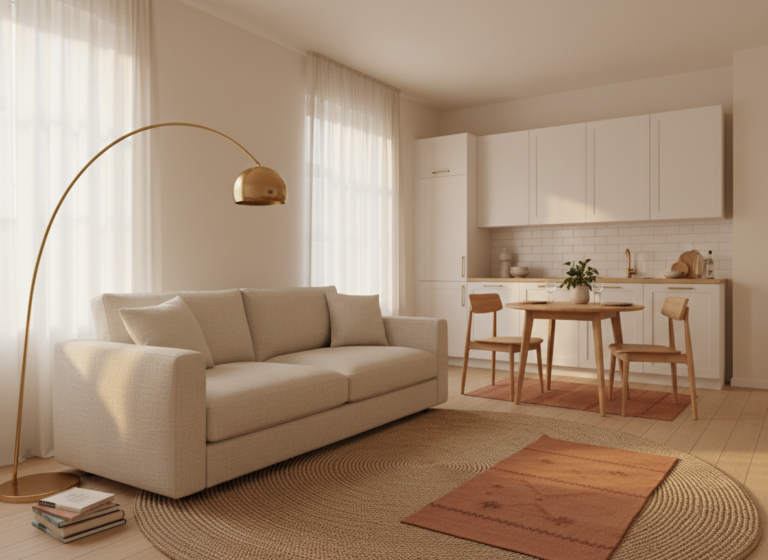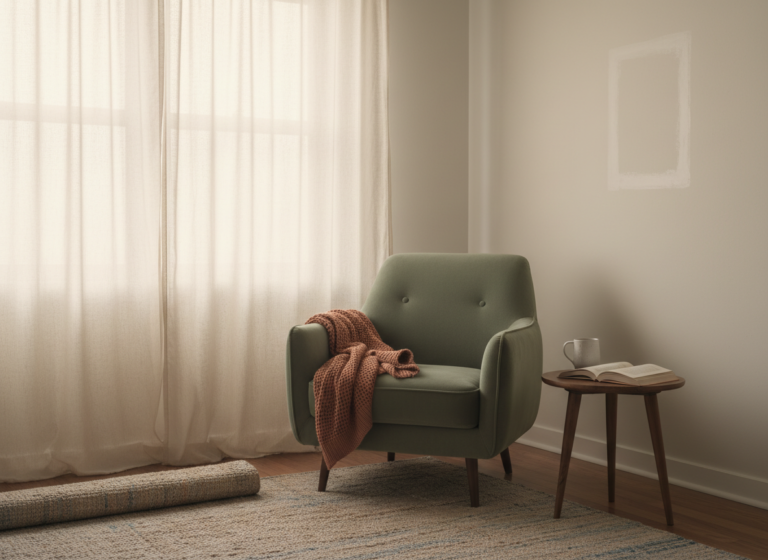
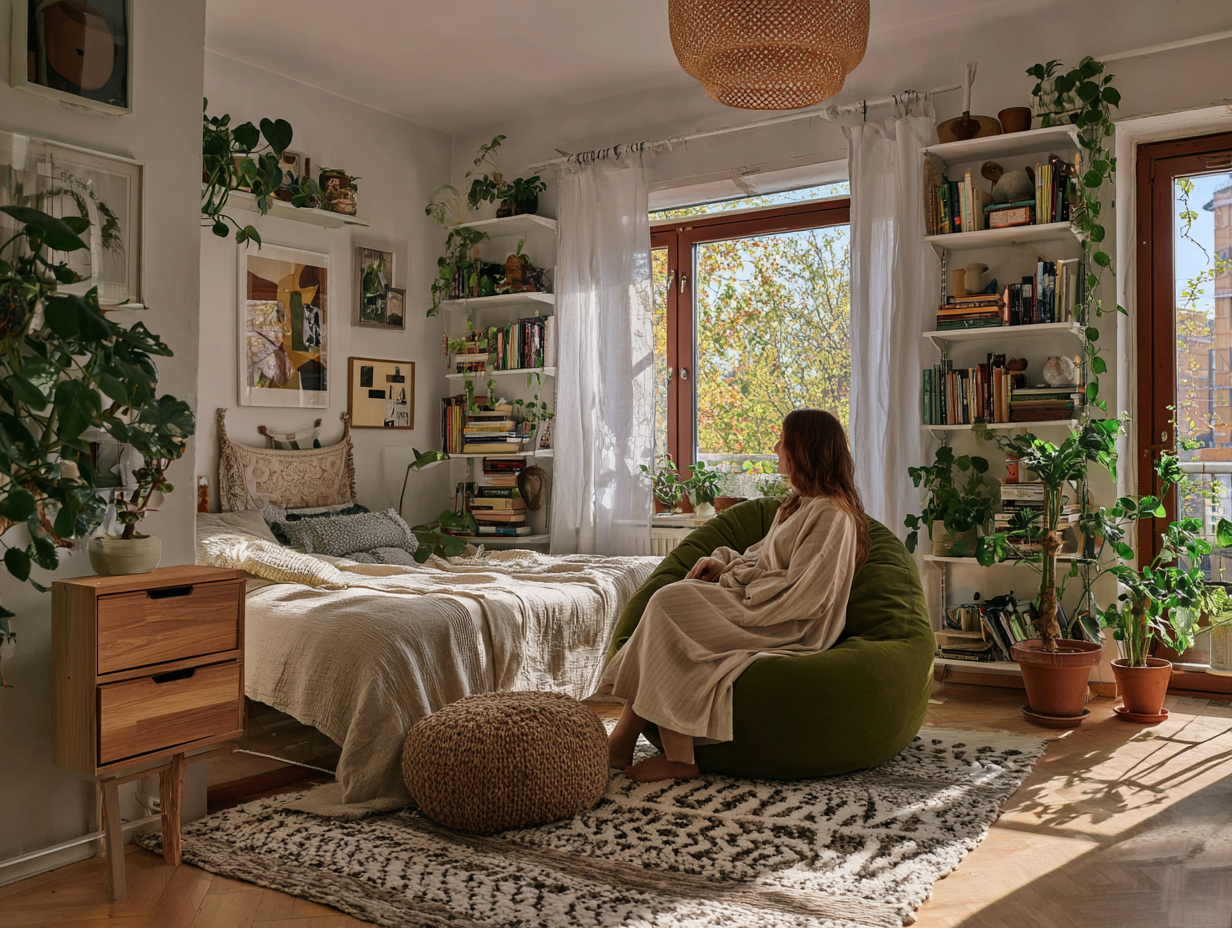
The throw-blanket math is illuminating. Most renters by their second apartment have bought three or four. One bouclé. One waffle weave. One cable-knit that sheds. One inexplicable polyester one from Target on sale at midnight. The apartment is not cozier. The throws migrate from the back of the sofa to the floor to the laundry pile, and the room still reads as a hallway with furniture in it.
Cozy is not a thing you buy. It is a sequence you decide on. Light first, then texture, then small living things, then the parts of the room that aren’t from a store. Done in order, the four layers compound. Done out of order, they fight each other and the apartment stays cold no matter how many soft things accumulate in it.
Why your apartment isn’t cozy yet (beyond throw blankets)
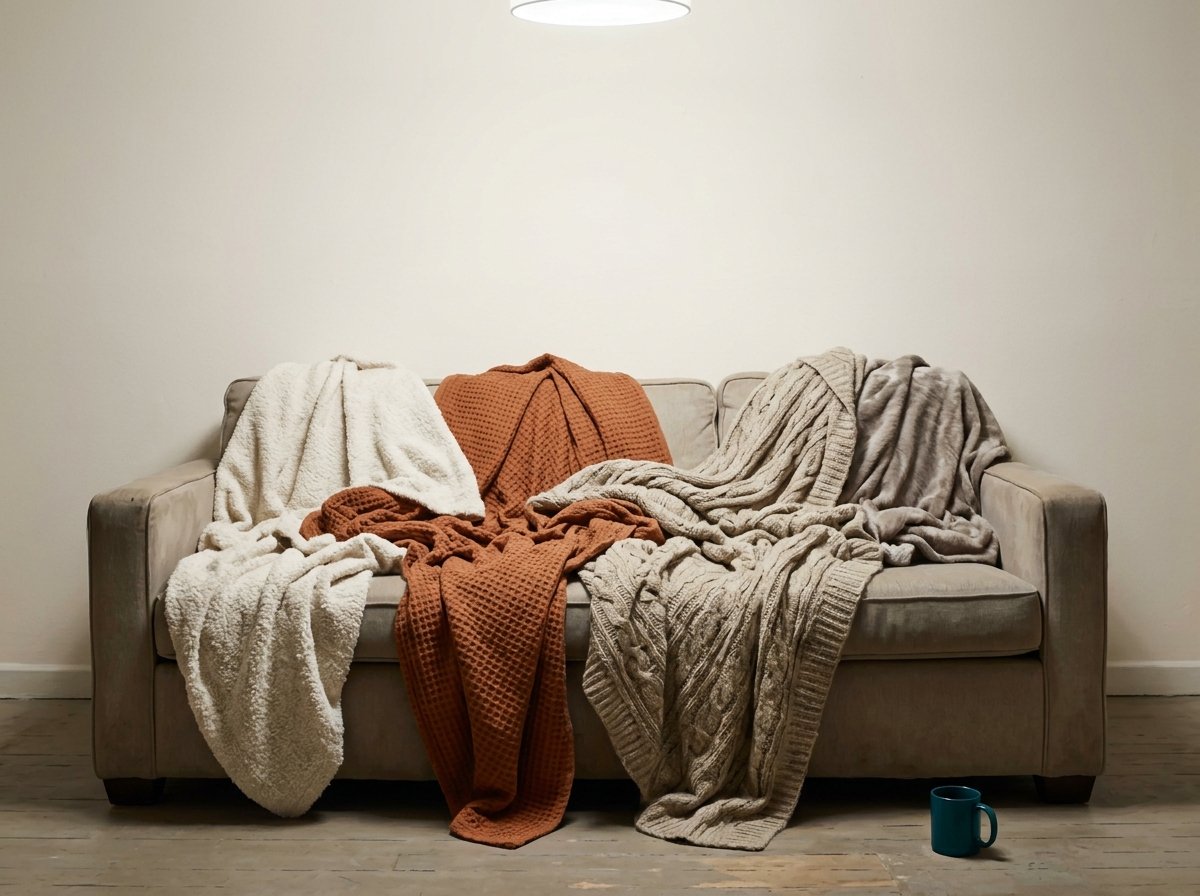
The pattern that catches most renters is treating cozy as a property of an object instead of a property of a room. A specific throw is not cozy. A specific candle is not cozy. A room is cozy when its lighting, surfaces, foreground, and personal context are all doing a little bit of work in the same direction. A room is not cozy when one of those layers is missing, no matter how excellent the other three are. Texture cannot fix bad light. A plant cannot fix a sterile foreground. Personal photos cannot fix curtains that are hung wrong.
The other pattern: cozy is treated as a moment instead of an accumulation. Most decor advice describes cozy like it’s a transaction you complete on a Saturday. The honest version is that cozy is what a room becomes after enough specific decisions have stacked up over enough months. A rented apartment can absolutely feel like home. The decisions that get it there are slower than most blog posts admit, and most of them are not on Amazon.
The four layers below are the same sequence I run in every apartment, in the same order, regardless of budget. Light is layer one because it carries the most weight per dollar. Textiles second, because they only register once the light is right. Plants and personal context third, because they need the first two layers to land against. Priority order is the post’s job; the throws come last, and they come after the apartment already feels like home, not before.
Layer 1: Light fixes most of what feels cold
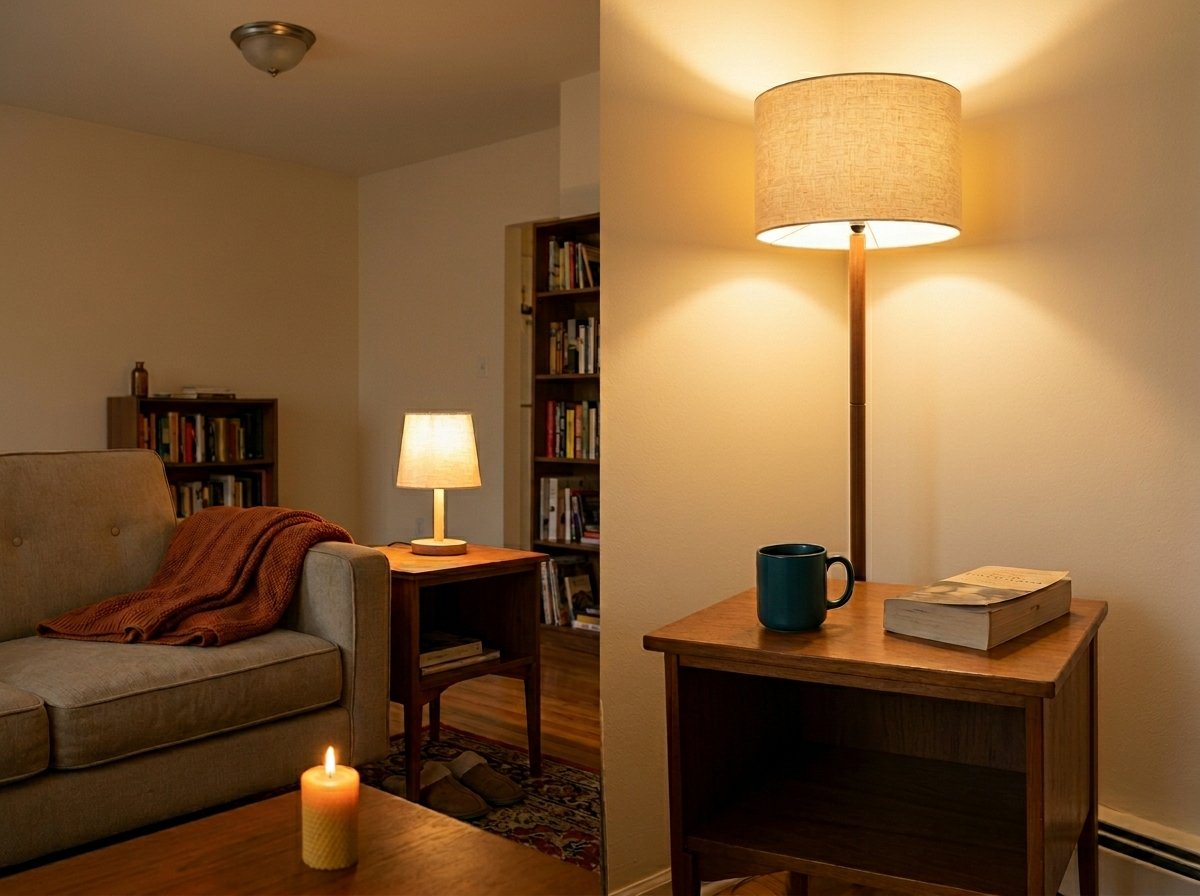
If you do one thing from this post, this is the one. Most apartments come with a single harsh overhead fixture per room, and that fixture is doing all the lighting work, which means everything in the room is lit from one direction, at one height, at one color temperature. The eye reads that as an office or a hallway, not a home. Add second and third light sources at different heights and the room reads as a room.
💡 Aim for at least 3 light sources per room at different heights:
Ambient (floor lamp in a corner) + Task (table lamp on a side surface) + Accent (candles, string lights, a small picture light, an LED strip behind a headboard or shelf).
Use warm white bulbs (2700K) in everything. Cool white (3500K and up) makes faces look tired and walls look slightly green.
The single most underrated move is turning the overhead off at night and letting the lamps carry the room. Most apartments visibly transform when the central ceiling fixture goes quiet. A pair of warm lamps and a candle is a different room than the same furniture lit by a 4000K LED panel from twelve feet up. Cost: two lamps under $40 each, a four-pack of 2700K bulbs from the hardware store. Result: the largest visible change you can make in a rental, no holes, fully reversible at move-out.
Layer 2: Textiles that make the room touchable
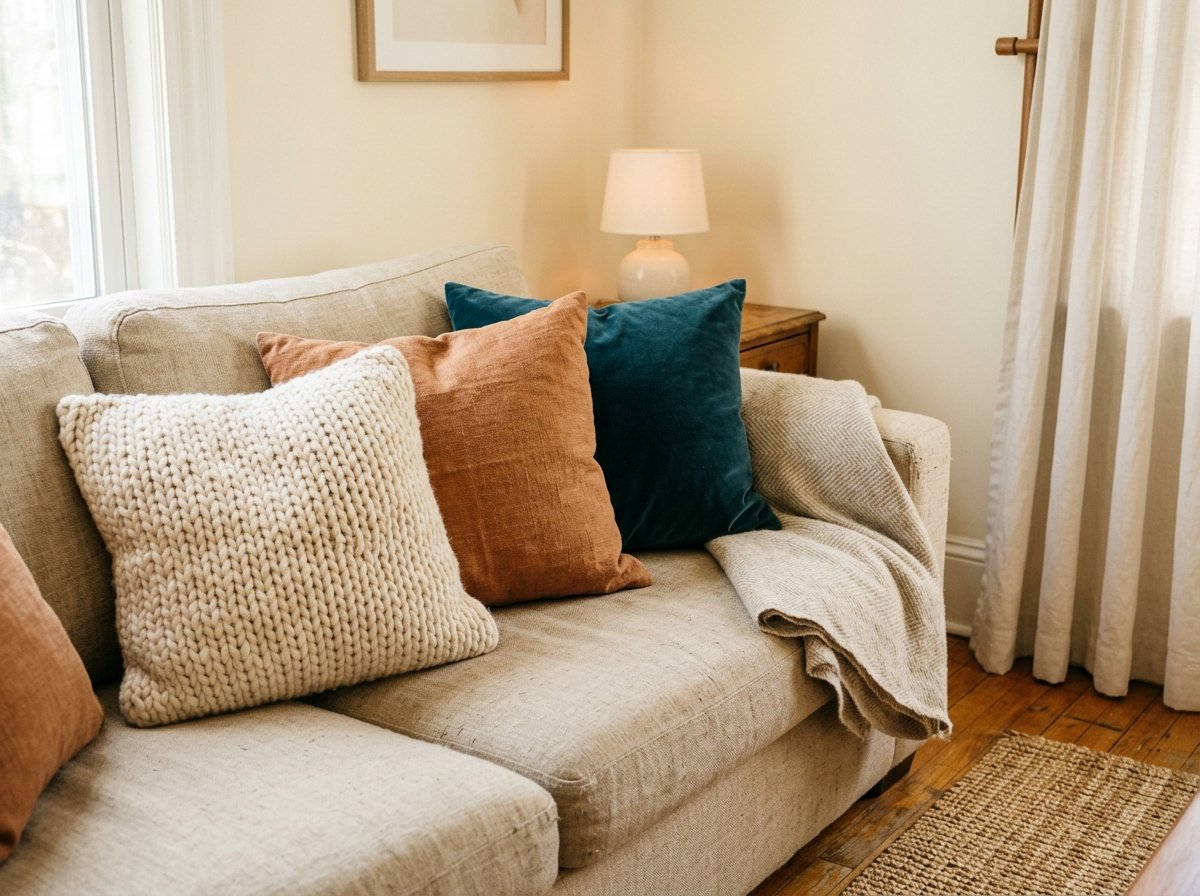
Once the light is right, the next layer is texture. A room that’s only smooth surfaces (laminate floor, painted walls, leather sofa, glass coffee table) reads as architecturally complete and emotionally empty. Texture is what tells the body that this is a place where you sit down for a few hours, not a place you pass through on the way to bed.
- Living room: 2–3 throw pillows mixed in size and texture (one velvet, one chunky knit, one linen, never all the same) + one throw blanket folded over the arm of the sofa + a rug that’s actually the right size for the seating area.
- Bedroom: Bedding you actually like the feel of (this is where to spend, not on a sixth decorative pillow) + a throw at the foot of the bed in a color that ties to one other thing in the room.
- Curtains in every room with a window: Hang them 2–3 inches below the ceiling, extend the rod 8–12 inches past the window frame on each side, let them touch the floor. This single decision moves a room from “rental” to “home” faster than any furniture purchase.
The curtain rule earns its own line because of how disproportionately it works. Curtains hung at the standard window frame read as builder-grade. The same curtains, same fabric, same price, hung high and wide read as deliberate. The fix costs an extra two feet of rod and nothing else, and it is the cheapest “designed” move in any rental.
Layer 3: One living thing, plus the parts that aren’t from a store
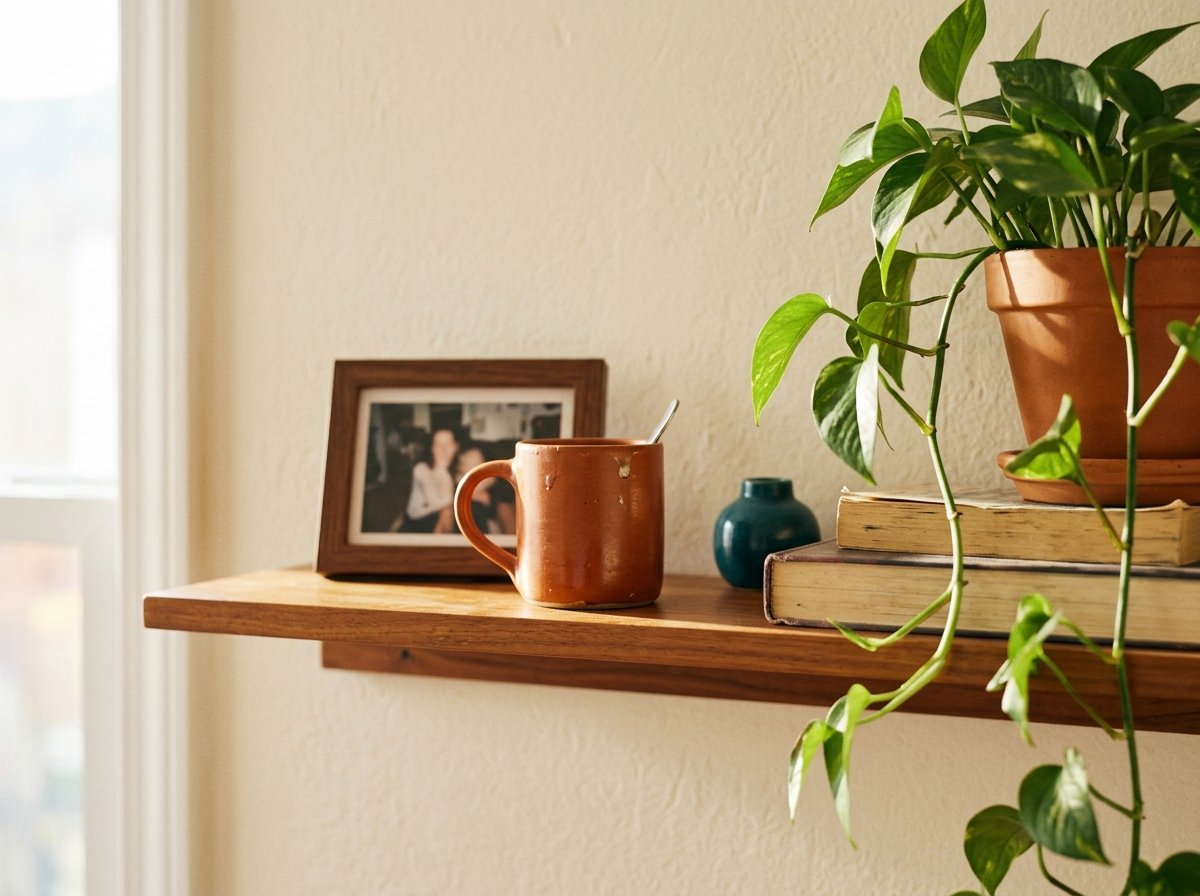
A room without anything alive in it feels sterile no matter what else is in it. You do not need a jungle. One pothos trailing from a high shelf and one floor plant in a corner is the threshold dose for most rooms. Easy varieties for renters: pothos (nearly unkillable, trails attractively, tolerates the apartment lighting situation honestly), snake plants (thrive on neglect, read as architectural), ZZ plants (low light, low water, slow but reliable, forgive a two-week travel gap). Skip fiddle-leaf figs unless the rental has direct south light, which it almost certainly doesn’t.
After the plant, the layer that completes cozy is the part of the room that isn’t from a store. The book you’re actually reading on the side table. A photo of someone you actually know. A ceramic mug from a trip you actually took. A room reads as lived-in when at least three objects in it have specific personal context, where a visitor would have to ask about them to understand why they’re there. A room with zero such objects is a furniture showroom no matter how layered the throw situation is.
This is the layer most decor advice quietly skips. There is nothing on Amazon for “the part of the room that proves you live there.” It is accumulation, slowly, of specific objects with specific stories. That’s the part that takes time, not money, and that’s the part renters most often interpret as a taste problem when it is actually a time problem.
The order matters: cozy is a sequence, not a shopping list
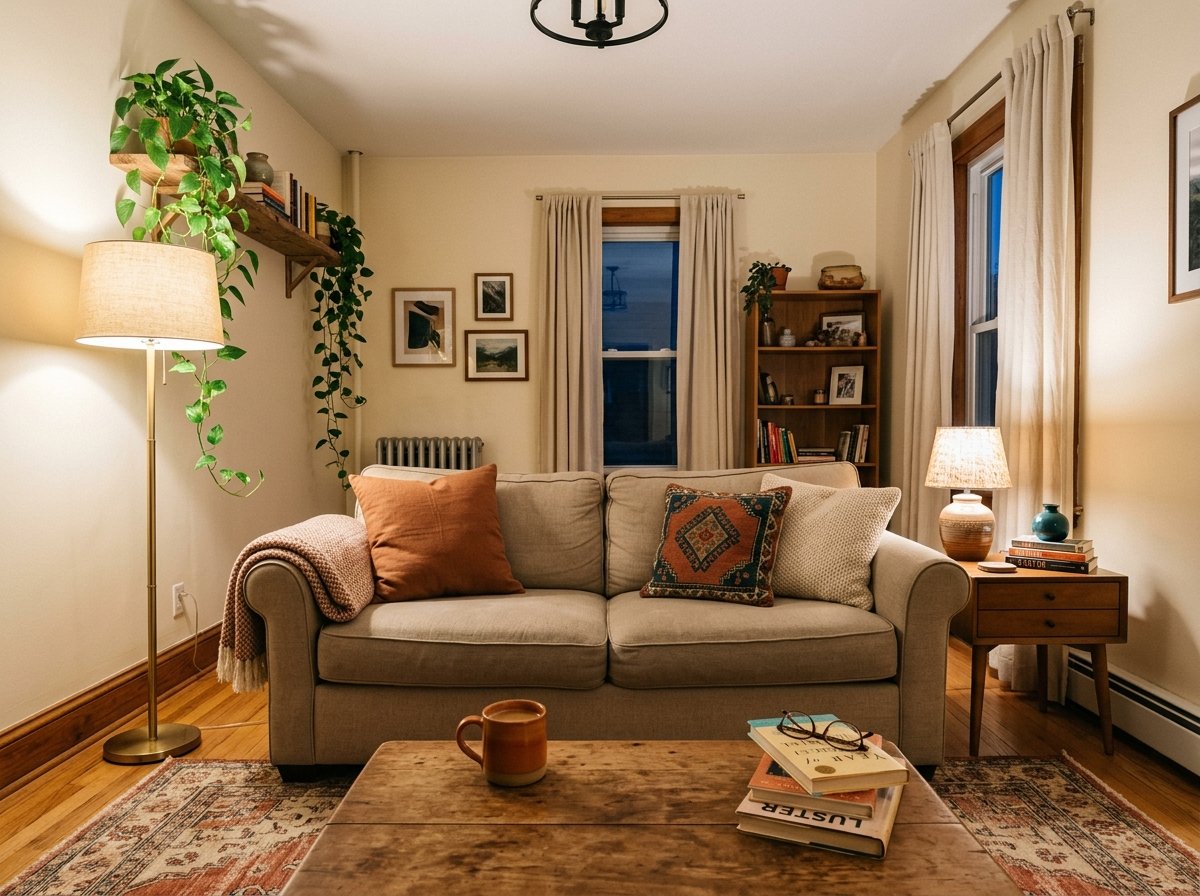
Priority order when budget or time is tight, from most leverage to least:
- Two lamps with 2700K warm bulbs. Biggest visible change per dollar.
- Curtains hung high and wide. The rental-to-home shift in a single decision.
- A correctly-sized rug, even if basic. Anchors the seating area and warms the floor visually.
- One throw + 2–3 pillows. The comfort layer. This is where most renters start, which is why it doesn’t work.
- One plant. One piece of art or one personal object you chose because you actually wanted it.
The list reads like a budget guide. It is also, accidentally, the entire manifesto. Cozy is not a thing you have. It is a thing you build, in order, across enough months to stop treating decorating like a transaction. The throw blanket is a downstream result of the system, not its starting point. A renter who buys throws first and lighting last will keep buying more throws and stay in the same cold apartment.