Budget · Apartment Planning
You told yourself you’d spend $500 on your apartment. You’re at $1,400 and your bedroom still doesn’t have curtains.
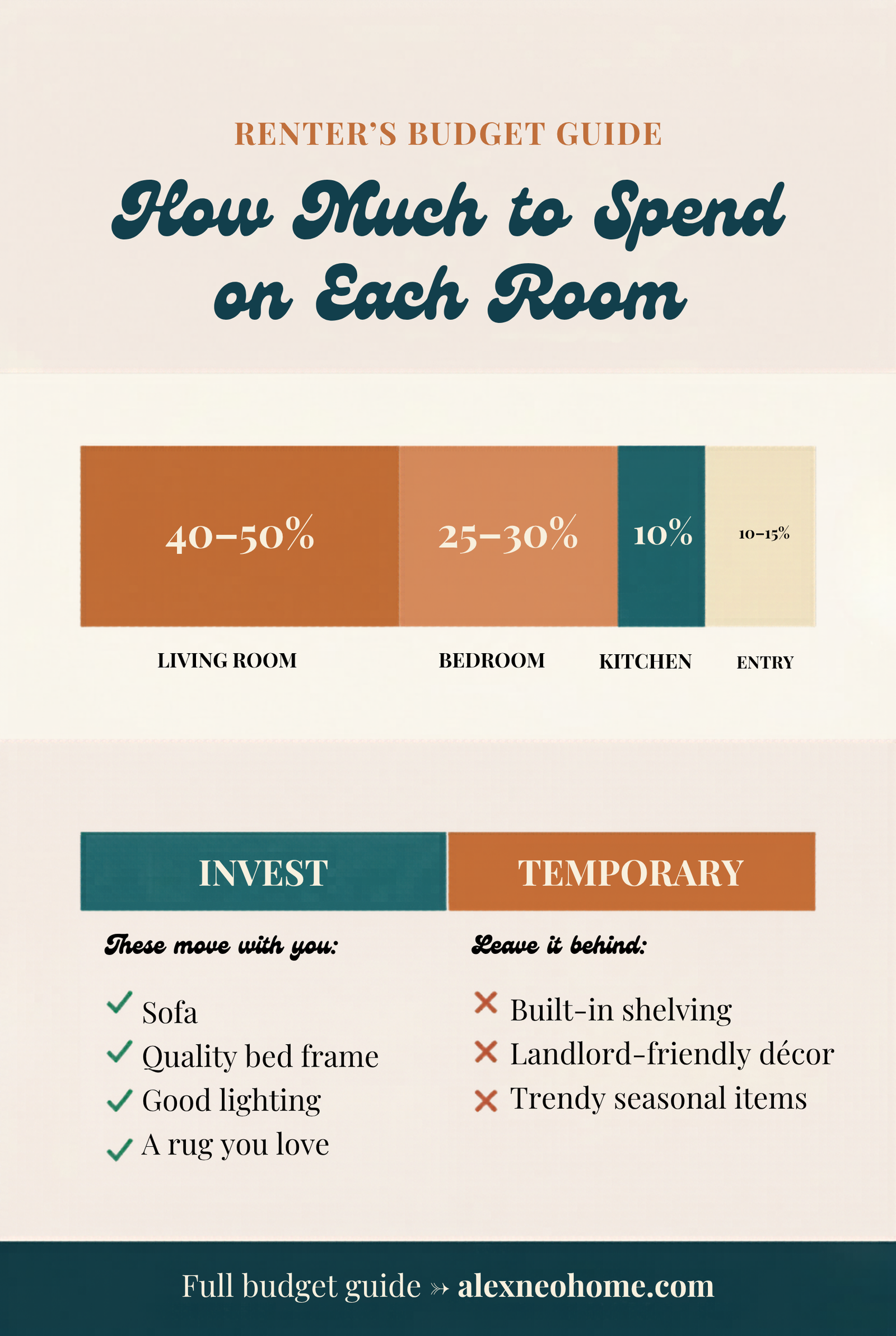
The fix isn’t discipline — it’s a framework. Break your budget down by room and by priority. Some things deserve investment. Others are perfectly fine at bargain prices. Knowing the difference before you shop saves hundreds of dollars.
The Invest vs. Temporary Framework
Ask this for every purchase: “Will I keep this for 3+ years, or replace it at my next apartment?”
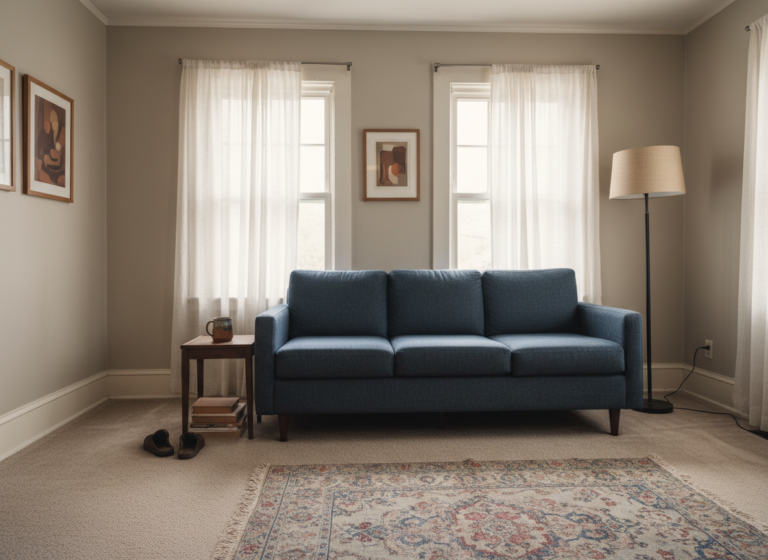
- Invest: Mattress, sofa, quality bedding, desk + chair (if you WFH). These stay with you across moves.
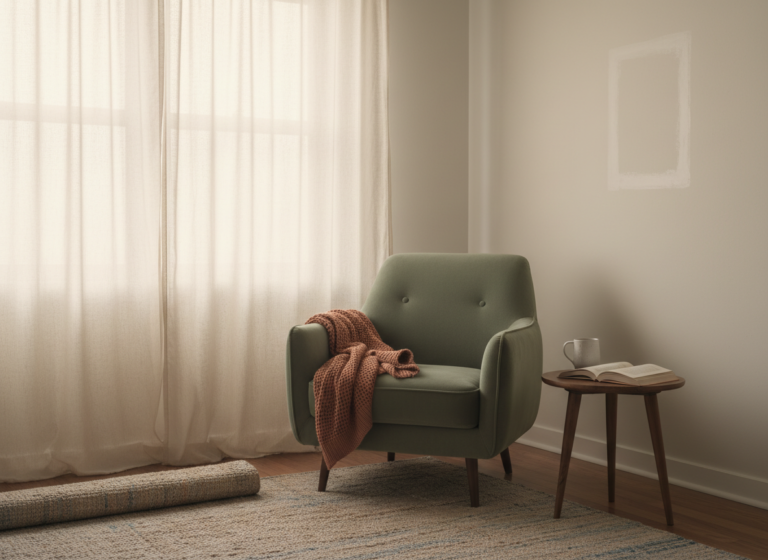
- Temporary (go budget): TV stand, nightstands, first set of curtains, small decor, storage bins. Function matters more than forever-quality.
⚠️ The most common mistake: spending the same on everything. A $200 nightstand and a $200 mattress is the wrong allocation. A $50 nightstand and a $350 mattress is smarter.
want this in one own-forever bundle, no subscription?
the apartment design action kit — 7 PDFs + 1 Excel planner. the complete renter decor system in PDF form. $27.99.
Budget Breakdown by Room
| Room | % of Total Budget | Key Invest Piece |
|---|---|---|
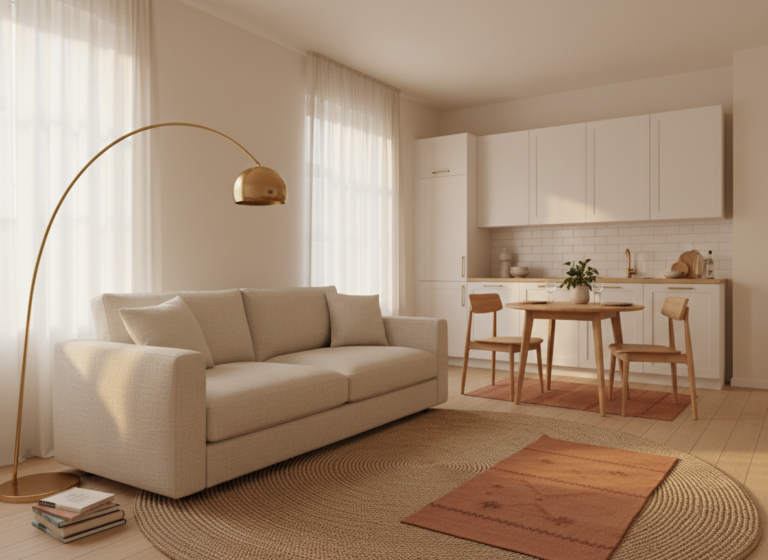
| Living Room | 30–35% | Sofa ($400–1,200) |
| Bedroom | 25–30% | Mattress ($300–800) |
| Kitchen / Dining | 15–20% | Dining table ($100–300) |
| Workspace (WFH) | 10–15% | Desk chair ($100–300) |
| Entryway + Extras | 5–10% | Mirror ($30–80) |
How to Avoid Budget Blowouts
- Set category budgets before shopping — not just a total. When a category is spent, it’s spent.
- Wait 48 hours on anything over $100. Impulse buys over $100 are where budgets die.
- Track what you’ve actually spent. Easy to lose track when buying from multiple stores over weeks.
💡 Want a budget tool built for this? The All-in-One Decor OS auto-allocates your budget across rooms, separates invest pieces from temporary ones, and tracks every purchase. Stop decorating on vibes and hoping the math works out.
your decorating year
rugs returned$80
lamp bought twice$60
coffee table mistake$200
amazon at 11pm$80
pinterest hours—
total fumbling$420+
Cozy Club / 1 yr$39