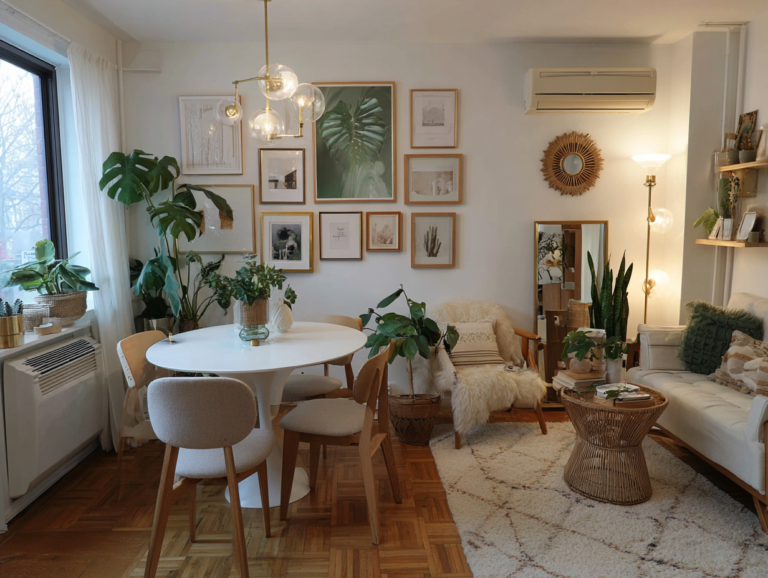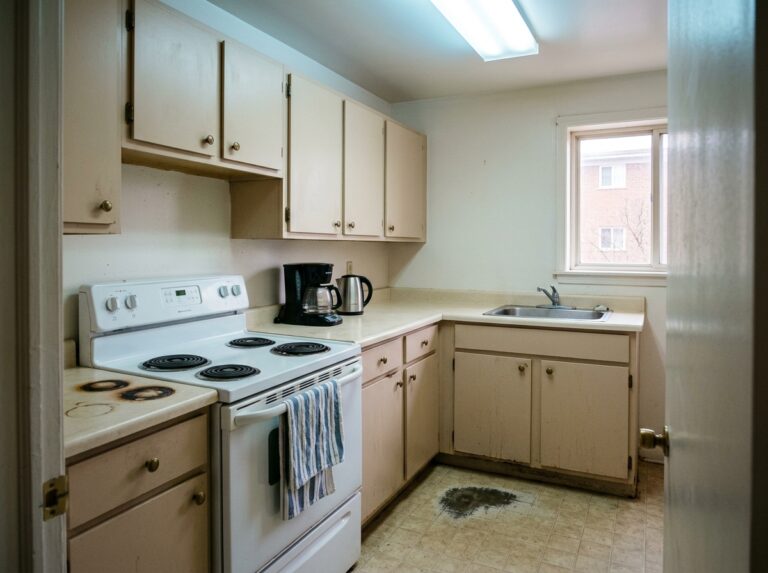
Six years into renting and I still walk into the living room some nights and think, “It’s not done yet.” Then I look around. The rug fits. The sofa has the right cushions. The art got hung last spring. The lamp in the corner gives off the warm light I wanted. Every single thing I set out to put in the room is there. So what does “not done” actually mean — and why has the same feeling followed me from apartment to apartment?
Here’s what I’ve come around to: “done” is a homeowner word that got smuggled into rental life and never quite fit. Homeowners think about “done” the way they think about a kitchen remodel — there’s a punch list, you cross things off, you reach the bottom, the project closes. Renters can’t think that way without lying to themselves. The lease ends. The walls aren’t yours. The kitchen will never be the kitchen you’d choose. So “done” — in the homeowner sense — never arrives, and the renter spends years feeling vaguely behind on a deadline that doesn’t exist.
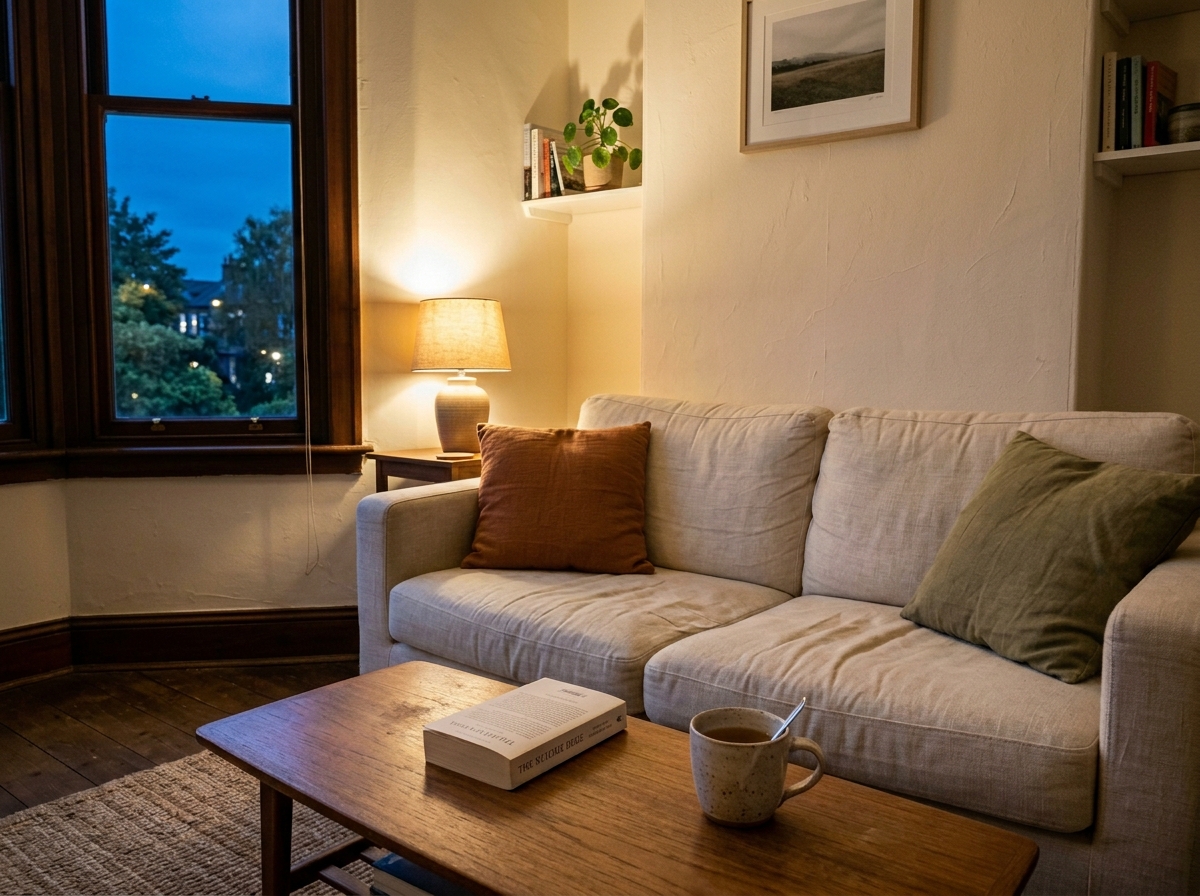
The myth of “done”
The reason “done” feels permanently out of reach is that the word is doing the wrong job. In ownership, “done” means a fixed state: walls painted, fixtures installed, no more decisions to make. In renting, that fixed state is impossible by definition. You’re decorating something temporary, and temporary things don’t have a final form — they have a current form.
What I’ve noticed, after a few apartments and a couple of late-night conversations with friends in the same boat: there isn’t one “done.” There are three. They’re reached at different points in the lease, they require different things from you, and most renters stall at the gap between the second and the third because they think the third one requires a level of permanence renting can’t give them.
Done #1 — Functional done (the apartment works)
The first kind of done is the easiest to reach and the only one people remember to celebrate. The room works. You can sit on the sofa without moving a box first. The kitchen has the things you need to cook a meal. The bed has sheets. The shower has a curtain. Nothing in the apartment is actively making your life worse.
Most renters reach functional done within two to four weeks of moving in. For some people, this is where the decorating story ends — and that’s a legitimate choice. The apartment houses you. It does its job. If you’re someone who moves every twelve months for work, stopping here is rational. Don’t let any decor account tell you you’re failing because you stopped at functional. You aren’t. You picked a different shape of life.
Done #2 — Comfortable done (the apartment is okay to come home to)
The second done is when the apartment stops being a place where things technically happen and starts being a place you’re willing to come home to on a hard day. It’s softer than functional but not yet personal. The lighting isn’t fluorescent. There’s a candle, or a throw, or a single corner that’s been arranged on purpose. The bathroom has a mat you chose, not the beige rectangle that came with the apartment.
This usually arrives between months two and four. The signal is small and specific: you stop apologizing when you have someone over. You don’t say “sorry it’s a mess” or “we just moved in” — even when both might still be technically true. The apartment has crossed a threshold where it doesn’t embarrass you.
A lot of people stop here, too. And again, this is a legitimate stopping point. If your apartment is comfortable and you don’t feel the pull to push further, the pull isn’t required. The reason I’m naming this stage explicitly is that most renter overwhelm lives in the gap between comfortable and the third done — the one nobody told them they were even reaching for.
Done #3 — Identity done (the apartment tells someone who you are)
The third done is the one that doesn’t show up on any moving-in checklist. The apartment is comfortable, sure. But more than that — it now telegraphs something specific about the person who lives in it. A first-time visitor could walk in and pick up a thread: this person reads physical books; this person cares about the way evenings feel; this person doesn’t follow trends; this person collects something on purpose. The room is sending a signal, and the signal is you.
Identity done is the version of “done” that homeowners can reach by accumulation over years. They never had to think about it — they just kept buying things, and eventually the things added up to a person. Renters can’t do that. The lease ends before accumulation can finish its work. So identity done, for a renter, has to be done deliberately or it won’t happen.
The honest test for identity done: walk into your apartment as if you were a stranger seeing it for the first time. Could you name three specific things about the person who lives here, just from the room? Not “they’re tidy” or “they like neutrals.” Specific things — what they read, what they do on Sundays, what they collect. If no, you’re between done #2 and done #3.
Why the gap is hard, and what actually closes it
The reason this gap is hard isn’t taste or budget. It’s permission. Renters convince themselves that the things that would push the apartment into identity done — the larger framed print, the not-cheap lamp, the rug that costs more than the IKEA placeholder — aren’t worth it because they might move. So the apartment stays at comfortable, the renter feels vaguely uncomfortable about it, and eighteen months go by.
The math is wrong. The cost-per-night of a piece you love over even a one-year lease almost always pencils out. A $200 lamp that makes the room feel like yours every single evening, for 365 nights, is 55 cents a night. The framed print you didn’t buy isn’t saving you money — it’s costing you a year of not-quite-home. Permanence isn’t the qualifying factor. The piece doesn’t need to last fifteen years to be worth it. It needs to make the apartment feel like yours for the time you have it.
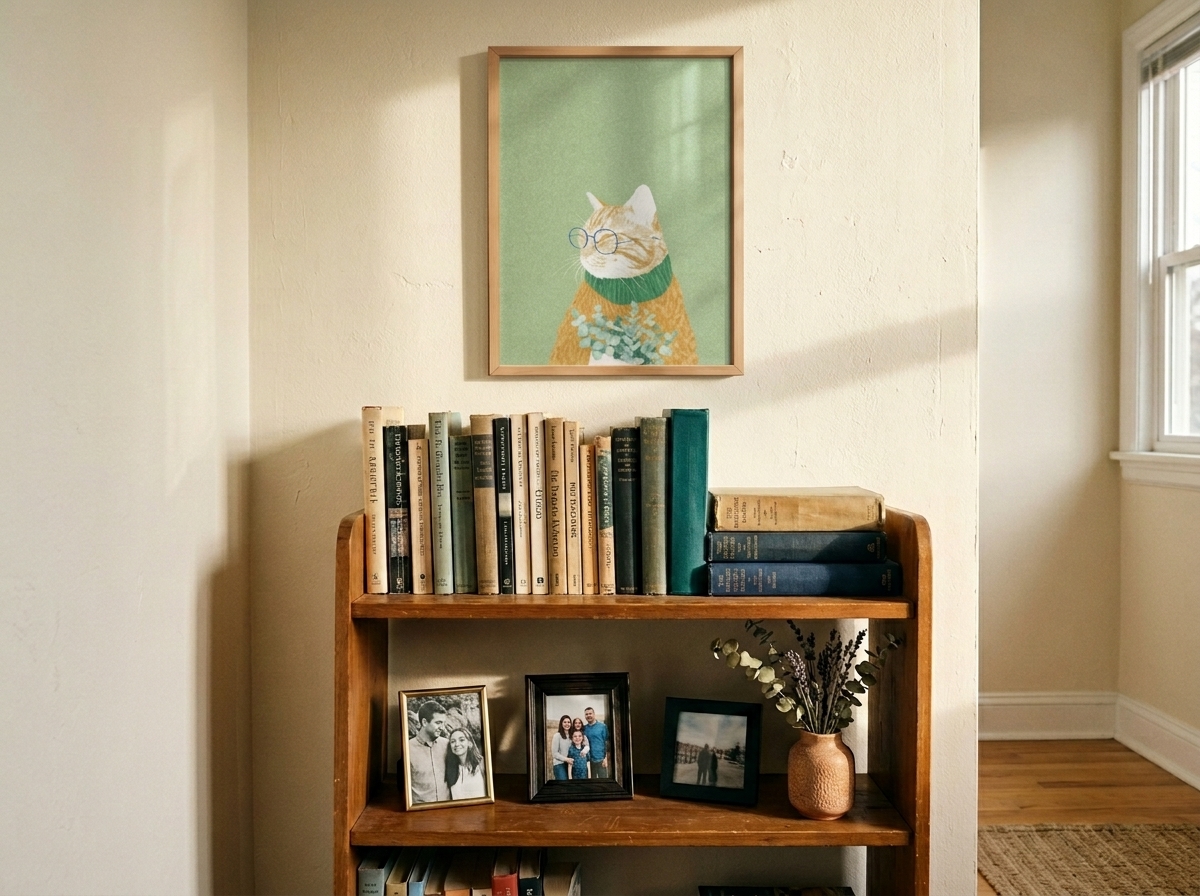
This is the part of the renter mindset I’ve watched almost every friend get stuck on. The fix isn’t a productivity hack or a checklist. It’s a permission slip — written by you, to you — that says the apartment you’re in right now deserves the same care you’d give the one you eventually buy. Same care, different timeframe. A rental is never “done” in the homeowner sense. But it can absolutely be alive — chosen, week by week, by the person living in it — not held in suspension waiting for the next lease.

Your apartment isn’t waiting to be done. It’s waiting to be chosen. Same care a homeowner would give a forever home, scaled to the time you actually have.
If you’re between comfortable and identity right now — most renters who read this far will be — the move isn’t to buy more. It’s to ask, room by room, what the apartment is currently telling a stranger about you, and whether that’s actually true. Then make one specific decision, this week, that closes the gap by a little. Then another, next month. The apartment will never be done. That’s not the goal. The goal is for the apartment to be unmistakably yours for as long as you live in it.
join.cozyclub →