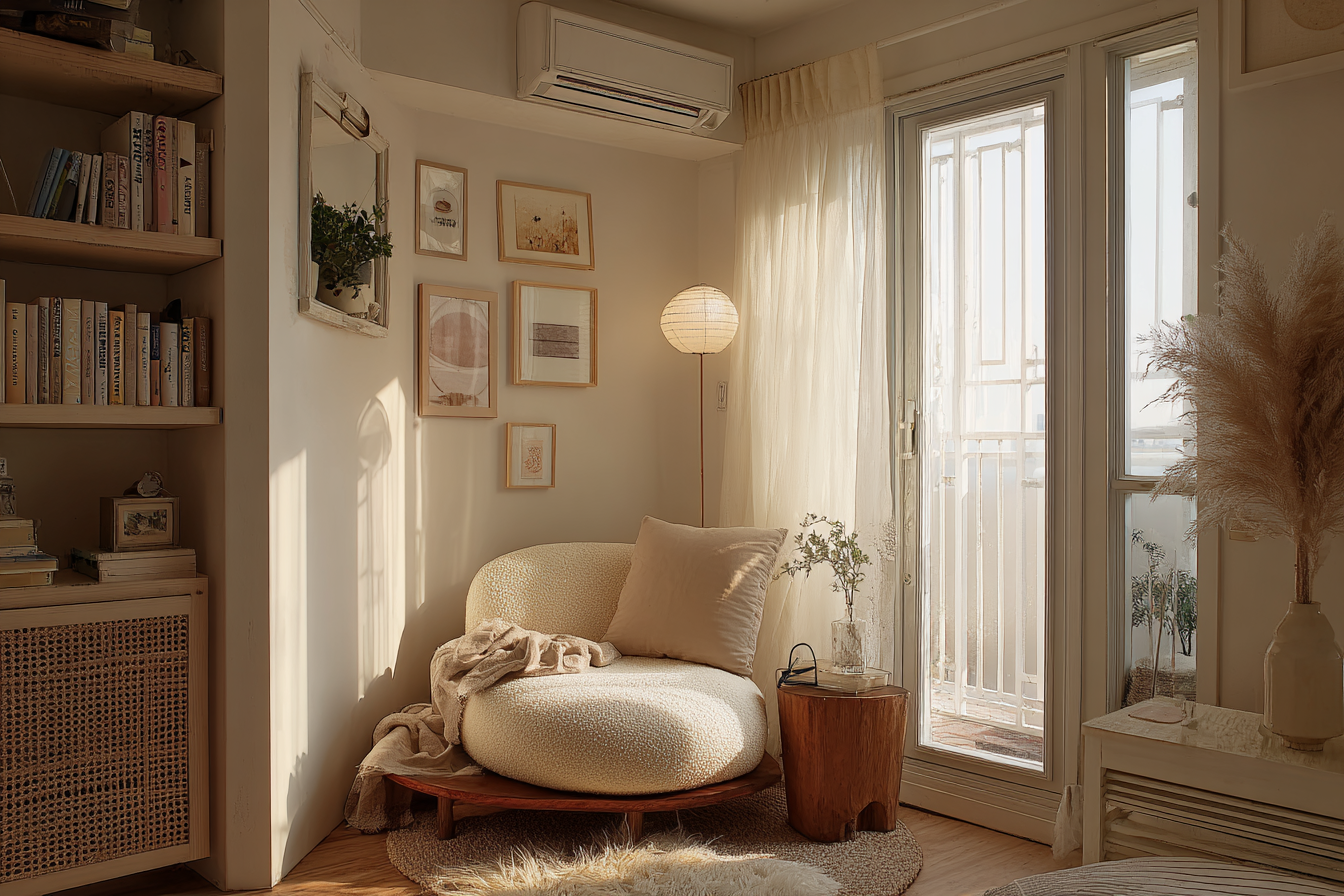
Your apartment is 550 square feet. You can’t change that. But you can change how those 550 square feet feel.
Most people respond to a small apartment by buying small furniture — “apartment-sized” everything. Somehow the room feels even smaller. That’s because small furniture in a small room creates a space that looks timid, like it’s apologizing for existing. Small apartment decorating is about visual tricks, not small furniture — the right choices make compact spaces feel open.
Small Apartment Decorating Tricks That Work
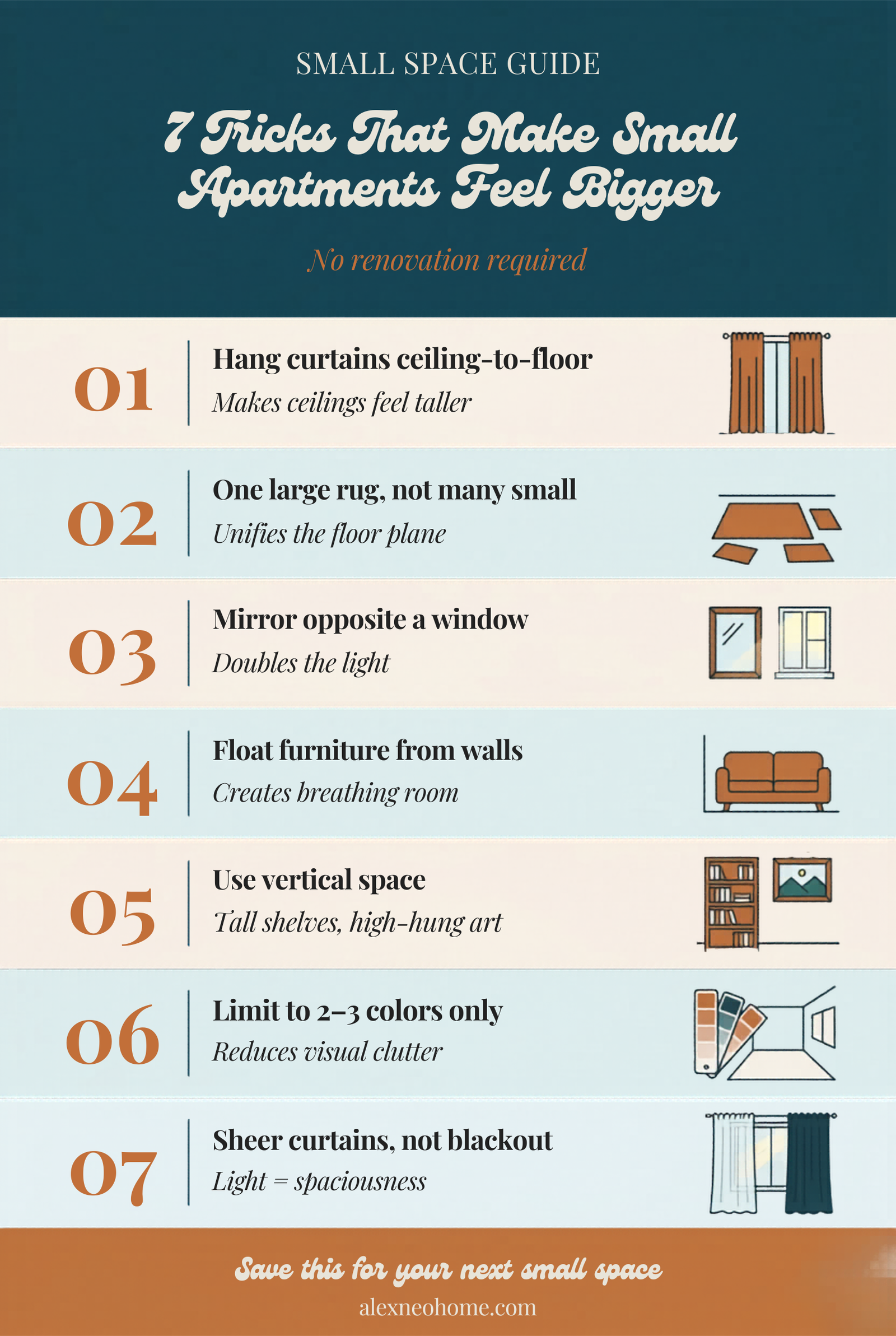
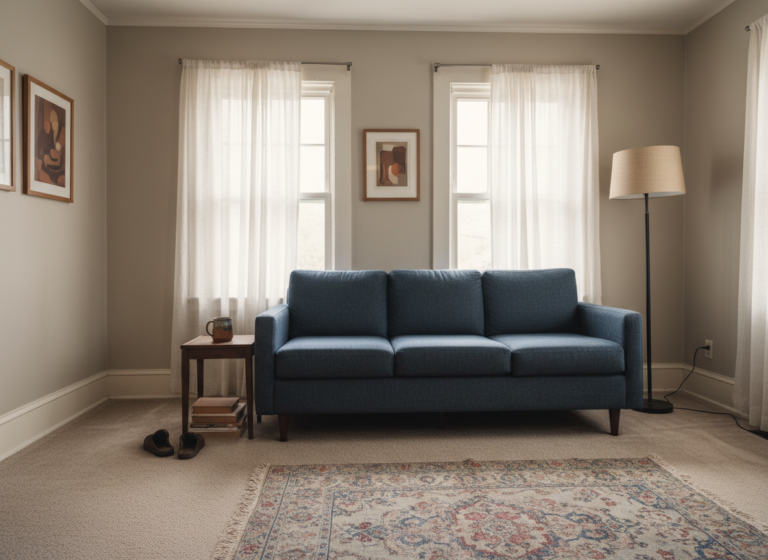
A full-sized sofa in a small living room actually makes the space feel more intentional than a loveseat surrounded by other small pieces. One substantial piece creates hierarchy — the eye has somewhere to rest. Pick one anchor per room, then keep everything else streamlined and slim.
Principle 2 — The Right Rug Size (Even in Small Rooms)
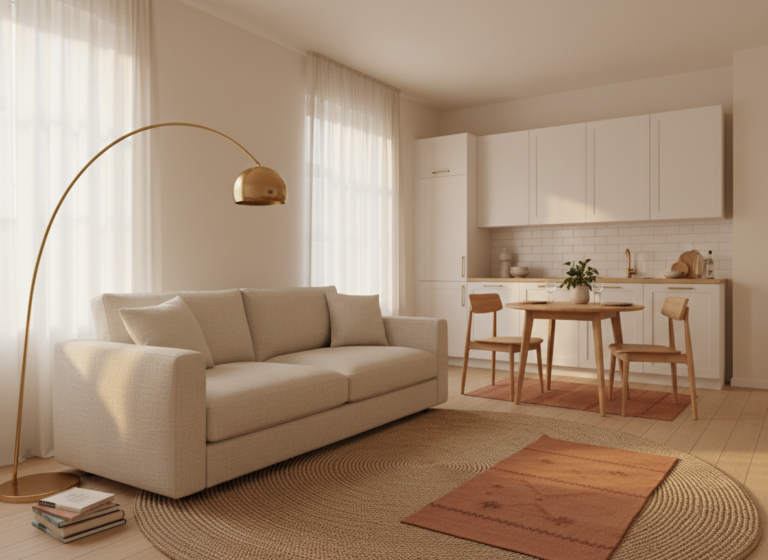
A too-small rug is the #1 reason small rooms feel cramped. The rug fragments the space. When the rug fills most of the floor area, the room reads as one unified zone — which makes it feel bigger.
📏 Even in a small room: minimum 8×10 for the living area. Rug should extend to within 12–18″ of the walls.
550 sq ft can feel like 800. Here’s the difference.
The All-in-One Decor OS builds the system behind it:
- →Unit Specs tool — store room dimensions, ceiling heights, door widths
- →Room Decision Boards — visualize furniture scale in your actual space
- →Anti-Impulse Filter — does this piece make the room feel bigger or smaller?
- →Renter Hacks Library — space-expanding solutions without permanent changes
Principle 3 — Curtains High and Wide
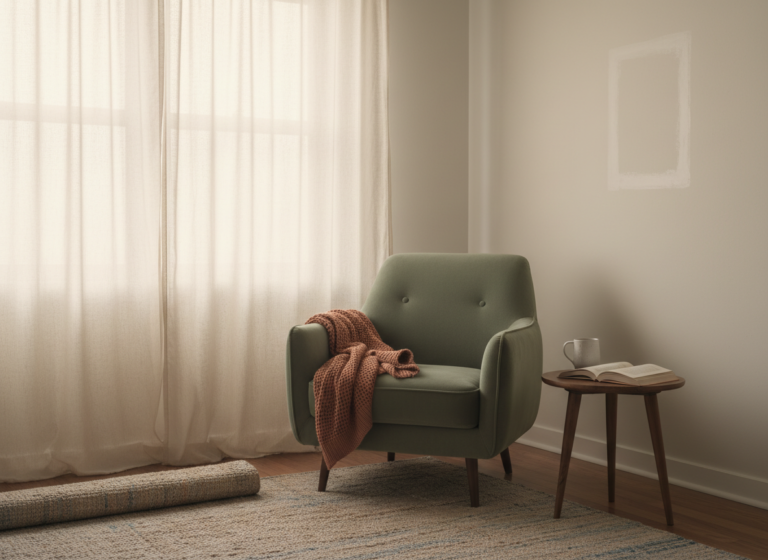
Hang curtains near the ceiling and extend the rod 8–12″ past the window on each side. This makes the window look larger and draws the eye upward — emphasizing the vertical space you do have. Vertical space is your secret weapon in small apartments.
Principle 4 — Visible Legs on Furniture
Furniture that sits flat on the floor blocks visual flow. Furniture with visible legs lets you see the floor continuing underneath — which makes the room feel more open. When shopping for small spaces, prioritize pieces where you can see the floor below them.
Principle 5 — Multiple Light Sources Create Perceived Space
A single overhead light flattens a room. Multiple sources at different heights create depth — shadows and pools of light that make the brain perceive more dimension. Aim for at least 3 sources per main room.
Principle 6 — Mirrors Multiply Space
A mirror placed opposite a window reflects natural light and creates the illusion of depth. Best placements: opposite a window, at the end of a narrow hallway, above a console in the entryway. Even one large mirror makes a noticeable difference.
Principle 7 — Clear the Walkways
📏 Main walkways: minimum 36″ clearance. Between furniture pieces: 18–24″ minimum. Around dining table: 36–42″ from table edge to wall.
If your furniture doesn’t allow these clearances, the room will feel cramped no matter how well-decorated it is. Sometimes the fix is removing or rearranging — not adding.