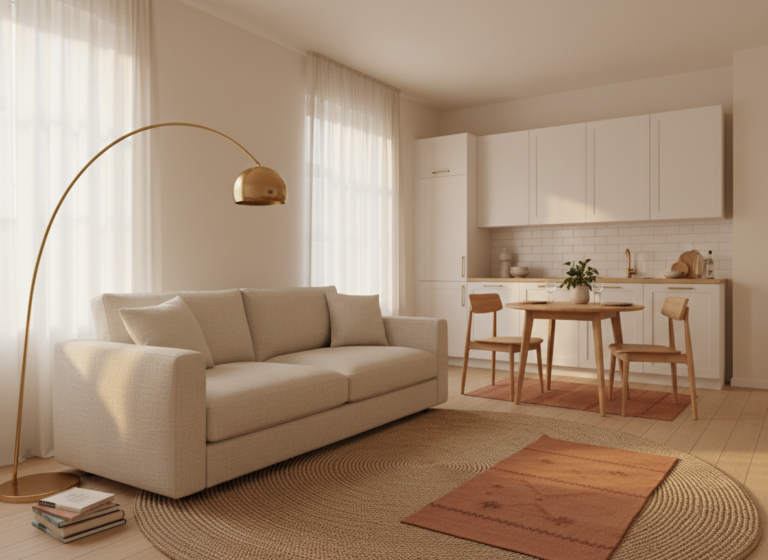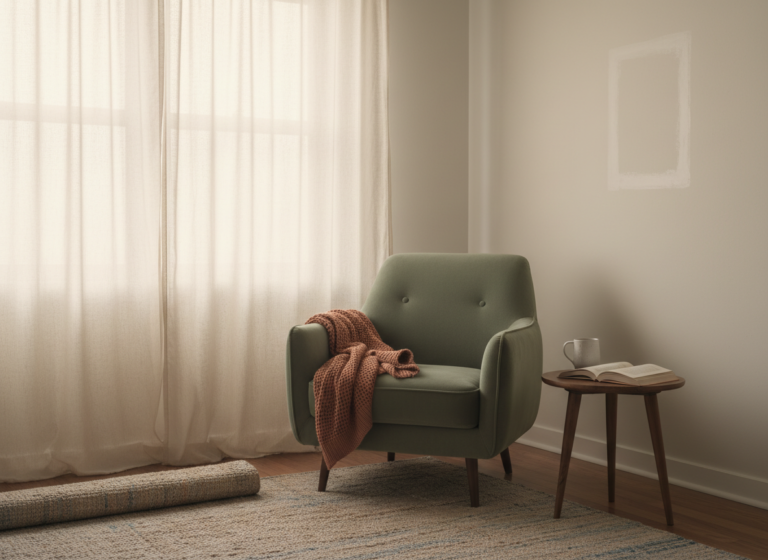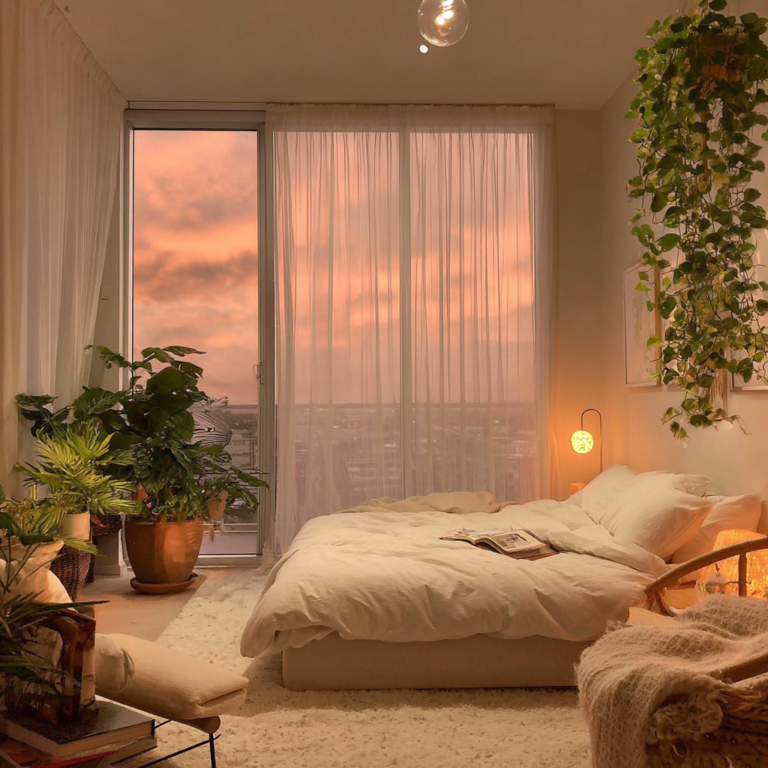
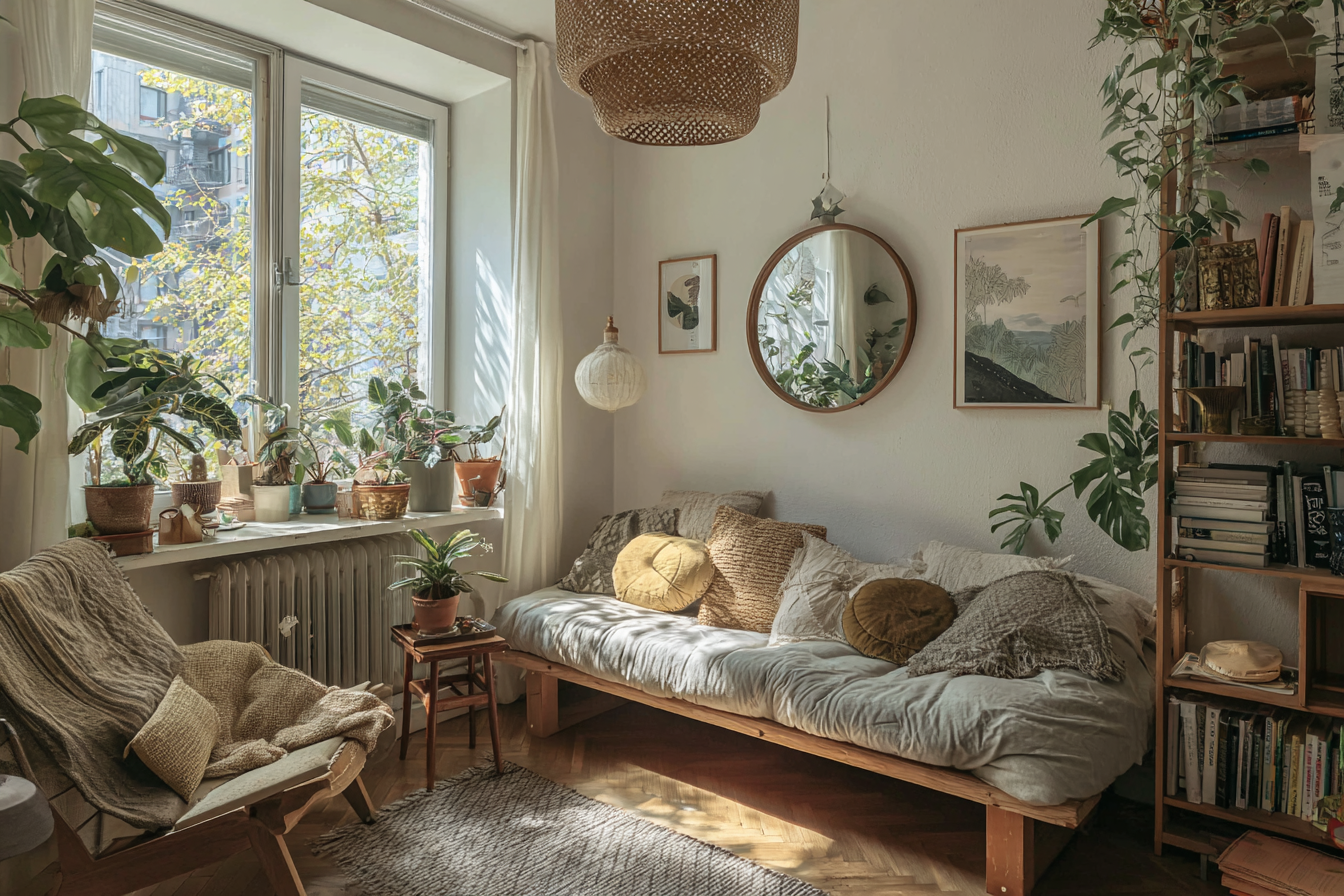
It took me embarrassingly long to figure out why my rental didn’t feel like home. It wasn’t the white walls, though everyone blames the white walls. It wasn’t the budget, or the temporary nature of renting, or the fact that the light fixtures were chosen by someone who has never once thought about ambience. It was simpler and more fixable than any of that. I wasn’t claiming the space. I was living in it the way you sit in a waiting room — present, but not committed. And a room always knows.
A rental doesn’t feel like home for three specific reasons: the walls are blank, the lighting is flat and overhead, and the objects in it could belong to anyone. All three are fixable. None of them require a landlord’s permission.
The Blank Wall Is a Choice You’re Making Every Day
There’s a reason rental apartments feel so similar to each other, and it’s not the landlords — it’s us. We move in, we arrange the furniture, and then we stand in front of the walls and think: I’ll sort that out later. Later, usually, never comes. The walls stay blank. The room stays provisional. And every morning you wake up in a space that quietly insists it’s temporary.
Here’s the thing about a blank wall: it isn’t neutral. It’s actively working against you. Furniture floating in an empty room reads as random, unrelated, provisional — because without something anchoring the wall, there’s nothing to compose against. Add three prints in a cluster above the sofa and suddenly the sofa belongs somewhere. The room has a logic. Someone made a decision.
That someone needs to be you, and it needs to happen before you feel ready, because you will never feel ready. The permission you’re waiting for isn’t coming from the landlord — it’s something you have to give yourself.
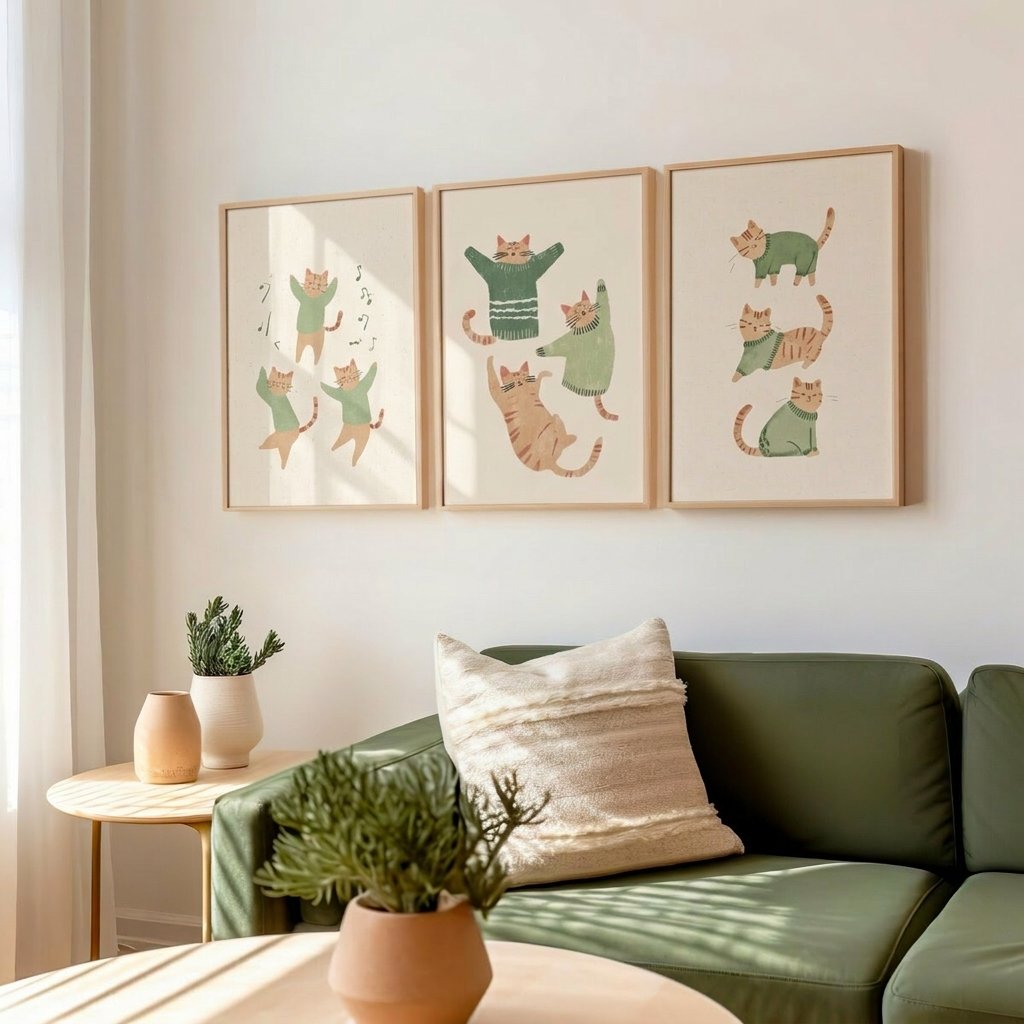
What goes on the wall matters less than the fact of putting something there intentionally. One large print you actually love. A cluster of smaller ones that share a mood if not a subject. Something that a specific person — you, specifically — chose because it resonated, not because it was the right size and on sale. Mass-produced art chosen for inoffensiveness is worse than nothing; it confirms the generic quality of the space rather than overriding it.
Too small, hung too high. A print that’s dwarfed by the wall around it looks more lonely than no print at all. Go bigger than feels comfortable — if you’re torn between two sizes, go up. And hang lower than instinct tells you: the centre of a piece should sit roughly at eye level, not at the ceiling.
You’re Lighting Your Apartment Like an Office. Stop.
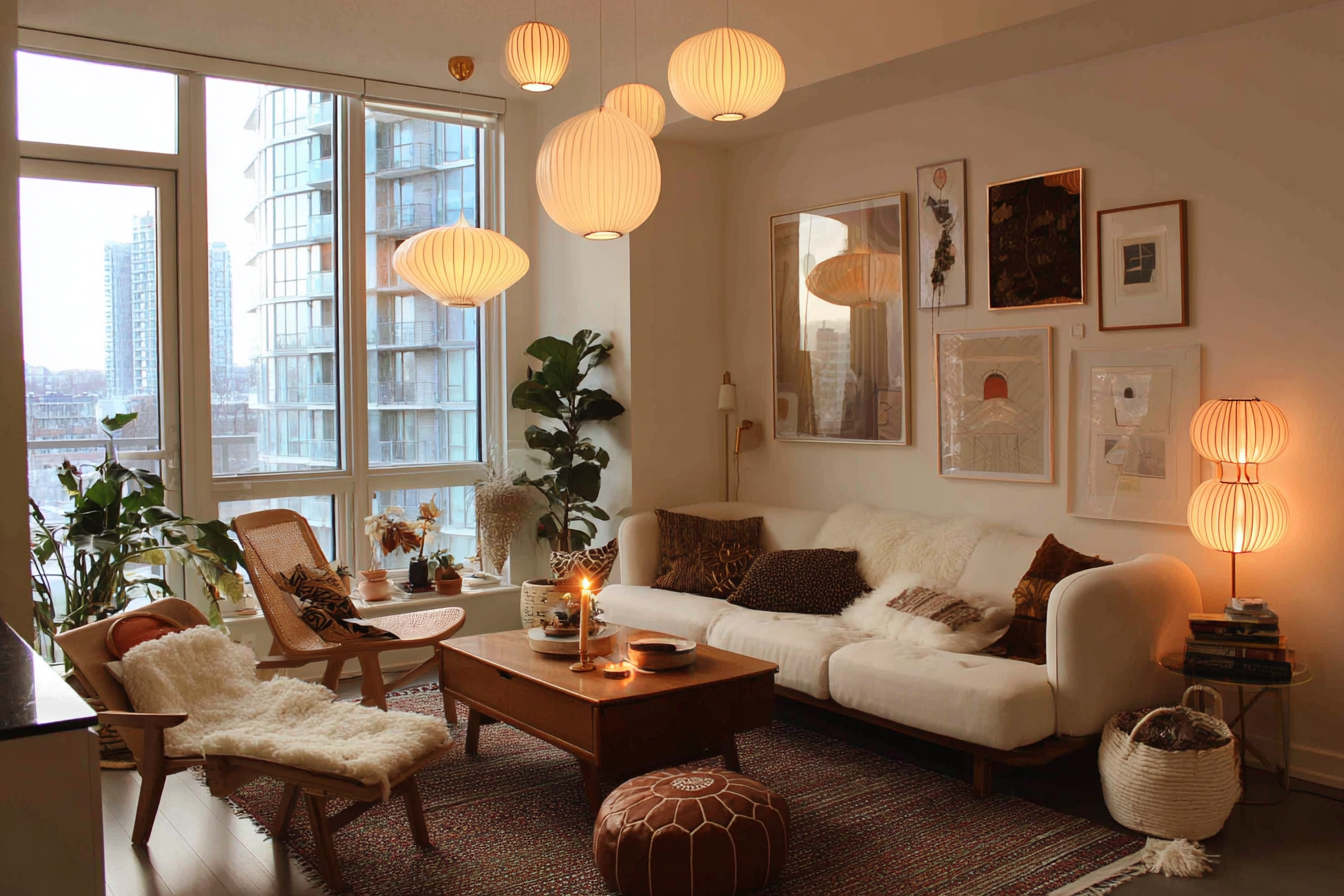
Rental lighting is one of those things that’s so consistently bad that most people have stopped noticing it. One ceiling fixture, dead centre, casting flat light in every direction with no warmth and no shadow. It’s functional the way a vending machine is functional — it does the job, but nobody’s happy about it.
Shadow is the thing. Rooms feel cozy and inhabited when light comes from multiple lower sources because that light creates shadow — and shadow is what gives objects dimension and space depth. Overhead lighting removes all of that. Everything flattens. The room feels clinical regardless of what you’ve put in it.
The fix is almost insultingly simple. Add a floor lamp to one corner. Add a table lamp to one surface. Switch every bulb in the apartment to 2700K warm white — the package says “warm white” or “soft white,” and it costs exactly the same as whatever cool blue daylight bulb is probably in there now. Then, in the evenings, stop turning on the overhead light. Use it for cleaning. For living, use the lamps.
I did this in my last apartment on a Tuesday evening and genuinely stood there for a moment thinking: why did I wait a year to do this. The room didn’t change. The feeling of it changed completely.
| Bulb type | Colour temperature | The feel |
|---|---|---|
| Cool white / daylight | 4000–6500K | Clinical, energising, office-like |
| Warm white | 2700–3000K | Warm, intimate, lived-in |
Start with the bulbs. Everything else in the room will look better immediately, and it costs about the same as a candle.
The Real Reason Your Rental Doesn’t Feel Like Home
Pick up anything in your apartment right now that you bought because it was the right size, or because you needed something in that spot, or because it was there. The decorative balls in a bowl. The throw pillow that matches but means nothing. The print chosen because the colours were inoffensive. These objects aren’t neutral — they were designed to belong to anyone, and that’s exactly what they do. They make a space feel like it belongs to no one.
There’s a reframe I heard once that I’ve never forgotten: think of your security deposit as the design fee you pay to live in a space that’s actually yours. Not a penalty for commitment. A fee for the privilege of inhabiting rather than just occupying. The people who live most comfortably in rentals aren’t the ones who spend the most — they’re the ones who decide, early, that this apartment is worth caring about for the time they’re in it.
What makes a space feel inhabited isn’t more objects — it’s the right objects. Things that have a story, or that you love without quite knowing why, or that came from somewhere. A print of a city that meant something. A plant you’ve kept alive long enough to feel attached to. A cookbook left on the counter because you actually cook from it. A mug that’s been used so many times it feels like furniture.
None of it needs to be expensive or permanent. It needs to be specific — yours specifically, not anyone’s. Go through the apartment once, slowly, and ask of everything: could this belong to anyone? The things that could, replace gradually with things that couldn’t. That’s the whole project. Not decorating a rental. Decorating yours. If you haven’t landed on what that actually looks like, finding your interior design style is the place to start.
join.cozyclub →